General

Elders and Novices

6 May 2013

The intention of Elders and Novices is to provide folks new to the SCA with a contact person to assist with acclimating to the culture and traditions of our game. The relationship between the Elder and the Novice is intended to be of a defined period, primarily informational in nature, and one desired by both the Novice and the Elder. A coordinator will assist local and regional chatelaines with matching across organizations, assisting with requests, and looking into the possibility of working interkingdom for folks on the move.

For additional information or to share your interest, Contact Lady Anthoinette at toni dot martell at gmail dot com.

Purpose and Description (PDF file)

The Novice brochure (PDF file)

The Elder brochure (PDF file)

Children in the SCA: An Introduction for Newcomers

1 June 2012

[I'm working on adding information to The Barony of Cynnabar's Newcomer page, and this is the first of several short and sweet articles I intend to write. - Genoveva]

Our children will lead tomorrow’s Society, and we encourage them to join in the fun today! It’s possible for most children, depending on their age and interest level, to participate in nearly every aspect of what we do in the SCA. The Society is not only a fabulous way to do fun things with your children, but it’s a tremendous learning opportunity for them as well. Yet it’s important to stress that the SCA is a family activity — most everything you’ll do together with your children under your direct supervision. Here’s a brief overview of how you can get your children involved and find their own special place in an SCA group:

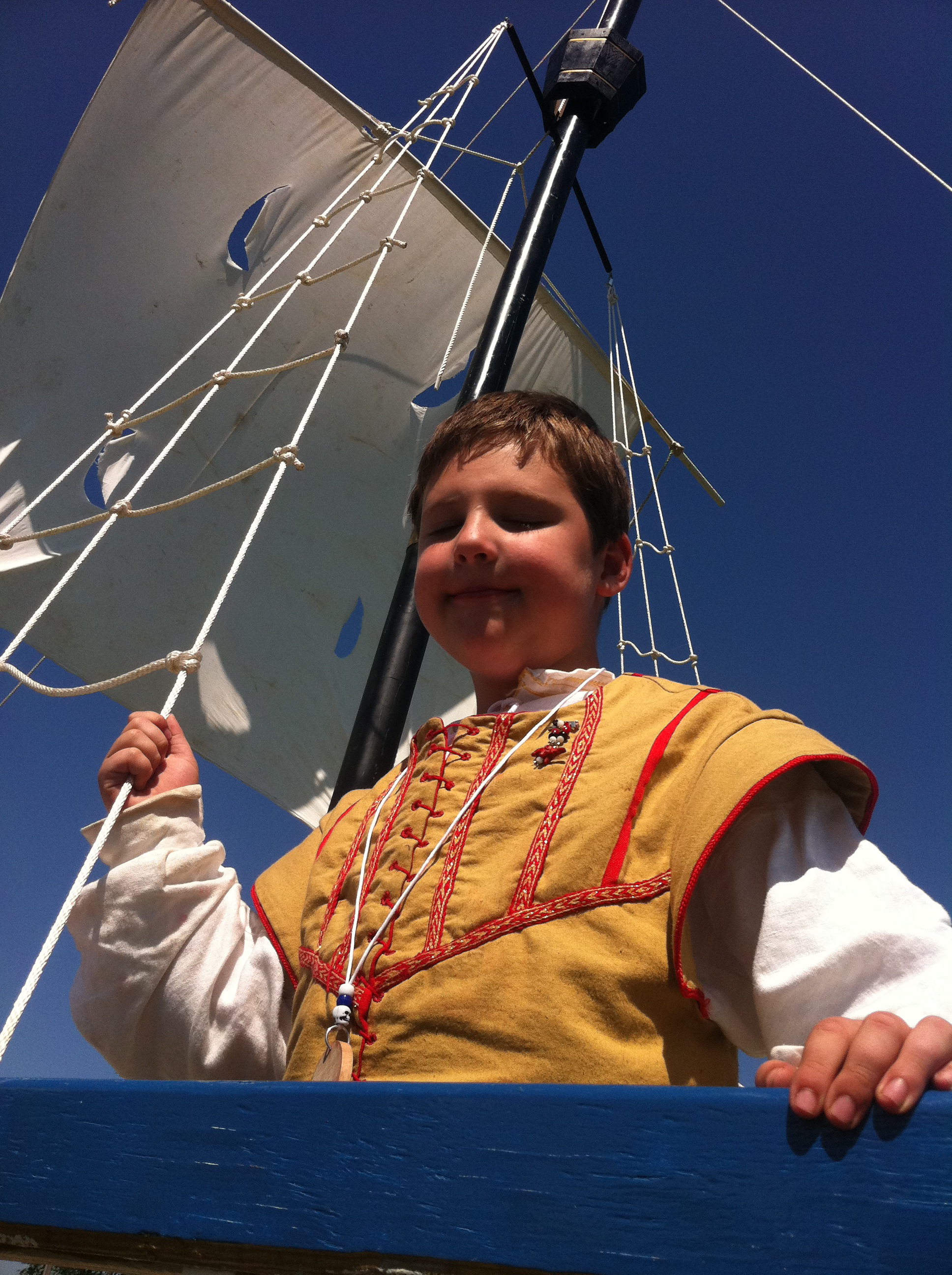
Alexander in his pirate garb!

Garb (Clothing) – Dressing in medieval and renaissance-styled clothing is one of the best ways for your child to get into the mindset of “historical recreation.” I urge you not to make the mistake of thinking they won’t want to “dress up” or “they’re just kids, no one will care.” A simple tunic works for both girls and boys, and is easy and inexpensive to make — the tunic can go right over their normal clothes for convenience and comfort. If you’re interested in costuming, get your kids involved in choosing clothing they’ll enjoy wearing and picking out colors and fabrics. When I asked my son what he might like to wear if he were “in the old days,” he answered, “a pirate!” So together we settled on Elizabethan-era clothing of a doublet and breeches. He picked out the materials and even created the trim with tablet weaving (a new craft to learn!). He wears his garb with pride, and looks amazing!

Garb Tip #1: I made my son’s garb a little big, so he’s still able to wear it a year later and I estimate he still has a couple more years left before he outgrows it and we pass it on to a younger member.

Garb Tip #2: You don’t have to have lots of outfits for kids — you’ll notice Alexander wears his gold doublet in most of his photos. Kids are generally content to wear the same garb to events, and may take comfort in familiarity of it. Just be sure you can wash their garb in some manner, as kids get dirty! My son’s doublet isn’t machine washable, but the white shirt he wears is … and I wash it a lot!
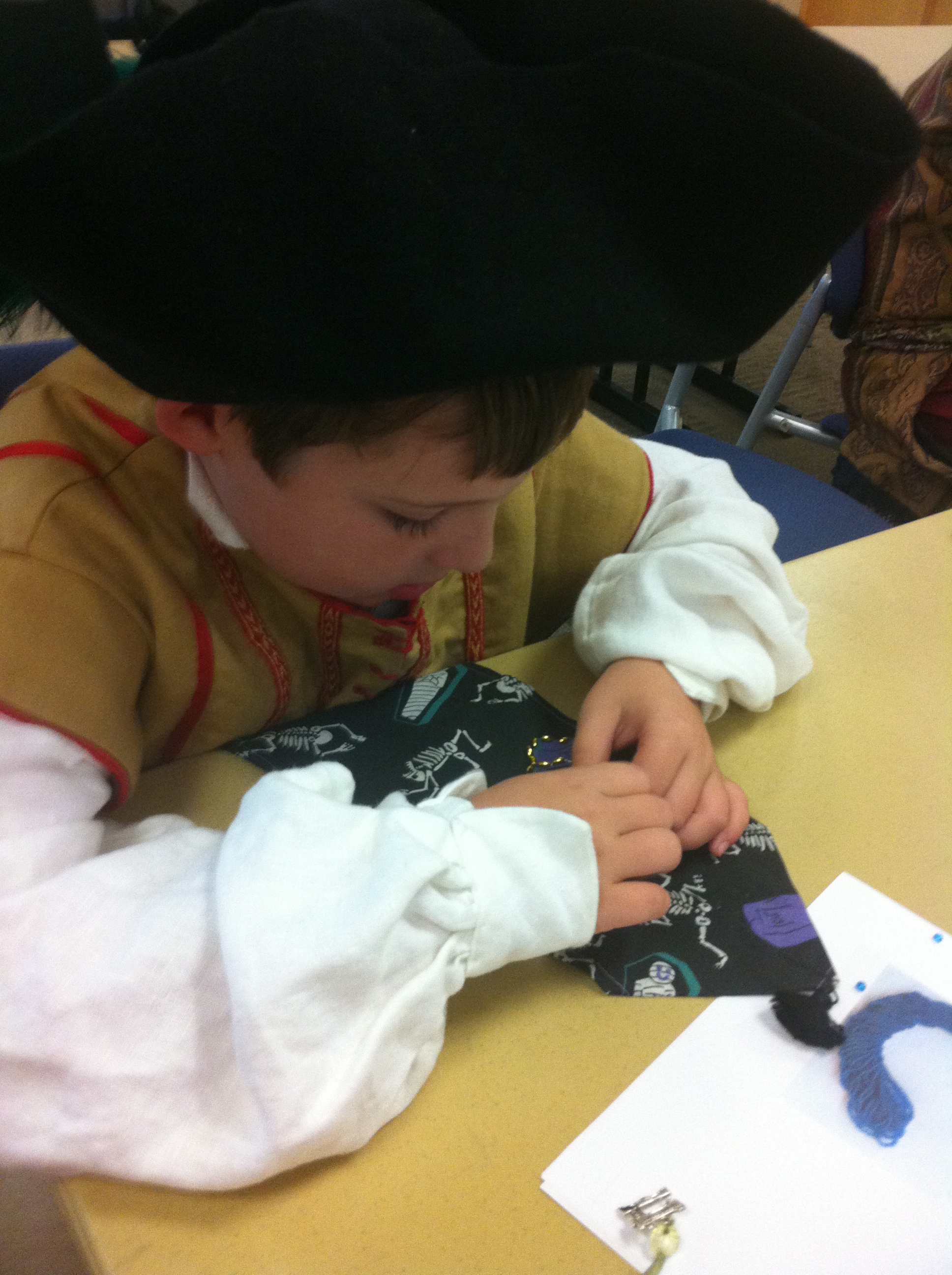
Beading at Fall Coronation

Arts & Crafts — I don’t know about your kids, but my son ADORES arts and crafts. And the SCA is the perfect place to learn and try new crafts because we’re all researching and trying out handicrafts of all types. Many events will offer crafts for kids to do — things my son has made in just the last six months include a wooden pirate ship, an ornament, a leather pouch, marbled paper, cookies, spinning top, hammered copper, beaded favors, heraldic devices, and a working catapult! Check the Children’s Activities on an event’s schedule to find out what might be available. You can also do historical arts and crafts right in your home or local group — good projects for children include painting, tablet weaving, cooking, and embroidery. Kids may even be able to enter some arts & sciences displays and competitions, including the Youth Craftmens Faire and Prize Tourney in the spring and fall.

Craft Tip #1: If you’re going to an event without formal kids activities, bring along a craft box with historical crafts. I like to keep a craft box filled with clay, beads, and period games (such as pick-up sticks), all of which are easily obtainable at stores.

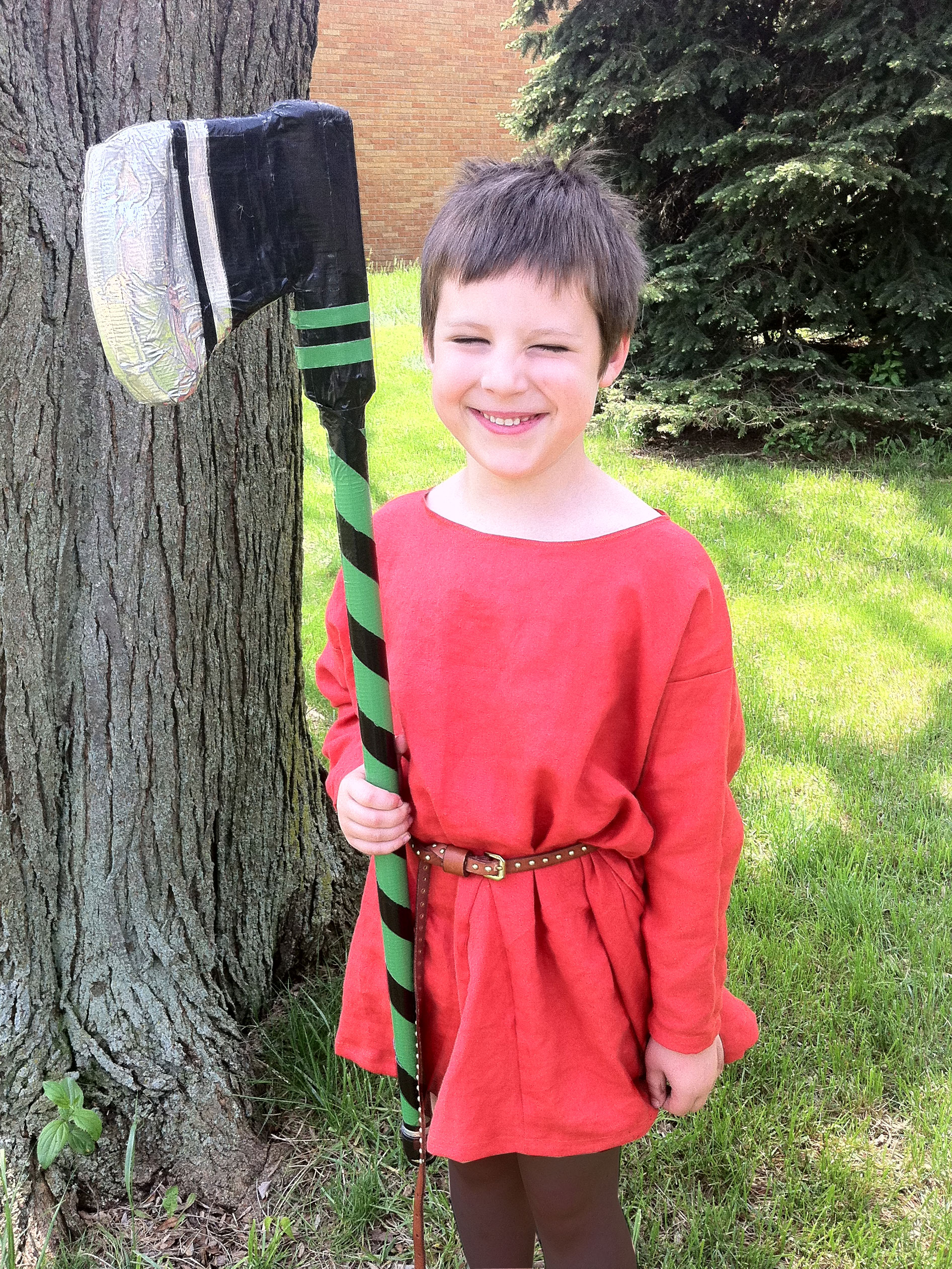
Alexander's boffer axe

Martial Arts — SCA “combat” is considered a Western martial art, and youths ages 6-17 can get involved in what’s called “boffer” combat. Boffers are padded lengths of PVC plastic with handles, allowing kids to learn combat techniques without being harmed. Kids have armor requirements like the adults, though their rules differ and less armor is required. You can get inexpensive armor by purchasing things like street hockey helmets from a used sporting goods store. If you’re interested in youth combat, ask your group’s Knight Marshall about how to get in touch with a Youth Combat Marshall and start learning!

Fencing — Youth ages 6-17 can also fence in the SCA!  From age 6 to 13, youth use plastic swords that cost about $20, and the same armor otherwise as an adult (gorget, mask, etc) — local fencing groups often will have youth loaner gear so children can first experience fencing for free. From age 14-17, they are allowed to use metal swords like adults, but only allowed to fence youth-approved adult fencers or other youths and are not allowed to participate in non-youth tournaments.  Again, fencing groups will usually have loaner gear for this age of youth also (since it exactly matches the gear for adults, just perhaps a bit smaller). [Information courtesy of Birke, Cynnabar's Fencing Champion]

Archery — The Disney/Pixar “Brave” movie (summer 2012) brings a resurgence in kids’ interest in archery, and the SCA is a particularly good place to learn youth archery. A number of events encourage youth archery, which has an even lower barrier to entry than youth combat.

Service – A big aspect of being a member of the SCA is giving back to the community, and kids are encouraged to participate as well. Depending on their age, children can assist in group service and crafting projects, help retain for royalty and barons/baronesses, teach classes on arts and crafts they enjoy, and help other children feel welcome at meetings, practices, and events. My son, who is 7 at the time I’m writing this article, has done each of these things as proud member of the Barony of Cynnabar, from simply helping to keep a water cup full for someone who is otherwise occupied and painting shields for an upcoming war to teaching an embroidery class and folding brochures (and encouraging other kids into helping him fold said brochures). Your Kingdom may also offer a Page School to help develop leadership skills and promote the skills and knowledge of the Middle Ages, which is a fun (and recognizable) way for kids to contribute.

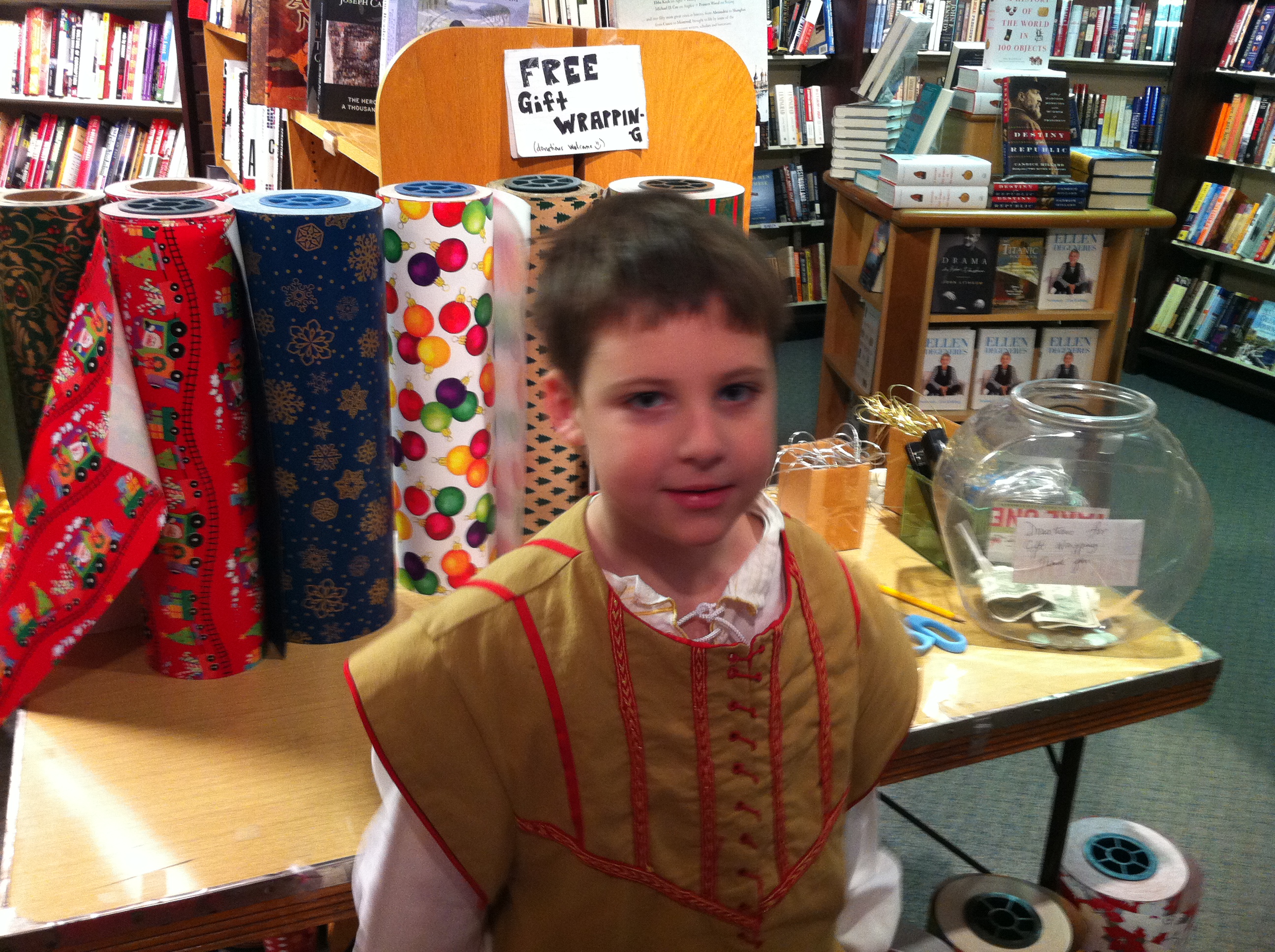
Alexander helping wrap presents at a group fundraiser

It’s important to note that there are responsibilities on the part of both the parents and the kids, but I consider them all basic common sense. Parents are responsible for the supervision, care, behavior, and well being of the children attending SCA activities at all times, minor waivers are required for minor children (they are available when you arrive at an event), etc. Children should only attend events with parental/guardian supervision, exhibit appropriate behavior at all times, and must be able to tell an adult their parent(s) SCA name, legal name, and where they can be found. Check with your Kingdom’s Minister of Youth for more details on their Youth Policy.

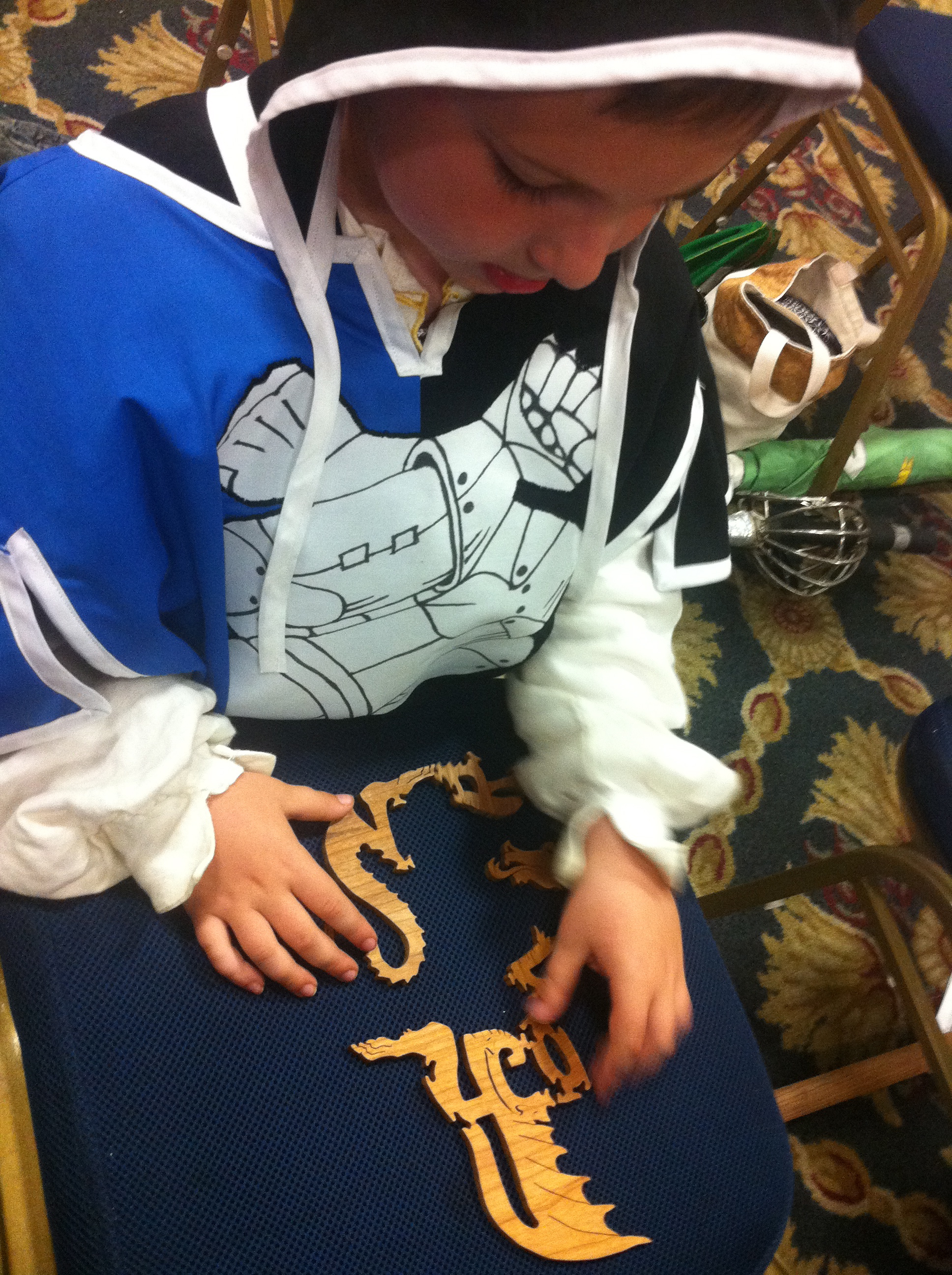
Putting together a puzzle at an event without organized kids activities

You may be wondering if your child will be interested in all this. I’ve experienced a wide variety of interest levels in children in the SCA, from “barely there” to “totally engaged.” The biggest common denominator in whether a child takes an interest appears to have a lot to do with their parent’s own interest level and encouragement of it in their child. If this is just “your thing,” and you’re dragging your kids along without any input or encouragement, it’s very likely they won’t enjoy themselves or be “bored.” If, on the other hand, you actively involve your children in planning activities, choosing events, packing, and helping out, you’ll find they are often active and engaged. That said, as children get older is a natural and healthy for them to seek our their own interests. Even in those cases, it’s healthy for children to experience “boredom” because it prompts them to seek out things, within their current context, rather than wait for you to entertain them. Don’t be afraid of boredom — it can lead to quite amazing things, given adequate supervision, of course. Teenagers can be a whole different scenario, and I don’t feel qualified to speak to that situation yet, so I encourage you to check out the SCA’s article on “Your Teenager and the SCA – Some Answers for Parents.”

I, for one, am over the moon happy about discovering the SCA and experiencing it with my son in the Barony of Cynnabar within the Middle Kingdom. It gives us quality time together doing something we both enjoy, it educates and stimulates his young mind, it teaches him how to behave around adults, it helps his interpersonal skills with other children, and it makes him feel involved in something bigger than our small family. I encourage all parents and families to get your kids involved in the SCA!

If you have questions about kids in the SCA, I’m happy to answer questions from a parent’s perspective, but please note that I am not a Youth Minister nor can I speak to SCA policy. Feel free to share this article with others (with proper attribution please).

Landsknecht German Garb: Overview and Resources

8 May 2012

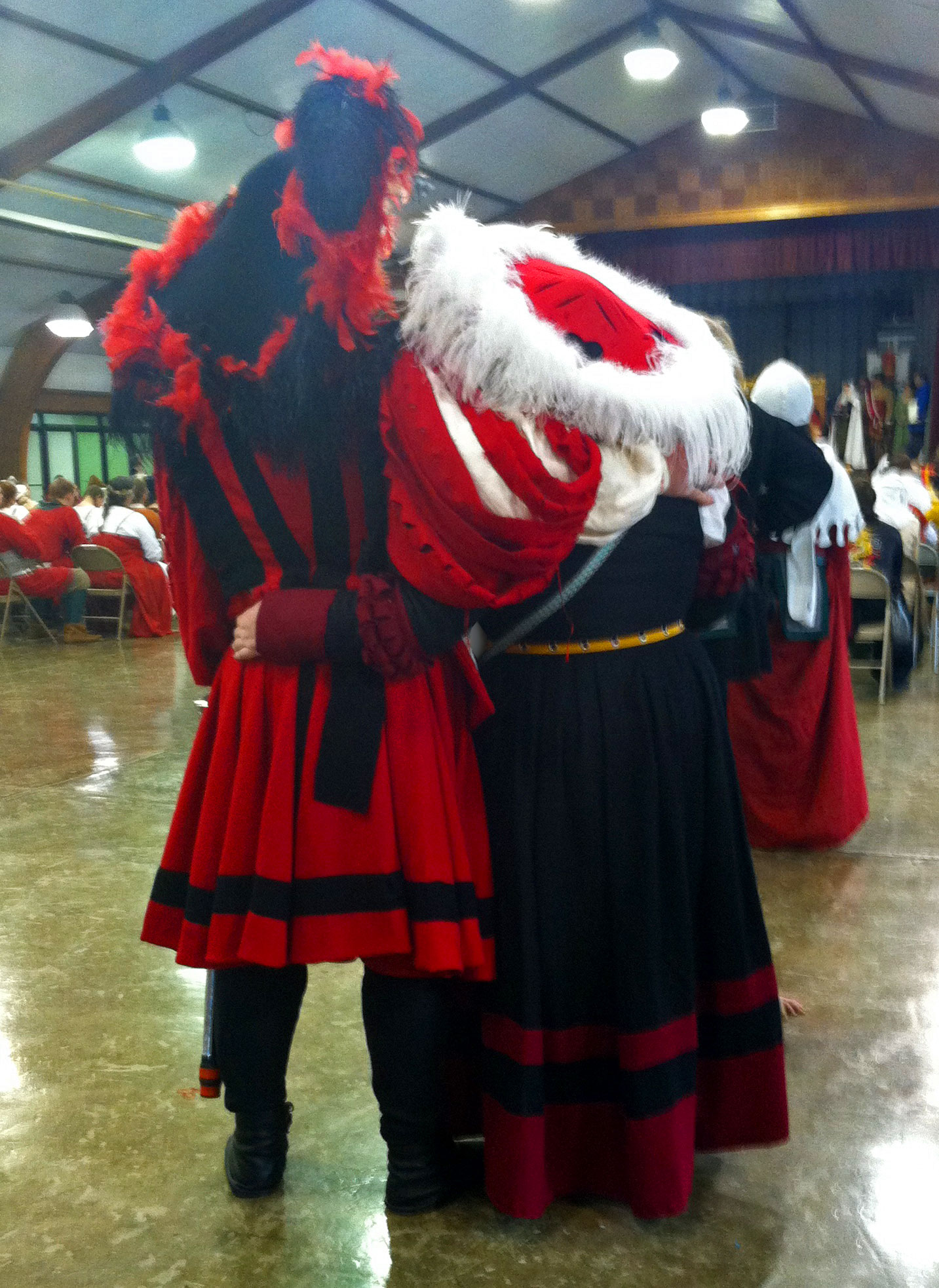
In our Landsknecht/German Garb at Court. Photo by Lady Arielle

The Landsknecht were famed German mercenaries from the late 15th century to the middle of the 16th century. The daring soldiers were well compensated for their dangerous work, and when you combine that with the fact that they were exempt from most sumptuary laws, you get a group of people who enjoyed dressing flamboyantly. Their clothing tended to be bright (dye was pricey) and slashed (showy and hid tears and rips). Feathers were common because the merchants who followed the train sold them, and it was easy to buy one and just “stick a feather in your hat.” To learn more about the history of the Landsknecht, I highly recommend the 2002 book, Landsknecht Soldier by John Richards — it is well researched and illustrated.

A number of resources for Landsknecht garb is available online. Here are links to several I find very helpful:

Renaissance Costuming FAQ – Scroll down to the section on Landsknecht about midway down for a good overview of what men and women wore.

St. Maximilian – The web site of a company of the St. Maximilian Landsknecht Re-enactment Guild (check out the Costuming Guidelines).

Landsknecht Guild of St. Maurice – Check out their Resources page!

Landknechts & German Ren – Many images, woodcuts, and modern illustrations

Trossfrau and Landknechts – Period woodcuts depicting the women of the Landsknechts

Landsknect Dress Diary – Good detail!

Landsknechtsportal – Translated from German, and not updated recently, but full of patterns, information, and cultural information

The Real Landsknecht Page – A bit hard to follow, but some useful images and information

FiberGeek’s Landsknecht Diary – Dress diaries, image sources, and details on constructing a Woffenrock

German Captain’s Woffenrock – Dress diary, resources, images

The Frazzled Frau – An entire web site documenting German women’s garb. There isn’t much Landsknecht specifically, but several of the styles in the first half of the 16th century translate to female Landknecht wear

SCA German Renaissance Garb – Excellent resource with lots of images, research, and projects!

Woffenrock Dress Diary – Not entirely period, but interesting — and contains a number of links to source images which are helpful.

Hats and Underwear of the German/Swiss Woman from the 15th century – Not in English, but full of great information.

Gregor in his Woffenrock and Tellerbarret

Early German Renaissance Costumes – Excellent dress diaries

Landsknecht Woodcut Gallery – 24 images!

German Ren Costume – list on Yahoo Groups (will have to join to see messages)

Patterns:

Woffenrock by Reconstructing History – I used this to make Gregor’s Woffenrock and I think it turned out well.

Kampfrau or Common Woman’s Dress by Reconstructing History – Haven’t used it, but have it

German Accessories by Reconstructing History – I’ve tried several of these accessories and they worked well

Elizabethan Double Plaited Braid Stitch: A Step-By-Step Tutorial in Photos

30 September 2011

The Elizabethan Double Plaited Braid Stitch is a very lovely, intricate embroidery stitch that was used on coifs, sweet bags (purses), samplers in the 16th century. The braid stitch was usually done in gilt or silver-gilt thread. Examples can be found in the Victoria & Albert Museum (see examples: coif, sweet bag, sampler).

I tried for several weeks to master this braid stitch. My early attempts were close, but not quite right. Finally, after just keeping after it for a while, watching videos, studying photos of braid stitches, and scouring the web for ideas and tips, I finally figured it out. Here I present my method of working the Elizabethan double plaited braid stitch:


Materials:

  • Fabric (I’m using 32-count evenweave linen)
  • Thread (I’m using DMC Gold Metallic)
  • Blunt end needle (you want a blunt-end needle, NOT a sharp, so that the needle does not catch or pierce other threads — I’m using a tapestry needle)
  • Stick pin

Starting the Stitch – Step by Step:

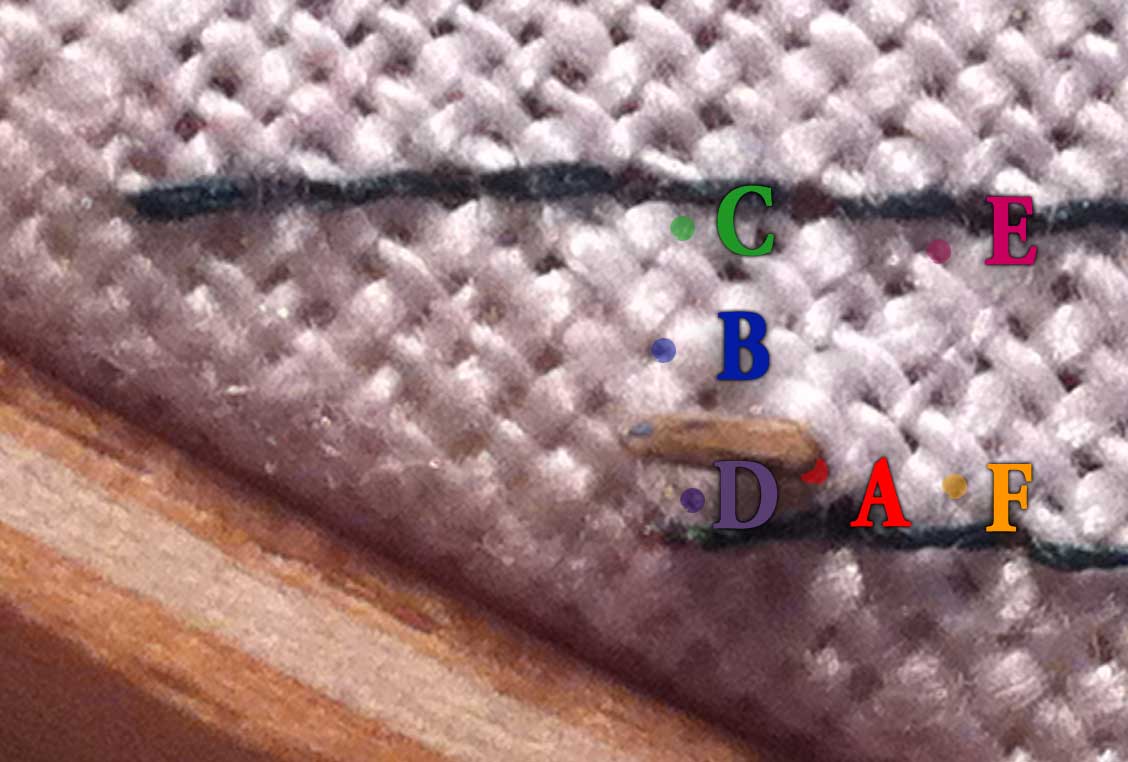
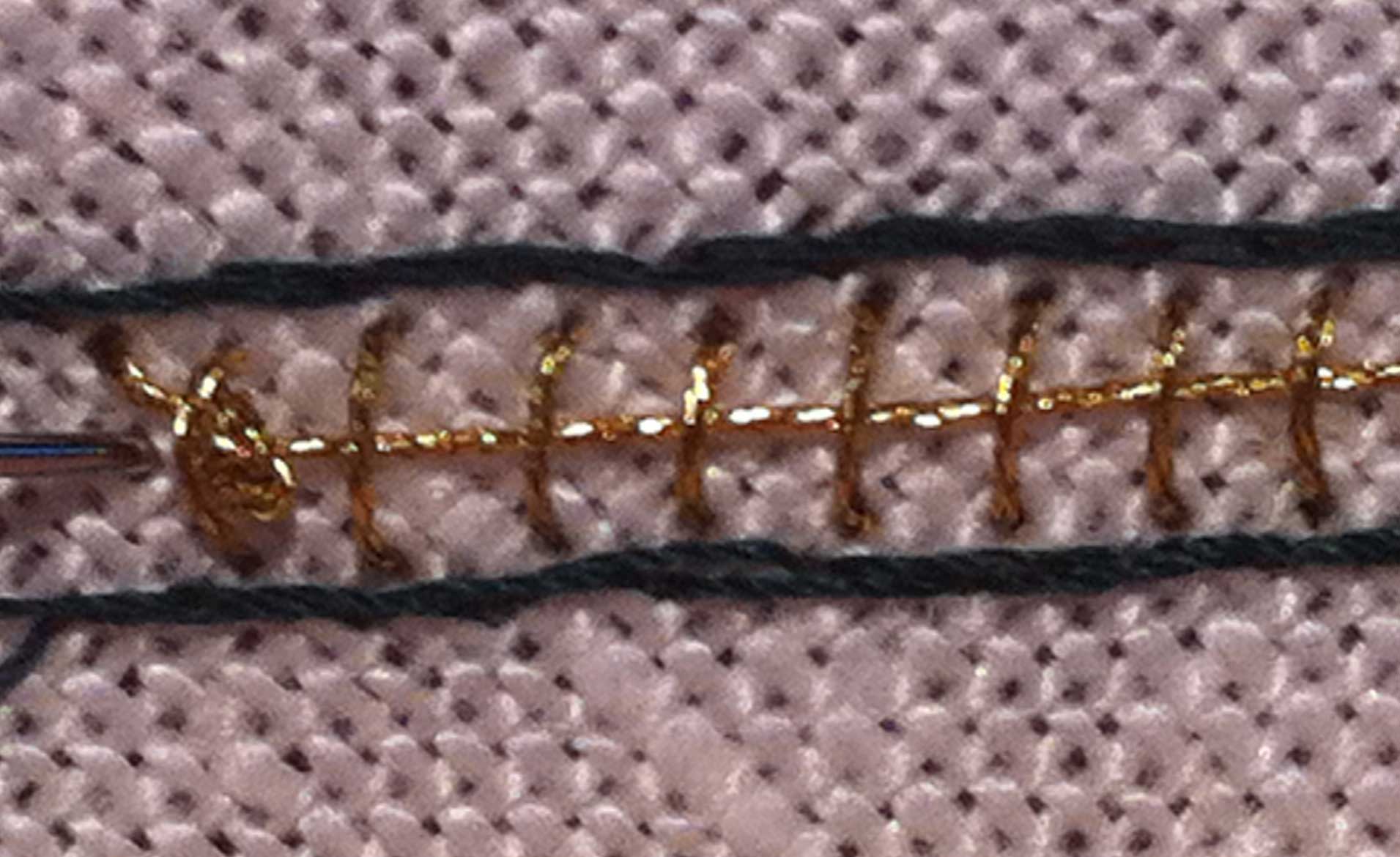
1. First we need to get the stitch started. Thread your needle and mark your fabric with two parallel lines in some fashion, either by stitching it with thread (as I have done with the green in the photo below) or with a water-soluble marking pen. Bring your needle up at point A, as shown below on my fabric (you can click the image to see it larger):


Step 1; Bring Your Needle Up at Point A

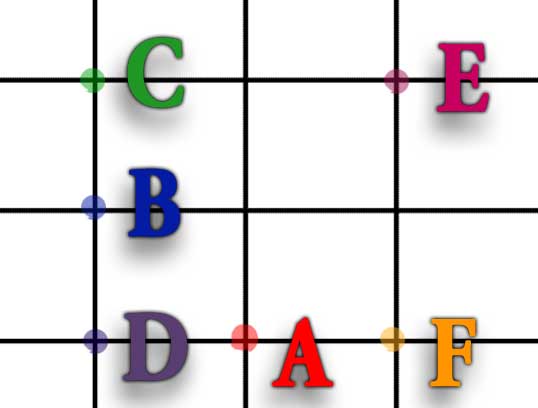
If you’re having problems figuring out where each of these points are in your own fabric, here is a simpler chart of points A-F:


Point Chart

Step 2: Go down with your needle at point B, as shown below. Pull taut enough so the thread lies flat. (Sorry for the blurry photo!)

Step 2: Go down at point B.

Step 3: Come up with your needle at point C. Again, pull taut.

Step 3: Come up at point C.

Step 4: Go down with your needle at point D.

Step 4: Go down at point D.

Step 5: Come up with your needle at point B (yes, you’ve already got thread in this hole, but you need to go back in here), as shown:

Step 5: Come up at point B.

Step 6: Go down with your needle at point E. Pull taut.

Step 6: Go down at point E.

Step 7: Come up with your needle at point F. Pull taut. All threads should lie flat, though you don’t want anything TOO tight, as that will make it hard to braid and pucker your fabric.

Step 7: Go down at point F.

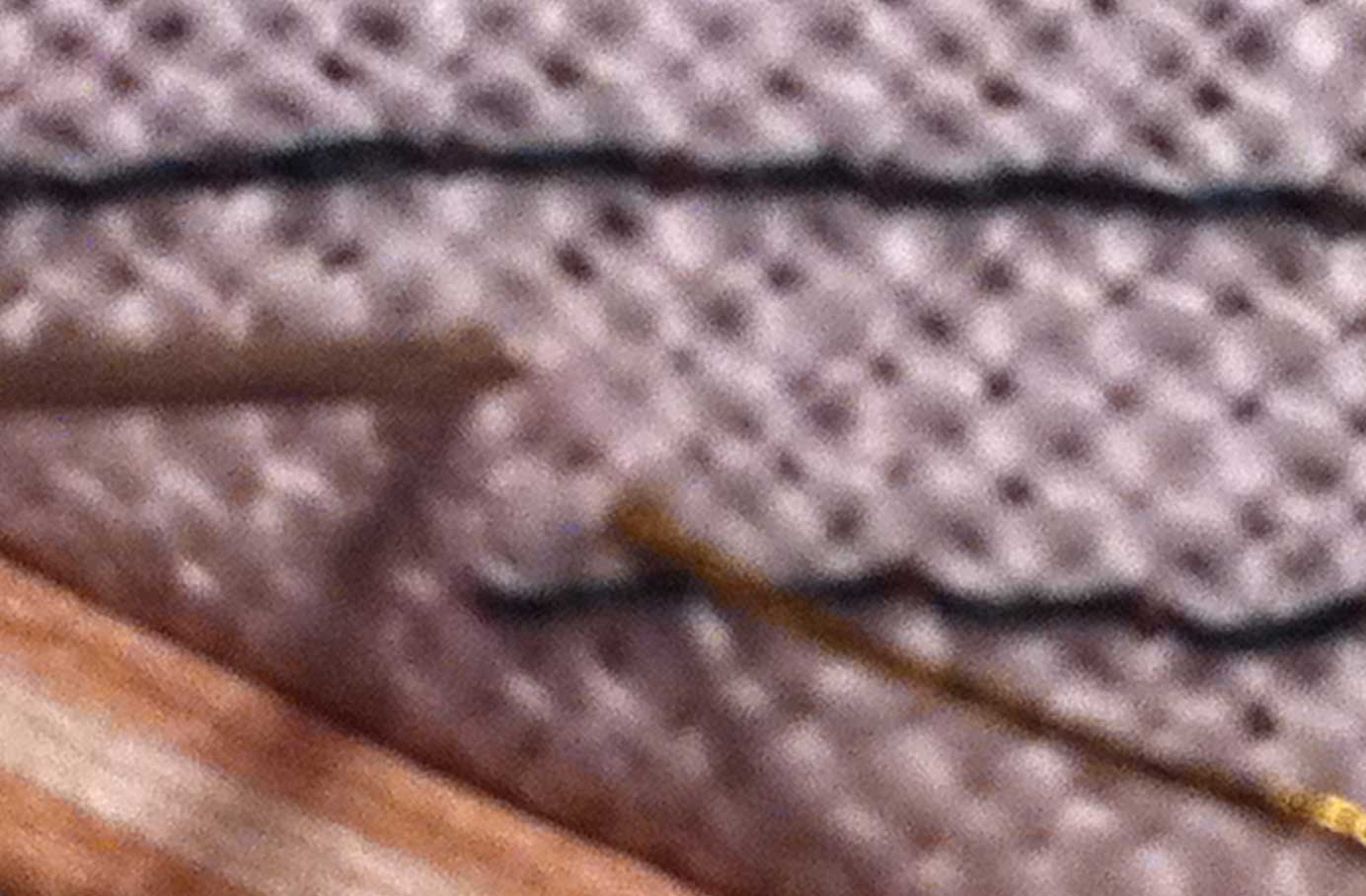
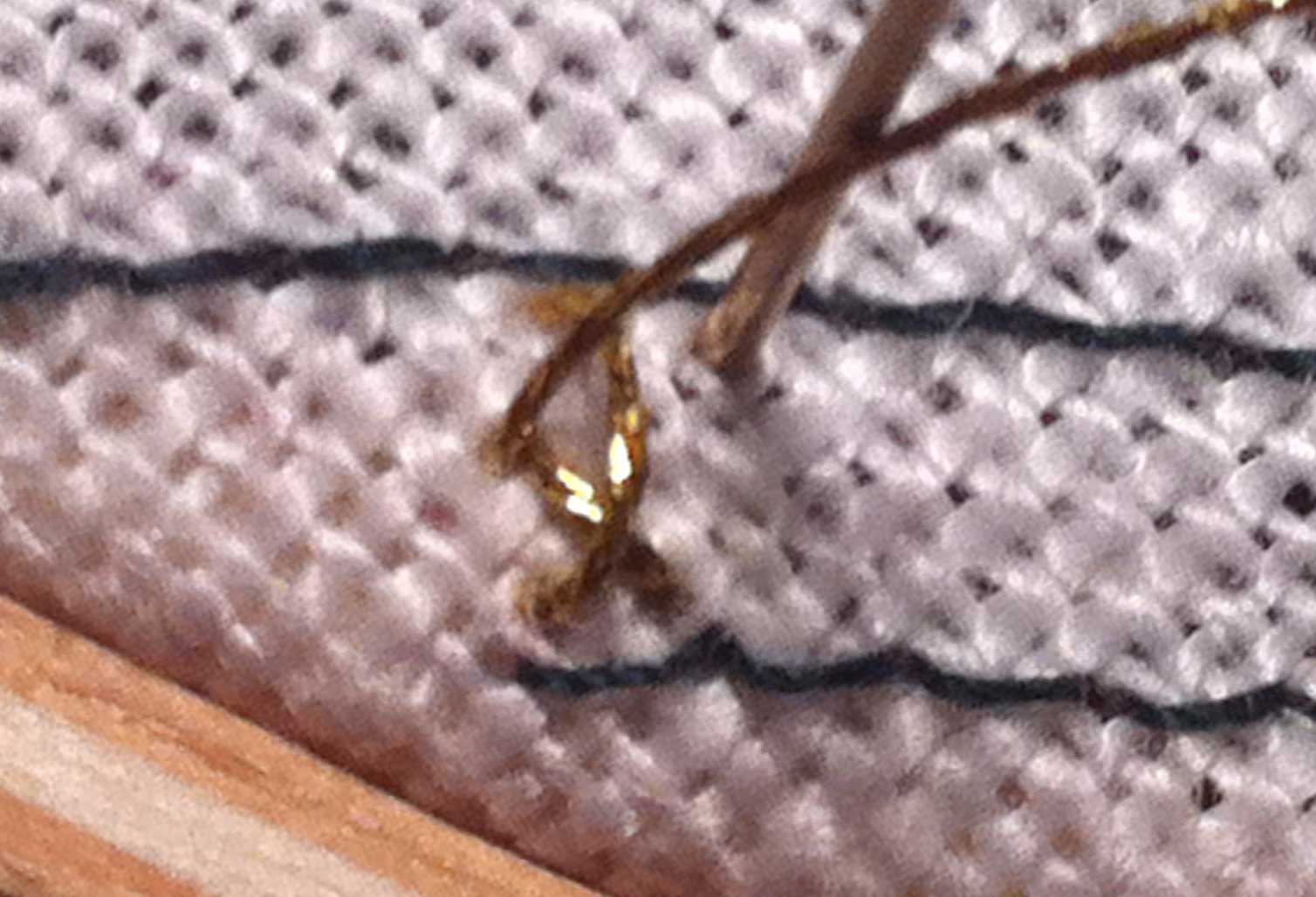
Step 8. Now, identify the the TWO crossed threads at the top of your stitch shown in this photo:

Identify your top cross

Now slide your needle under this cross, going under both threads, from bottom to top as shown below:

Step 8: Slide your needle under this cross.

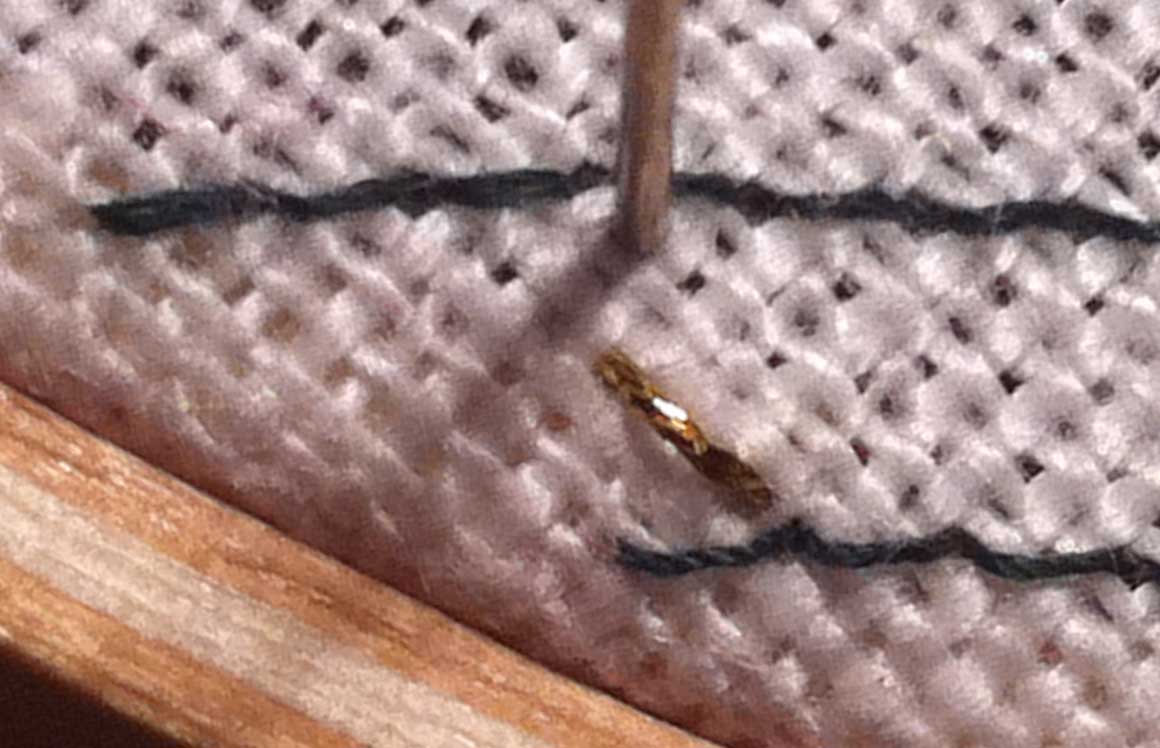
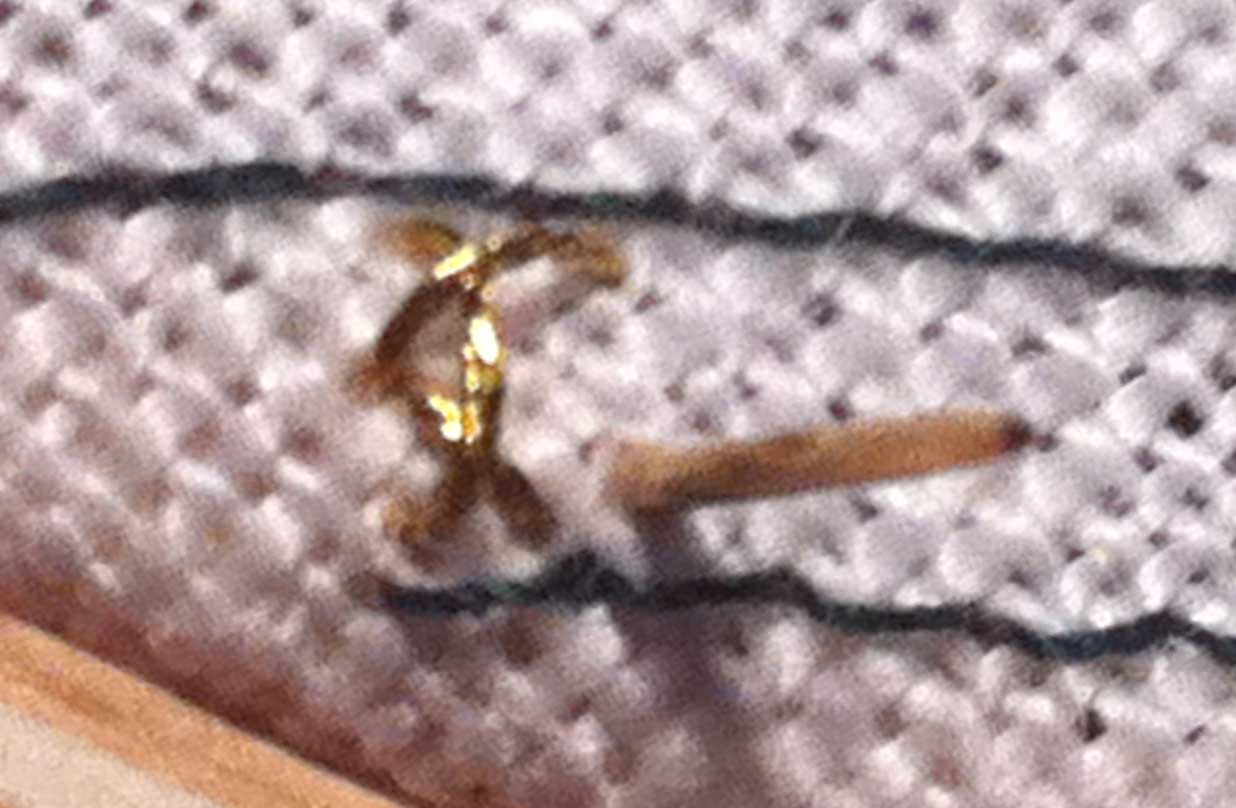
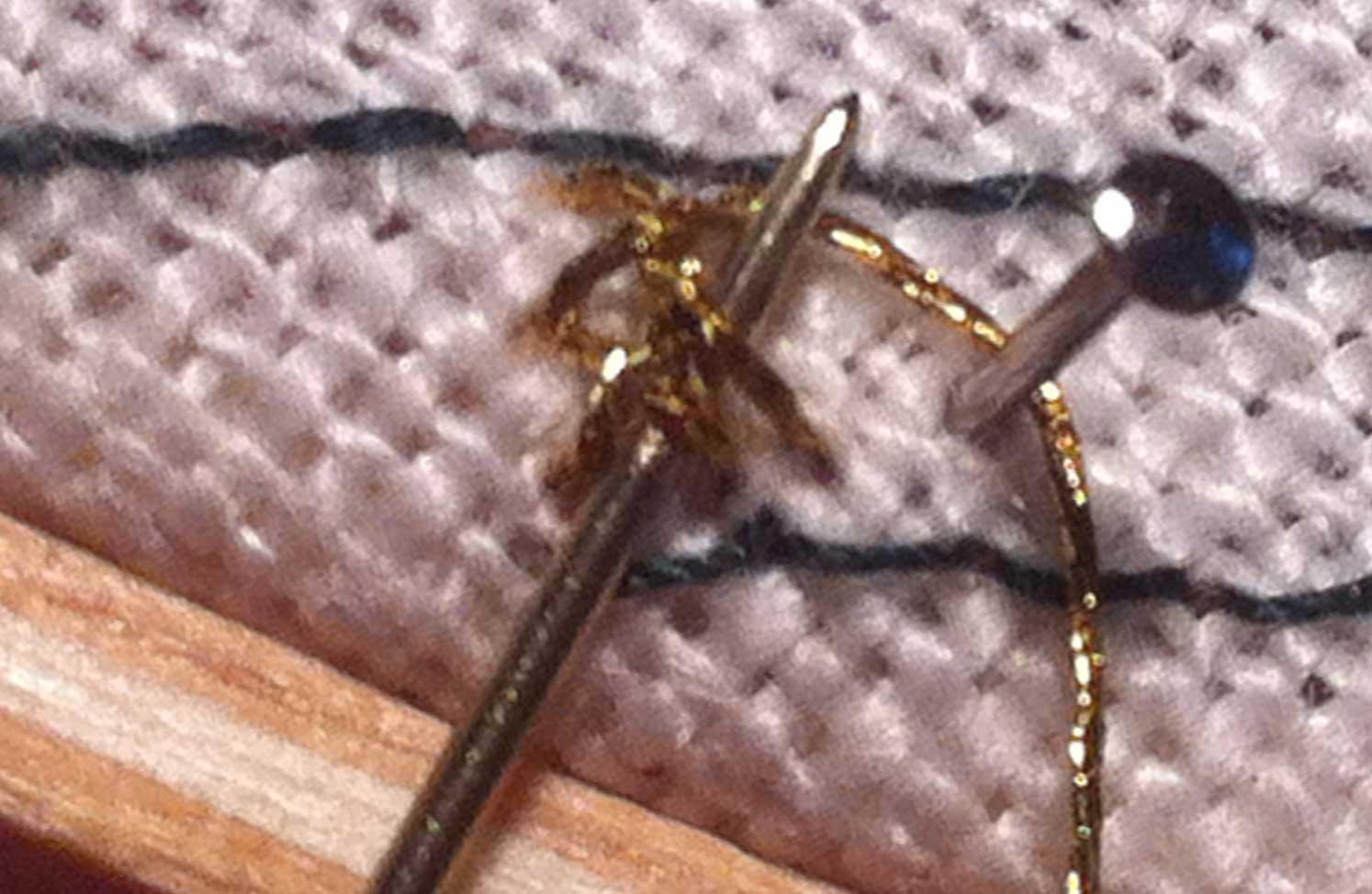
Step 9: Next, identify the the THREE crossed threads at the bottom of your stitch shown in the photo below and slide your needle through. The three threads are the very first one you created in steps 1 and 2 above, the one you made in steps 4 and 5, and the one you just made in step 8. It can be tricky to locate these three threads — you may need to move your threads around a bit with your needle. But it’s important to go under all three threads, or your stitch won’t properly braid.

Step 9: Slide under the three threads at the bottom.

Important Tip: See the straight pin sticking out in the above photo? I put that there, just ahead of my stitching, to keep the loop I create in step 9 large enough for future steps. This was the key for making my braid look good. I highly recommend using a pin when you’re getting started.


The Four Main Stitches – Step by Step

At this point, you’ve started your stitch! Now I will explain the four steps you will do immedately fter this point, over and over, to continue stitching your braid. To differentiate from the above steps, I will use roman numerals. Step X: Bring your needle down at the top left. Keep your needle in place if you’re using one. You should pull taut, though not so tight that you strain your loop.

Step X: Go down at the top left.

Step XI: Come up with your needle at the bottom left, as shown below:

Step XI: Come up at the bottom left.

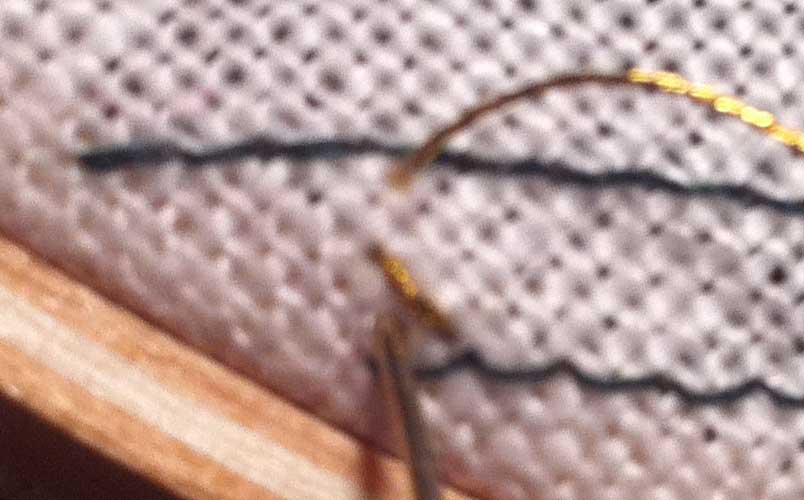
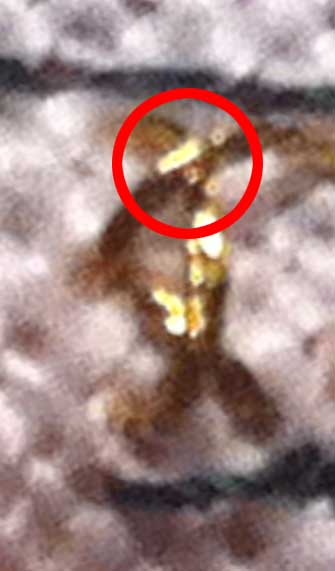
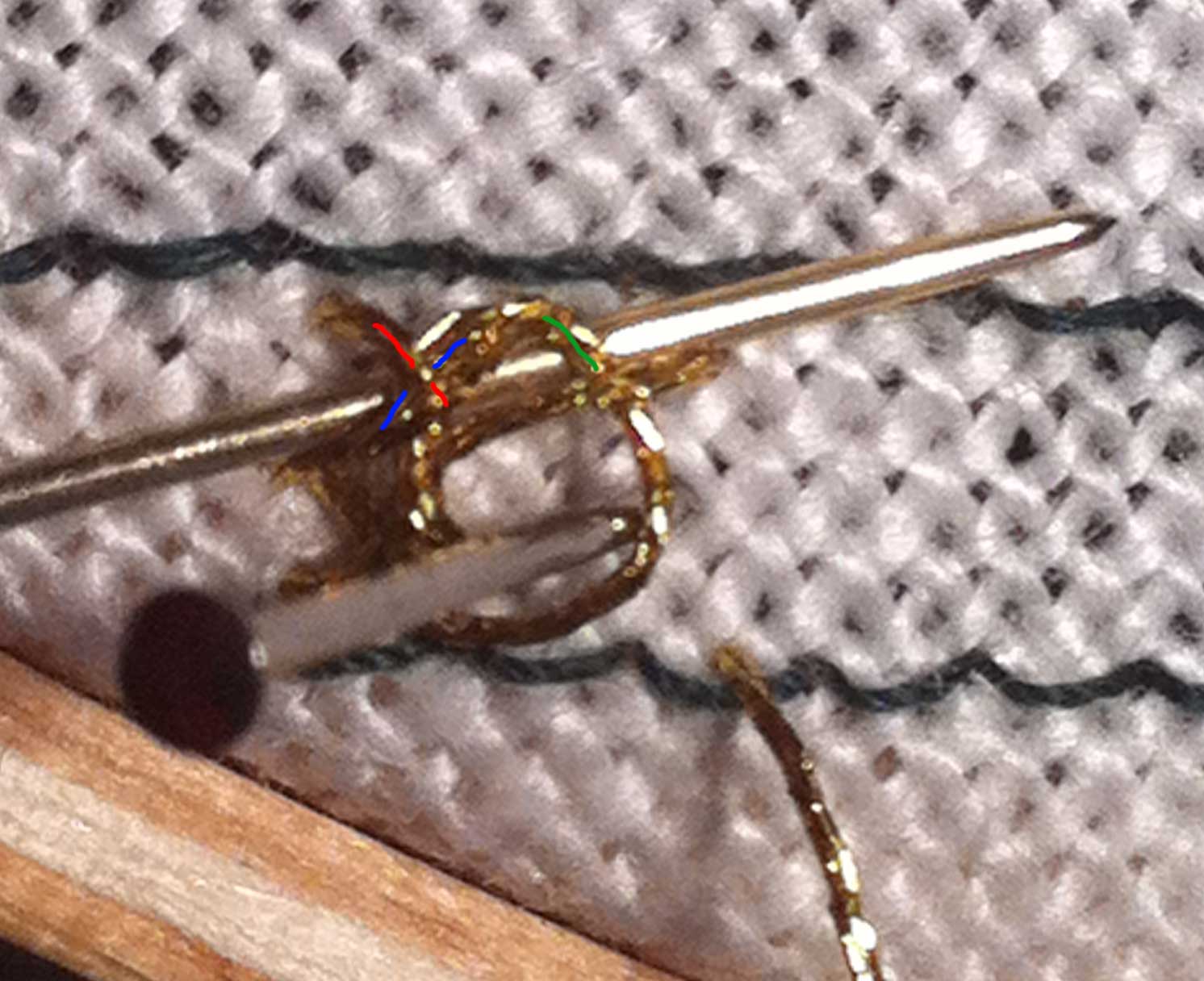
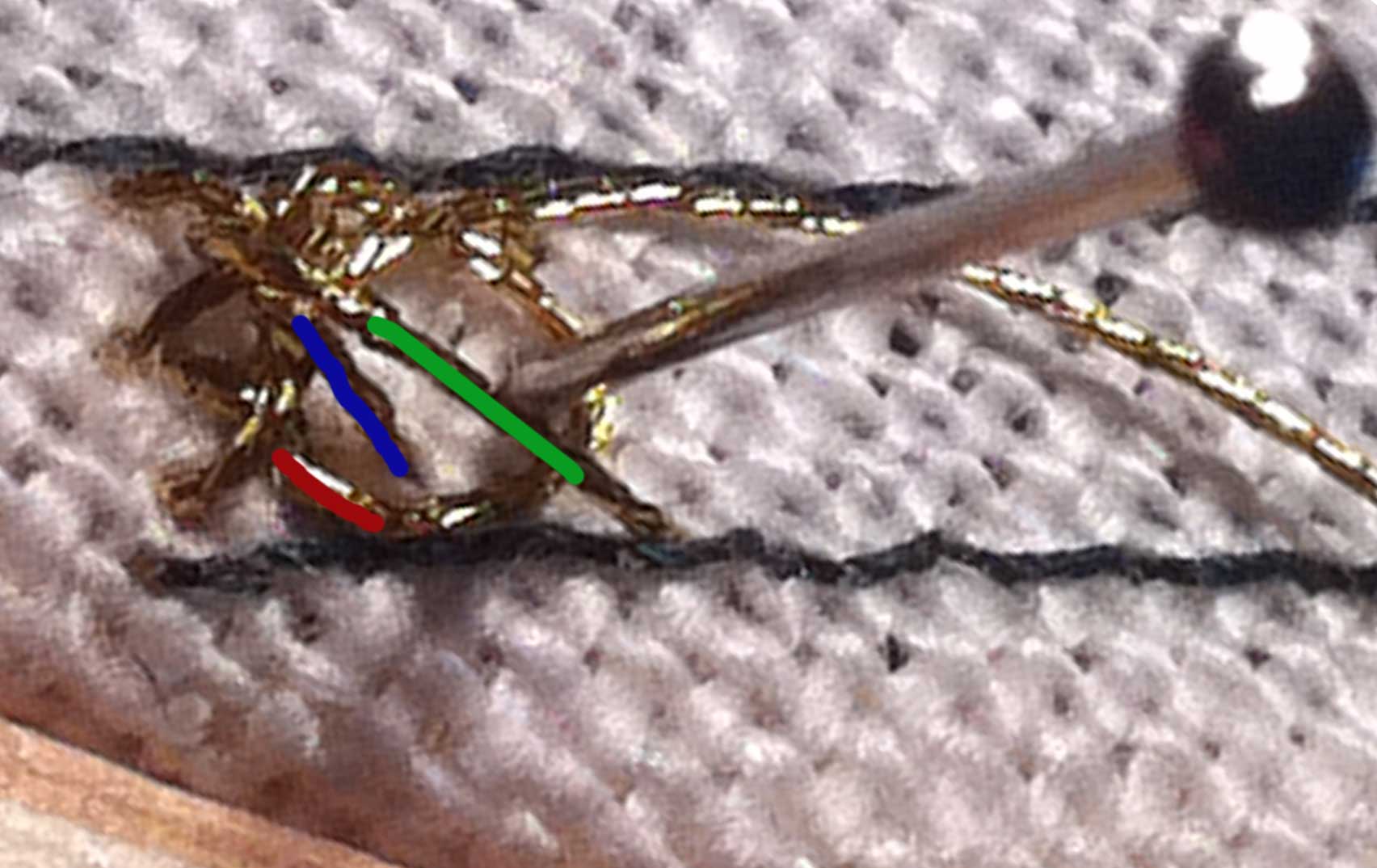
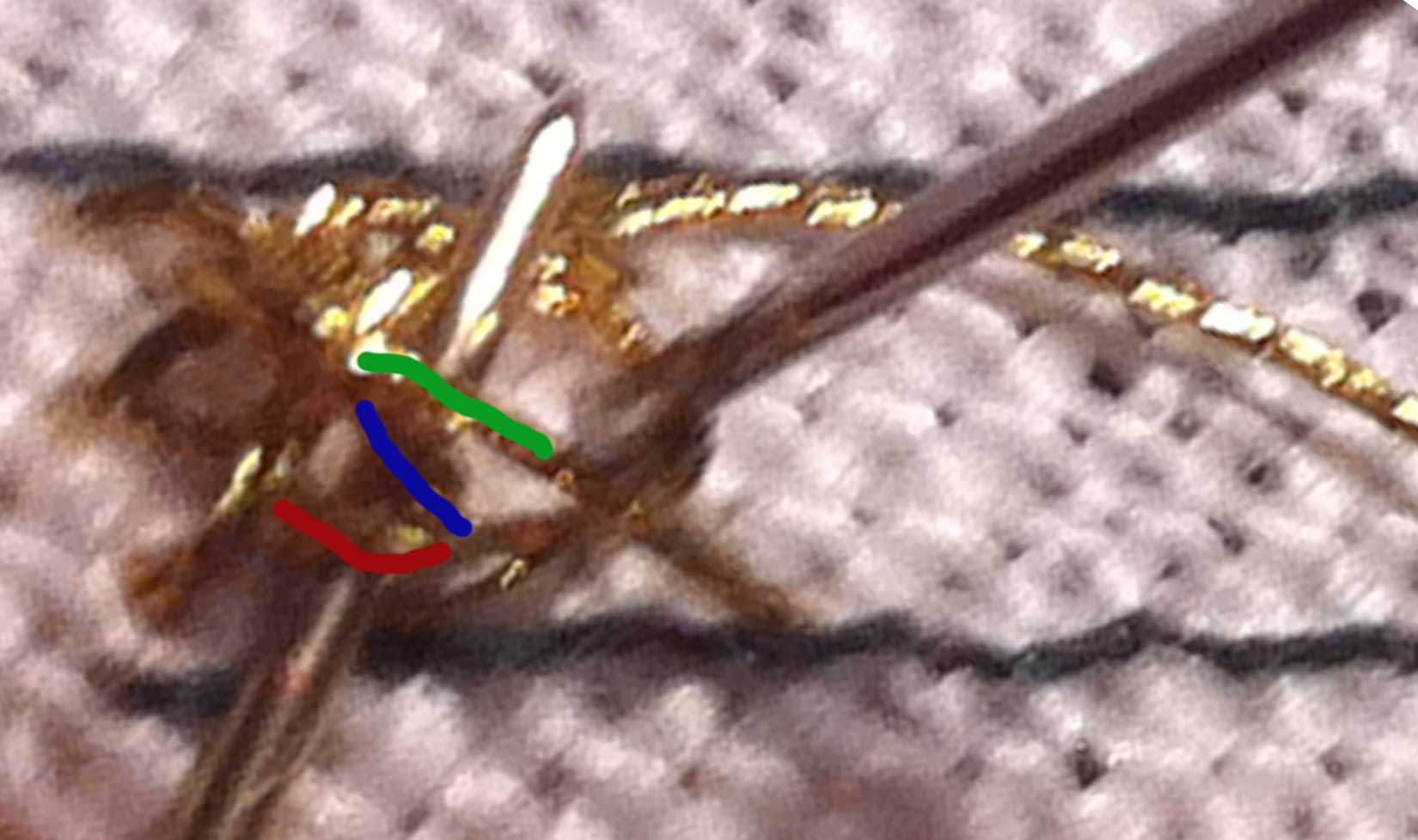
Step XII: Slide your needle through the THREE crossed threads at the top of your stitch, as shown below. To help you identify these three threads (it can be tricky until you know what to look for), I’ve colored them in the photo below (click to see it larger).

Step XII: Slide your thread under the three top crossed threads

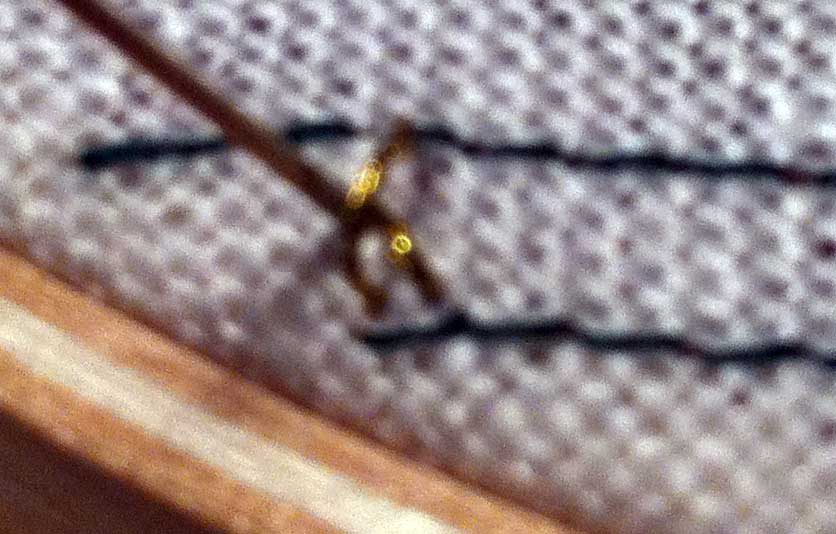
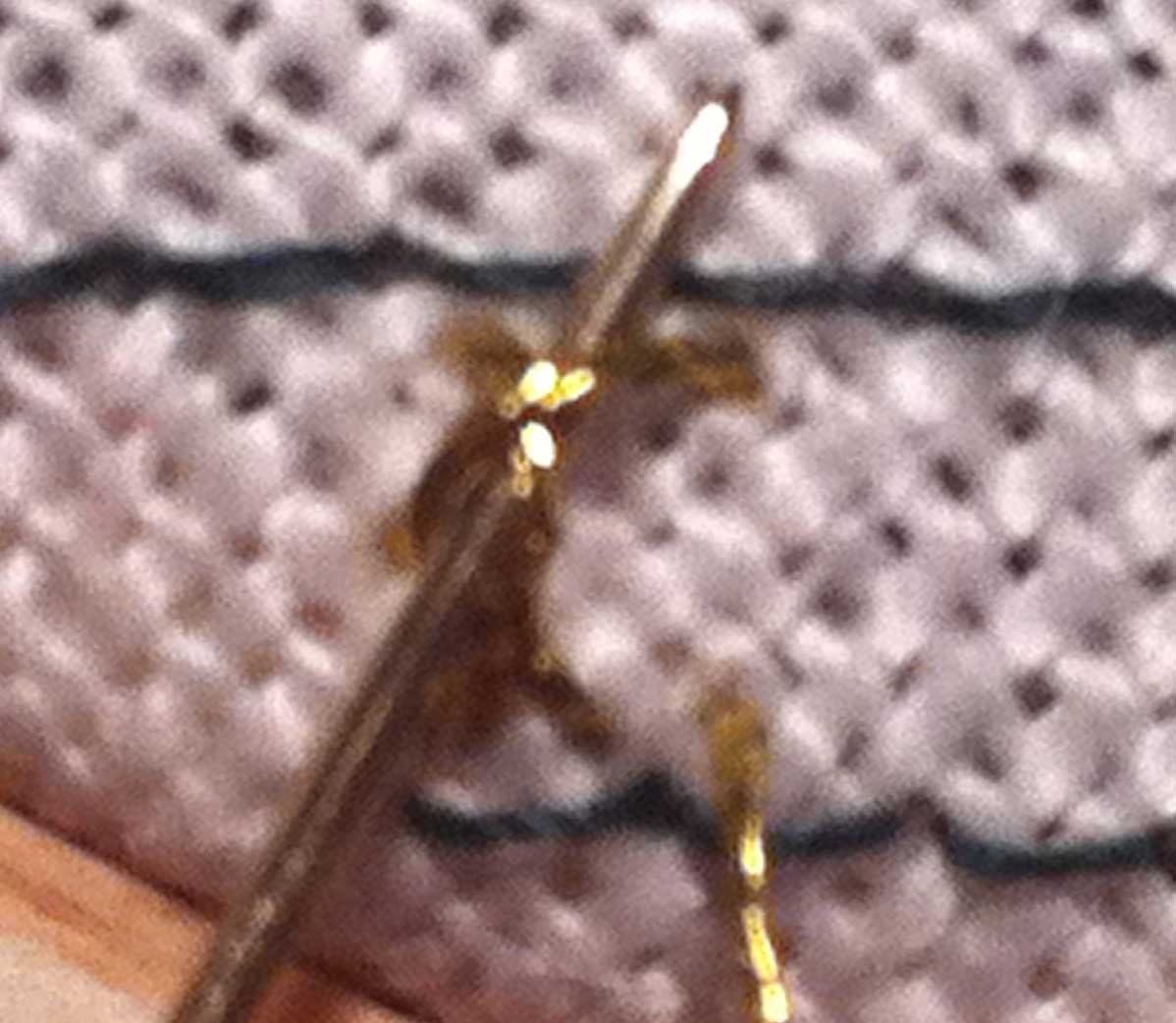
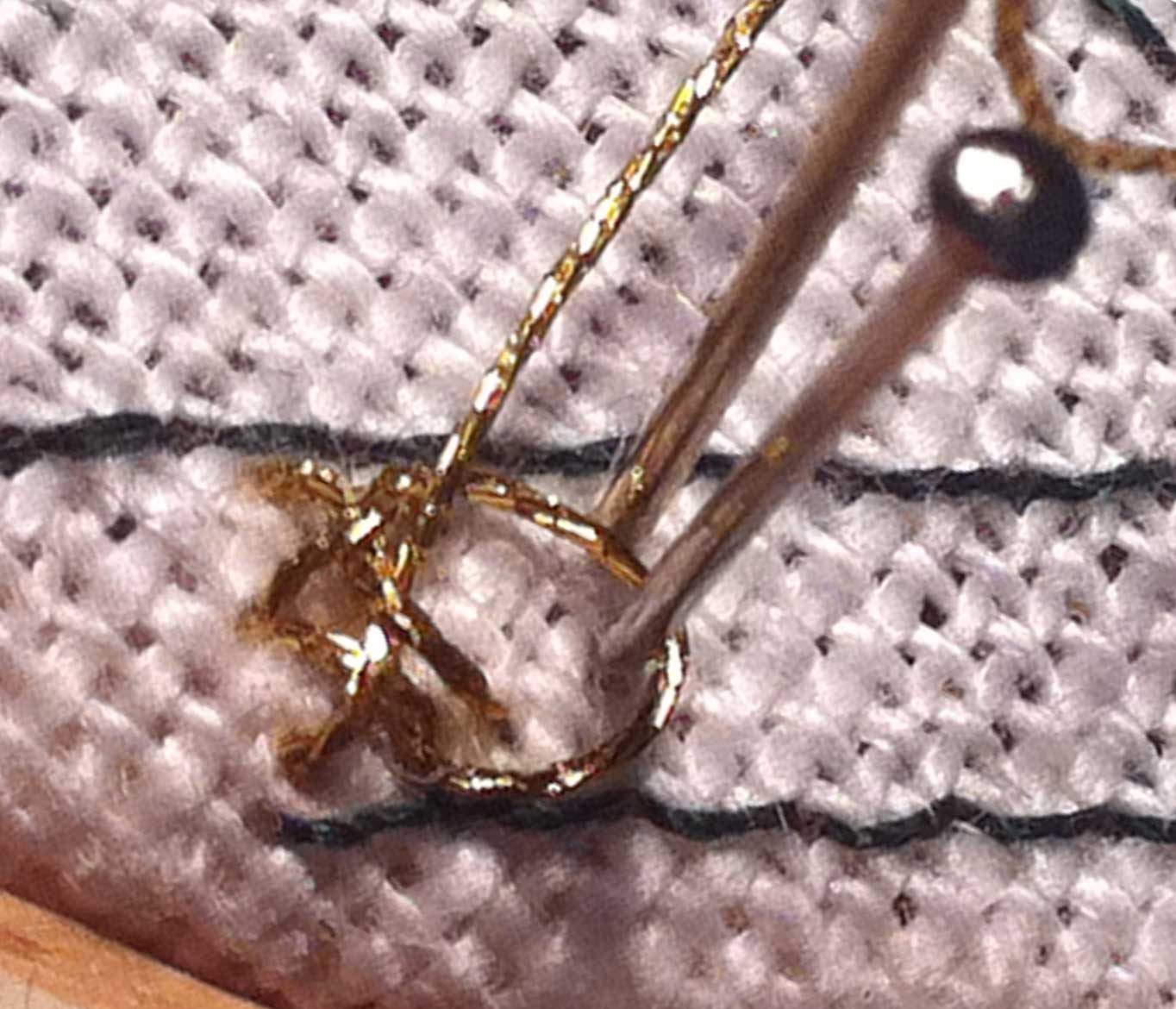
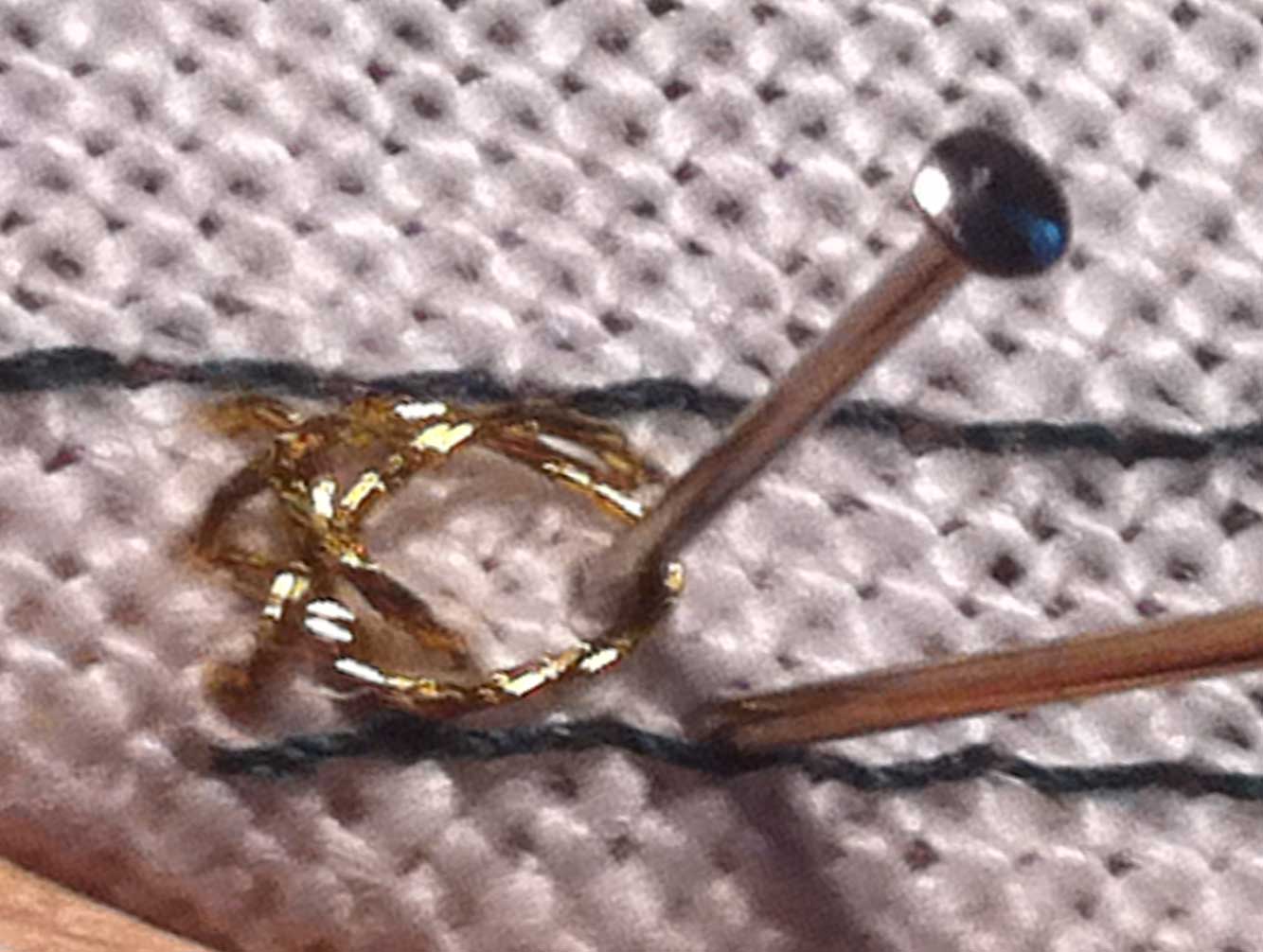
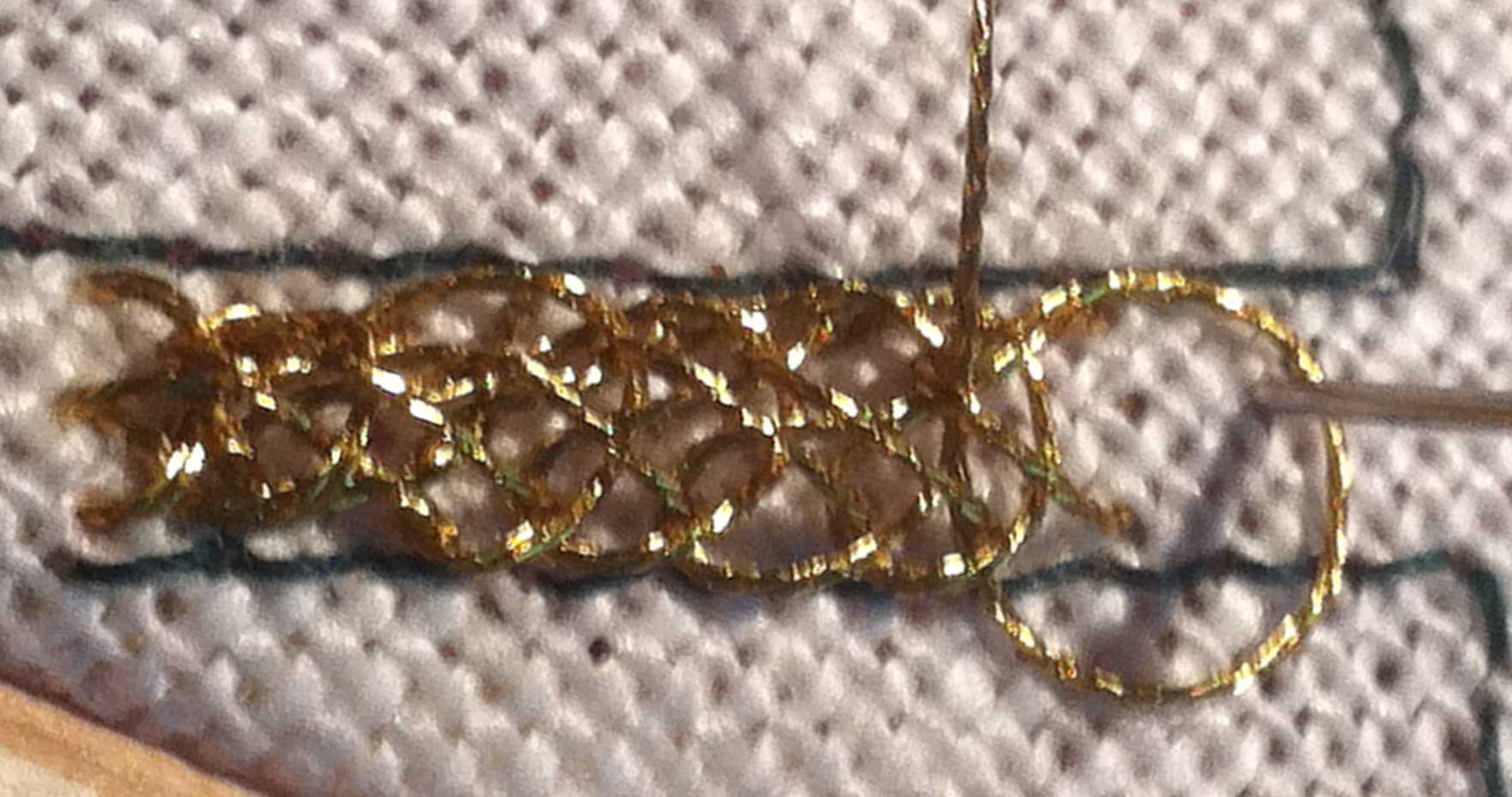
Step XIII: Bring your thread around in a loop to the right and slide your needle up under the THREE cross threads at the bottom. Again, it’s hard to identify before you get practised, and I’ve colored the three threads again. (Note: My photo came out blurry, so I’m showing you two images — one with the threads before the needle goes through, to help you find them, and one with the needle sliding through.) If you’re using a pin to keep your loop in place, you can now move it over to the left in preparation for the new loop you’ll be making in this step.

Identify your three bottom crossed threads

Step XIII: Slide your needle through the bottom three crossed threads

That’s it’. Now you just repeat steps X-XIII until you’re done! This is how it looks after several stitches:

A plaited braid!

Notes:

  • Different threads will produce different results. The thin thread used here gives a looser looking braid — the metallic thread I’m using is pretty stiff. I like this. A thicker or fluffier thread would fill the braid in more (see photo lower on this page). I have ordered more thread and will experiment with different types! A thicker, yet more flexible, metallic thread would be nice!
  • As you go along, you may notice that your most recent stitches don’t look like the older stitches, but don’t worry. They aren’t being pulled in the same manner because you haven’t braided them yet. As you continue stitching, you’ll see that things fall into place.
  • If you don’t want to use a pin (it can be cumbersome — I like to hold it with the thumb and forefinger of my left hand, under my fabric, as I stitch), you could try using your right thumb to hold it in place and to stitch with your left hand. Or reverse the stitches and go in the other direction if you’re right-handed.
  • If you run out of thread, stop after step X, knot your thread under your fabric, and slide your needle through the stitches in the back, like this:

    Secure your thread underneath

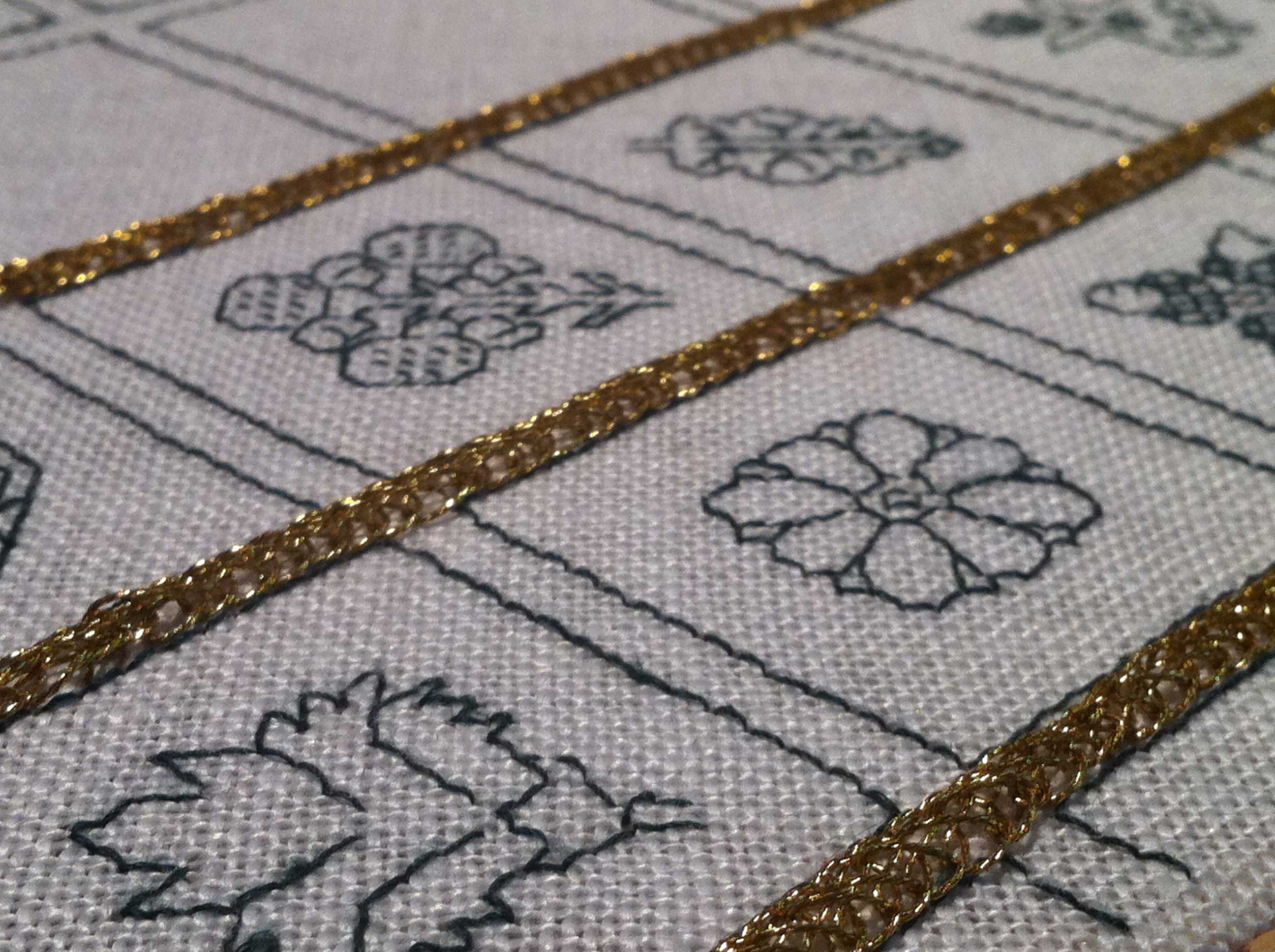
Here is what the stitch looks like when done in a thicker thread:

Plaited braid stitch in thick thread

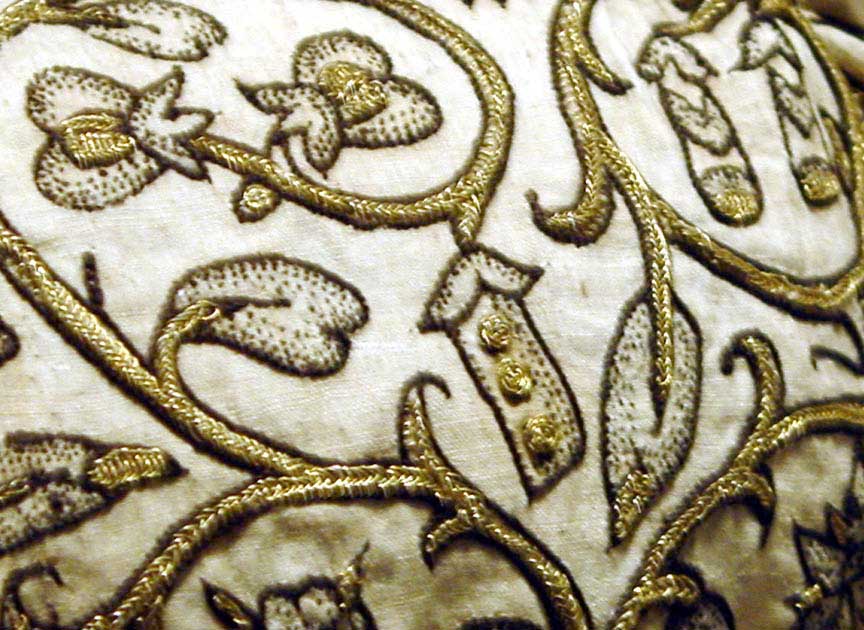
In the thicker thread, it’s easier to see that the stitch matches the one in this extant coif from the 16th century:

Coif with Gold Braid Stitching

And here is some of my plaited braid stitching on my current project:

Plaited braids on embroidered caul

Web links I found helpful while learning this stitch:

I hope this is helpful! Please let me know if you have any questions!

A Silken Standard!

5 July 2011

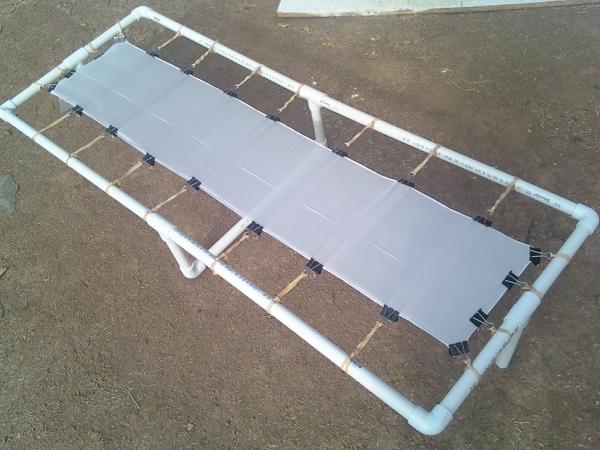
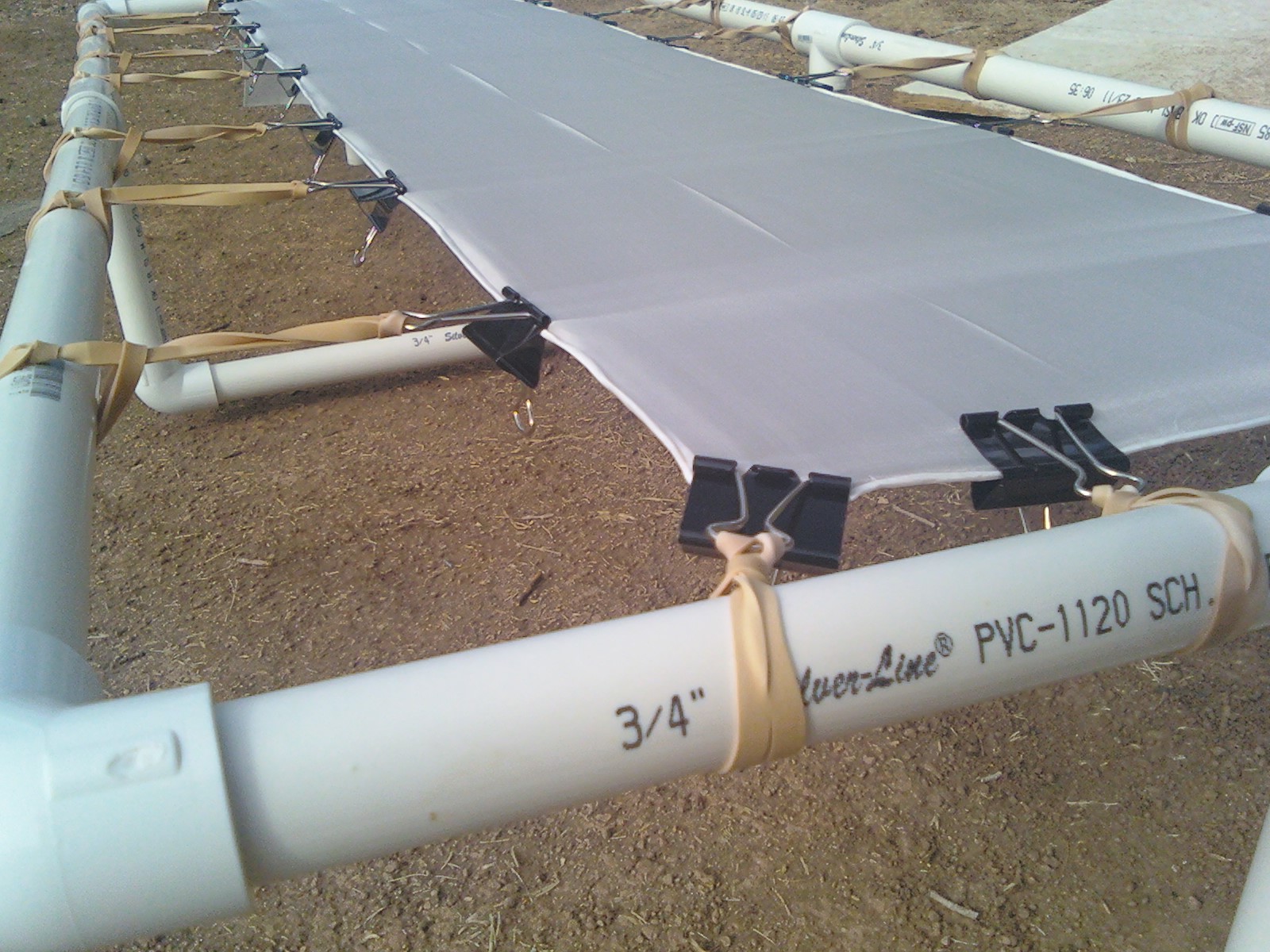
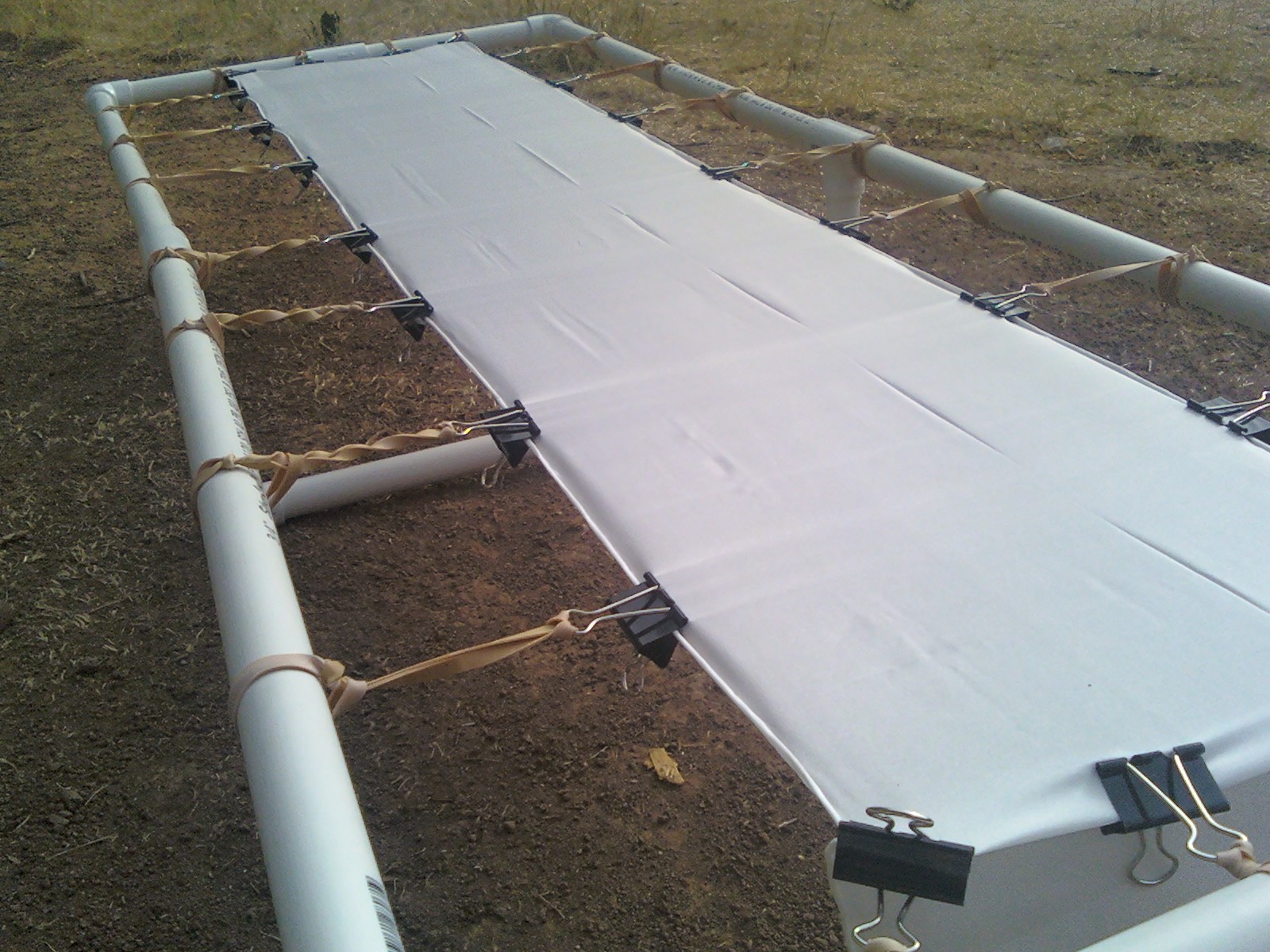
What is a medieval encampment without proud colors to fly over it? I’m to paint a pair of silken standards for Genoveva and myself and today finished a cheap “stretch-frame” so that I may begin painting this Thursday ( July 7th ). The frame is made out of 3/4″ PVC, 20 large binder clips, and lots of rubber bands… quick.. simple…cheap ( $12.00 ). Plus I can always spend another dollar and re-size the frame for other projects in the future. This will be my first attempt at anything even remotely like this and I look forward to the experience.

Note: It may look uneven now… but that’s just because I only put it together temperately for a few quick pictures (before the rains come’ith!)

Silk Standard on a Stretcher

The binder clips keep it secure

Many thanks to my good friends Charles and Kathy for the idea!


Cynnabar Fight Song

28 June 2011

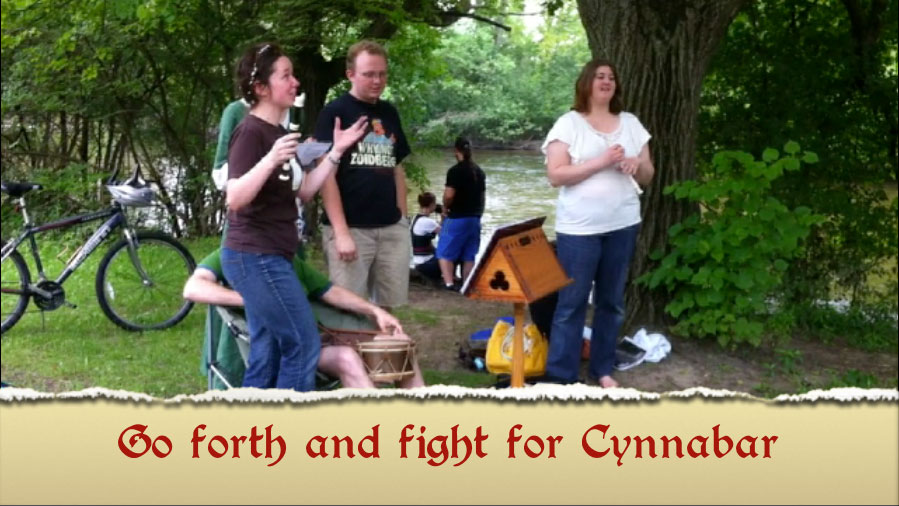
This weekend at Cynnabar fighter practice (a “Kill and Grill”) we learned the new lyrics to the Cynnabar Fight Song, as follows:


Go forth and fight for Cynnabar

Beneath the dragon’s wing

Go forth and fight for Cynnabar

For baron and for king!

Very easy to remember and quite epic! To help me remember it, and hopefully learn the rest of the fight song, I recorded it. Here’s several of Cynnabar’s talented musicians teaching us and performing the song:
 

Here are the lyrics in full:

A New Cynnabar-Style Song for Fighting
(To the tune of ‘Nonesuch’)

Red Black and White our colors fly
So proud upon our tower
They show to all who fight with us
Our courage and our valor

CHORUS:
Go Forth and Fight for Cynnabar
Beneath the Dragon’s Wing
Go Forth and Fight for Cynnabar
For Baron and For King

Our mighty giant elephant
strikes terror in our foes
Impaling knaves upon his tusks
Their meat shall feed the crows

[CHORUS]

Our sweet saint Cynnabarius
Does bless our shining steel
His relics we will bear on high
To force our foes to kneel

[CHORUS]

Our fortress shall protect the land
No rogue nor cur admit
Our Barony is great and true
It never will submit

[CHORUS]

The Dragon’s blood runs through our veins
As hot as any fire
The tide of blood left in our wake
Is rising ever higher

[CHORUS]

Approval was obtained from each of the five musicians recorded in this video (thank you!)

A Trestle Table for Under $35: How I Built a 15th-Century-Style Table for Pennsic From an Old Door and Pine Boards

19 June 2011

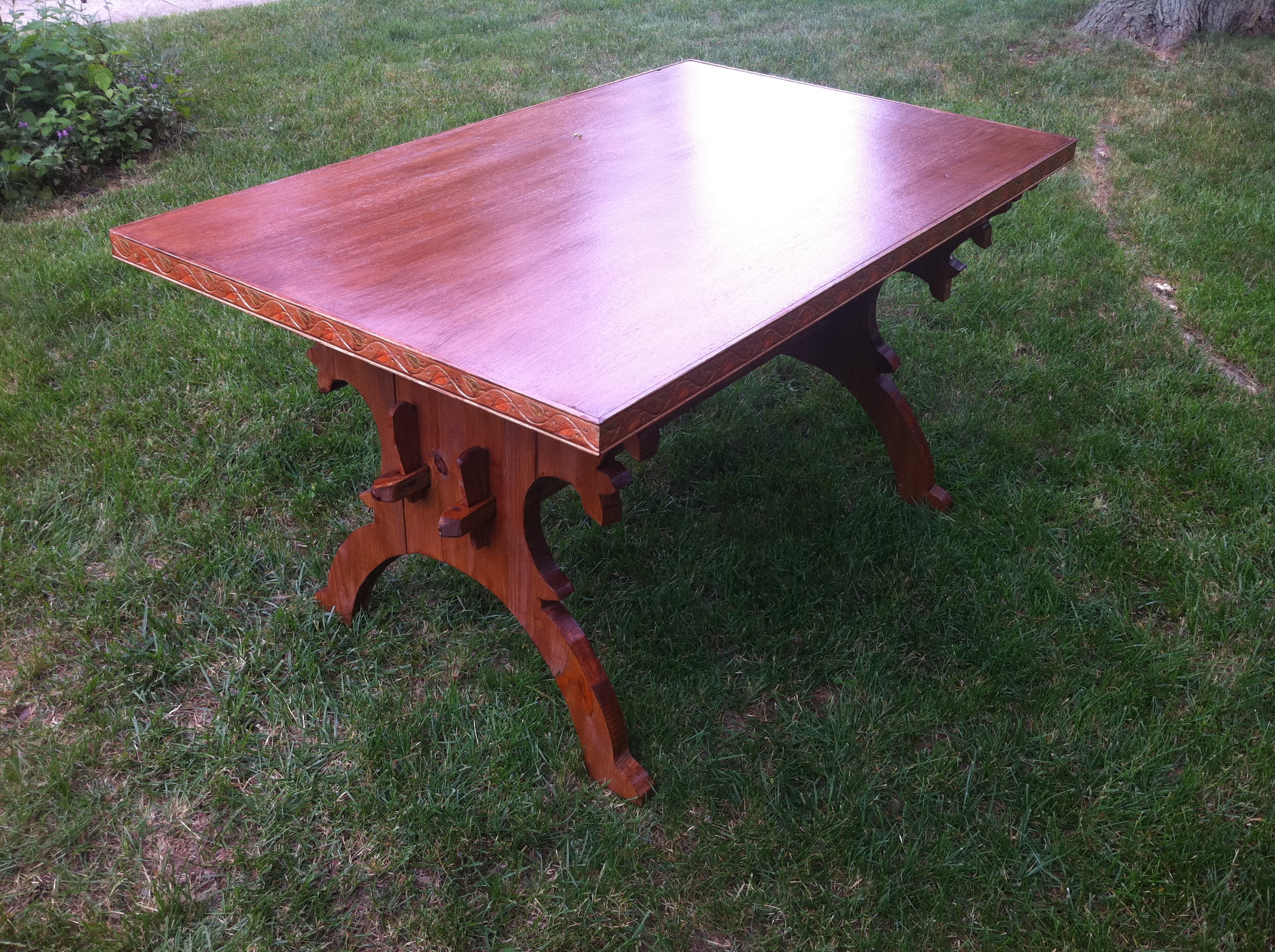
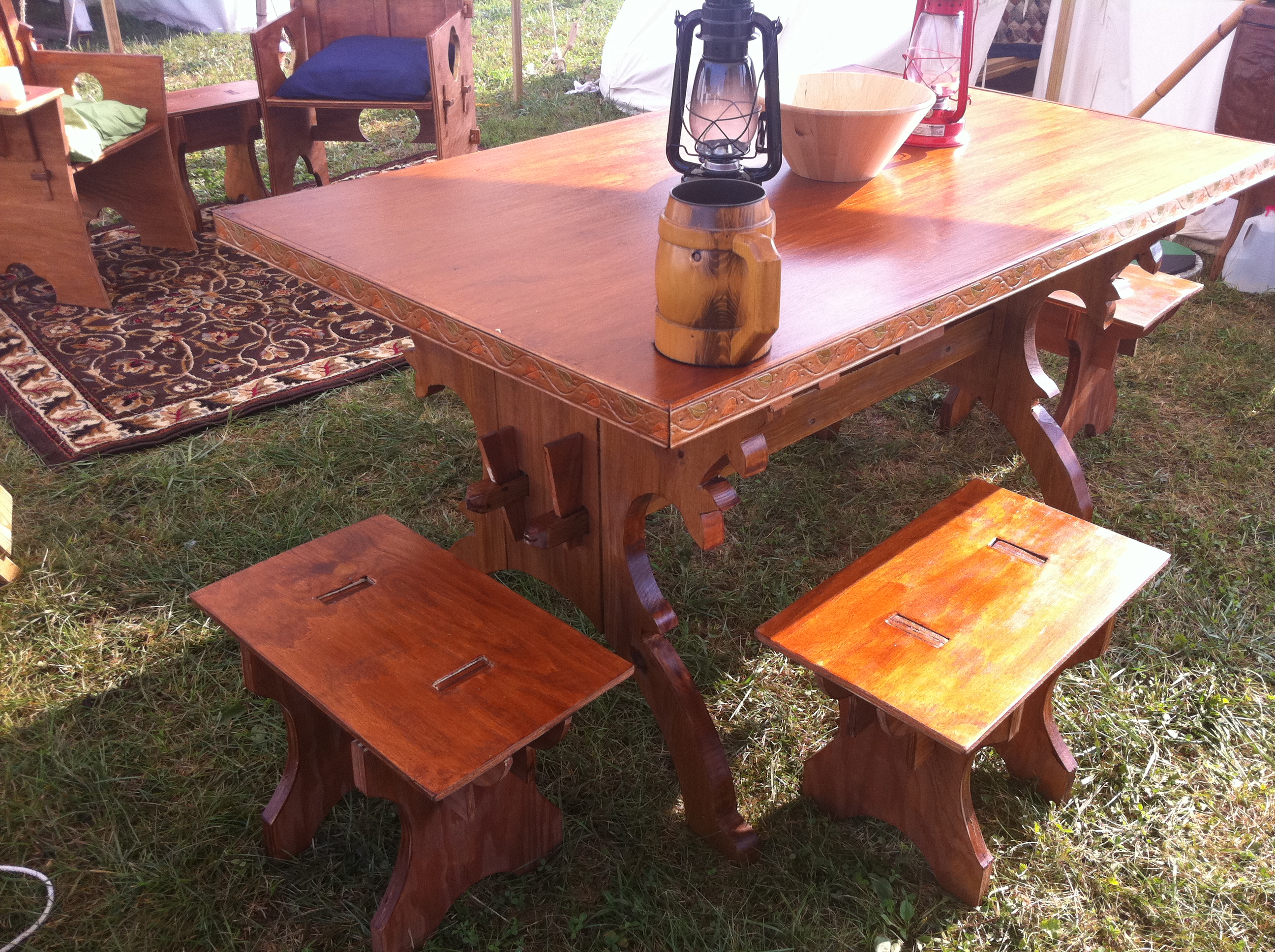
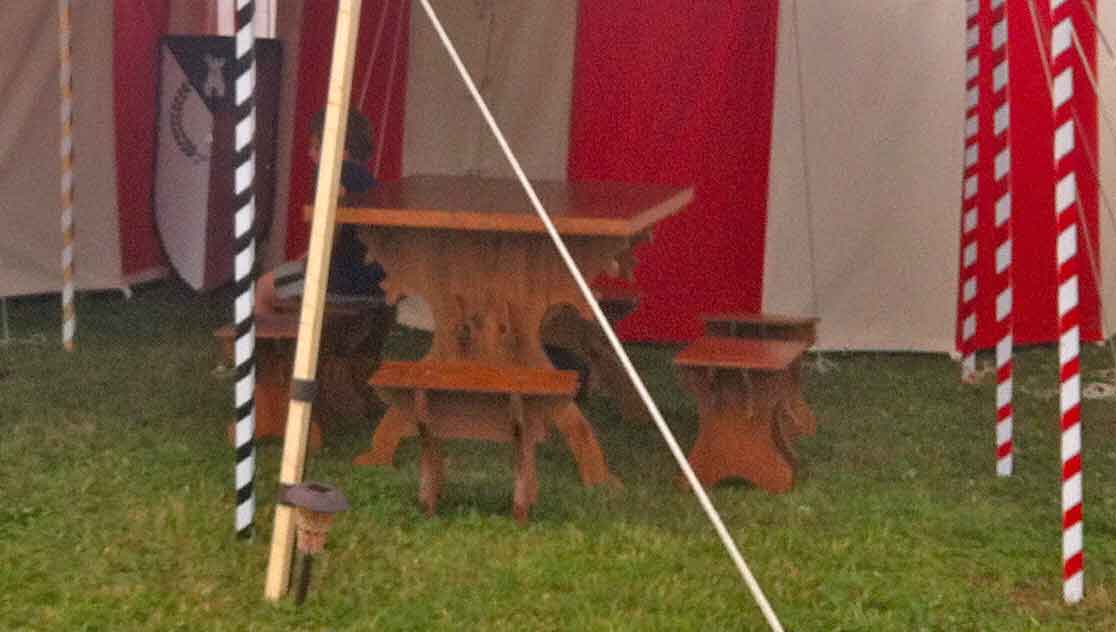
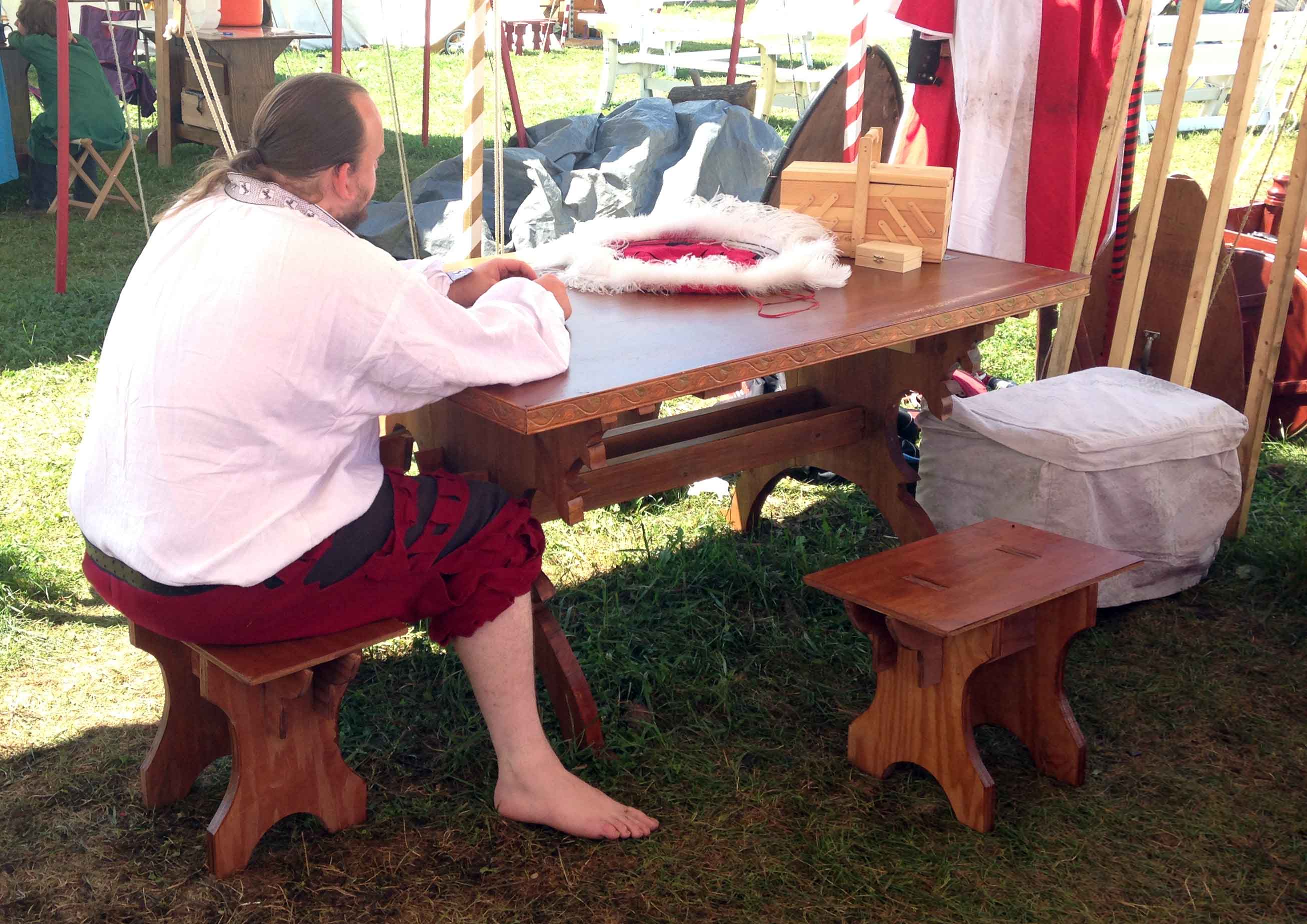
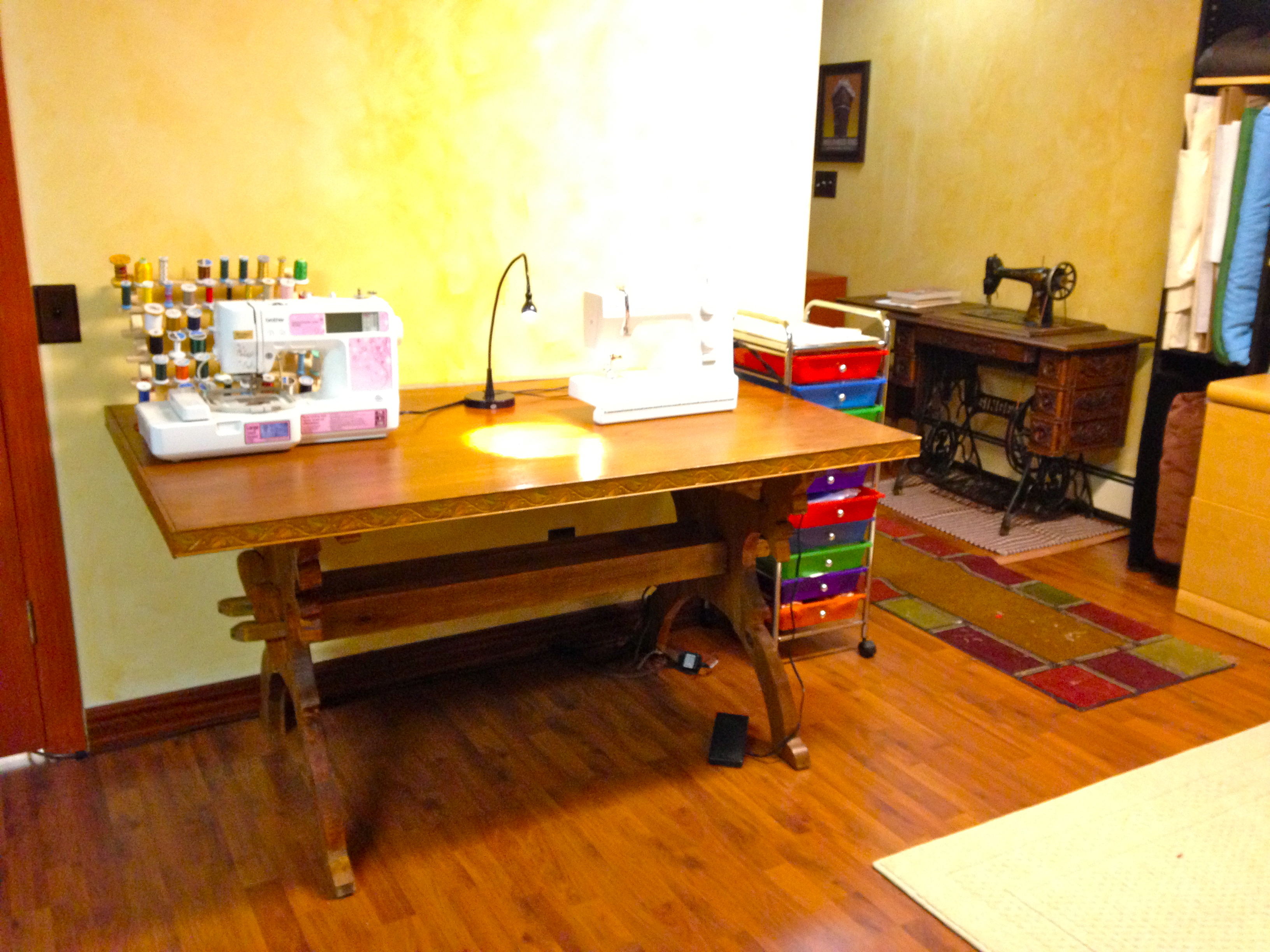
My Trestle Table

If you’re prone to dancing on tables, read no further. But if you want an authentic-looking, wooden trestle table that you can take to events, or even use as a craft table in your home, do I have some woodworking plans for you! You won’t be able to dance on this table, sure, but its lightweight tabletop is perfect for lugging about without breaking your back … or your wallet!


How did these plans come about? This year I needed a table for camping at Pennsic, but I didn’t want to spend a fortune on it. I could buy a couple sheets of plywood, but I want to use this table year-round for crafts, so I preferred something that would look nicer. Alas, oak and even select pine is really pricey — $100 and up for the project. My solution? I combined an old recycled door (for the table top) with inexpensive pine (for the legs and spacers) for a 15th-century, St. Jerome-style trestle table that comes in at under $35.
An Old Door for $5

What You Need:

  • 10 feet of 2″ x 4″ pine – $3
  • 10 feet of 2″ x 12″ pine – $10
  • 8 feet of 2″ x 10″ pine – $7
  • 1 36″ x 80″ hollow door slab – $5 at my local recycling center (or about $30 if you buy one new at Lowe’s)
  • Dowels- $1
  • 4 (four) 1″x 2″ x 8″ firring strips – $3.20
  • 1 12″ x 24″ x 1/2″ oak board – $3
  • Wood glue – $2

Total for the Table: $34.20

Optional Extras to Make Your Table Fancier:

  • Stain (Minwax Polyshades Antique Walnut Gloss) – $12
  • Moulding to put around the table edges – $20
  • Wood burning tool to make designs – $12

Equipment Used:

Jigsaw, circular saw, drill with boring bit, sander, chisel, mallet, pipe clamp, spring clamps, sawhorse, ruler, knife, permanent marker, safety goggles

Experience Required:

I’d say beginner-intermediate. I’ve only made a few things from wood (some benches, a two-step stair, some trellises), and I was able to create this table to my satisfaction.

So you may be wondering what in the Known World possessed me to use an old recycled door as a tabletop. I thought a door would be both inexpensive and light enough for me to carry on my own. I can’t very well use this table at Pennsic if I can’t even carry the tabletop to my camp site, now can I? A hollow door slab is really quite lightweight, but still strong enough to function as a great table. It’s true, no table dancing, but how often does that really happen anyway (oh, right, I’m going to Pennsic … )

A door is the perfect size for a trestle table

As for finding an old door, my local recycling center had about 50 of ‘em, all for $5-$10. I was able to find one that hadn’t ever had a door handle installed, too. And it was already stained a good color. Just needed a little dusting! You might have one hanging around the house from a remodel (or know someone who does). And I’m convinced that doing something like this is period — our ancestors recycled wood, including old doors, whenever it made sense. Wood was never wasted.

As to whether you can actually use a hollow door slab as a tabletop, yes, you can! This is a common practice among folks who need furniture on a budget, model train enthusiasts who need a place for their layouts, drafters who need a desk, and crafters who want a large workspace.

The Table Plans

So here’s how to make the trestle table — these plans are adapted from those posted by Charles Oakley and bits and pieces picked up from other online sources.

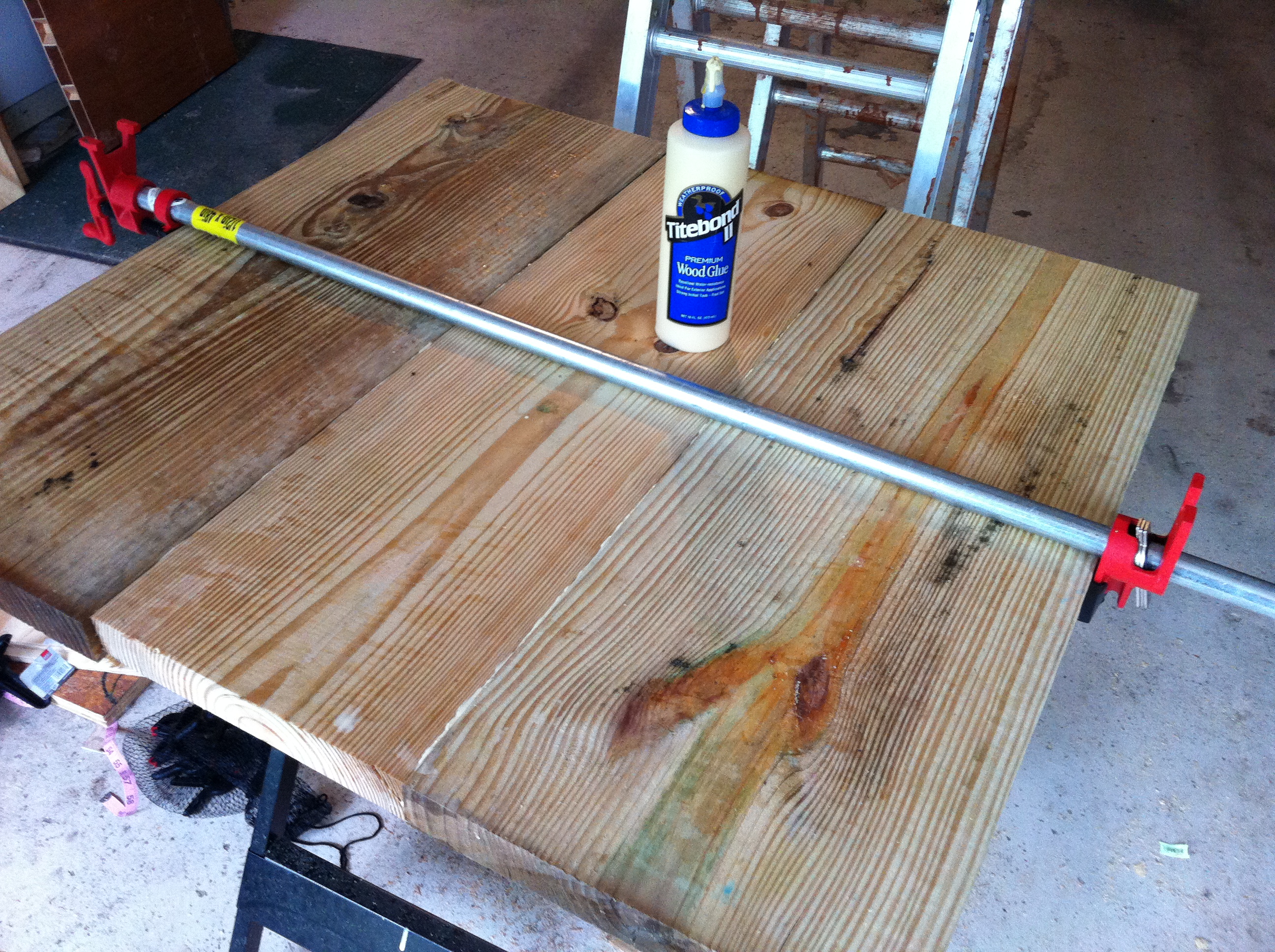
1. Join the Leg Pieces: Cut the 2″ x 12″ board into four 30″ long pieces. Cut the 2″ x 10″ board into two 30″ long pieces. Place one of the 2″ x 10″ boards on the floor or some other flat place, and flank it with two of the 2″ x 12″ boards, creating 34″ x 30″ of wood. Repeat with the other three boards. Drill holes in the edges of the boards where they meet, then insert dowels into them and glue them in place with wood clue. Clamp and allow to dry for 24 hours.

Join the wood tightly and securely

2. Size the Tabletop (Optional): If you want to use the full length of your door slab, just skip this step. I wanted my table to fit into a free space in my studio so I could use it as a craft table, however, so I’m shortening my door slab. Here’s how to do it: Measure 58″ inches on your door slab and score it with a knife (this prevents splintering when we cut it). Cut the door so it is 58″ long (I used a circulate saw). [Note: You can vary the length of your table, but be sure to change the length of your stretchers in step 3 accordingly.] Make room in the newly open end by pulling out/pushing in the reinforcements you’ll find there. Cut your firring strips to about 34″ long and place them just inside the open end of the door for support on the end, using wood glue to keep the strips in place. Clamp and allow to dry.

Plug the open end of your hollow door with strips of wood and glue

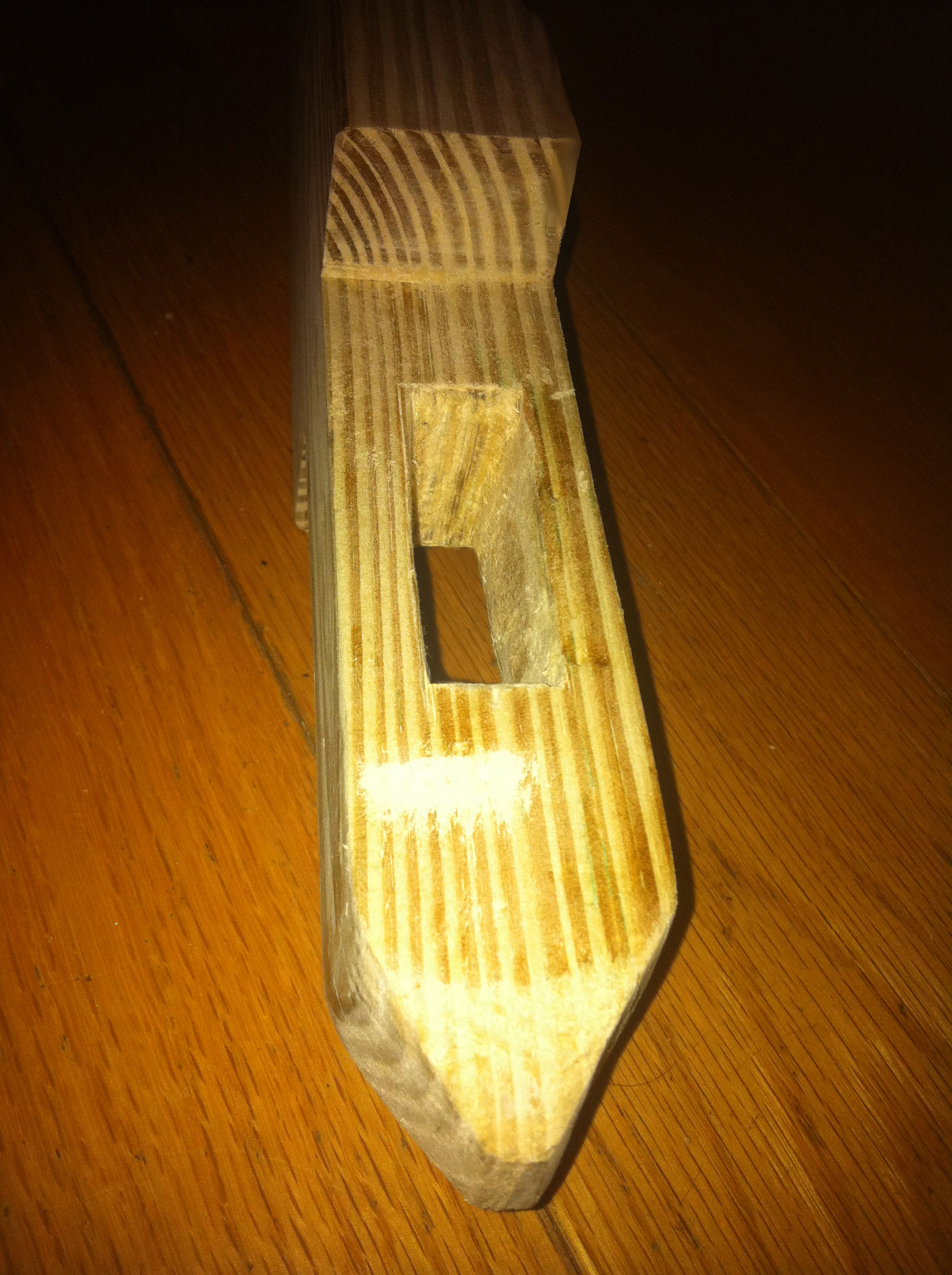
3. Create the Stretchers: Take the 2″ x 4″ and cut into two 51″ lengths (shorten or lengthen this if you have a shorter or longer table than me). Trim the end of each spacer according to the diagram below. To create the mortise (the hole in the end of the stretcher), use a boring bit on your drill to drill in two places (either end of the bit of wood you want to remove), then use a jigsaw and/or chisel to remove the extra wood and smooth it down.

Cutting the ends of the stretchers

Mortise in the end of a stretcher


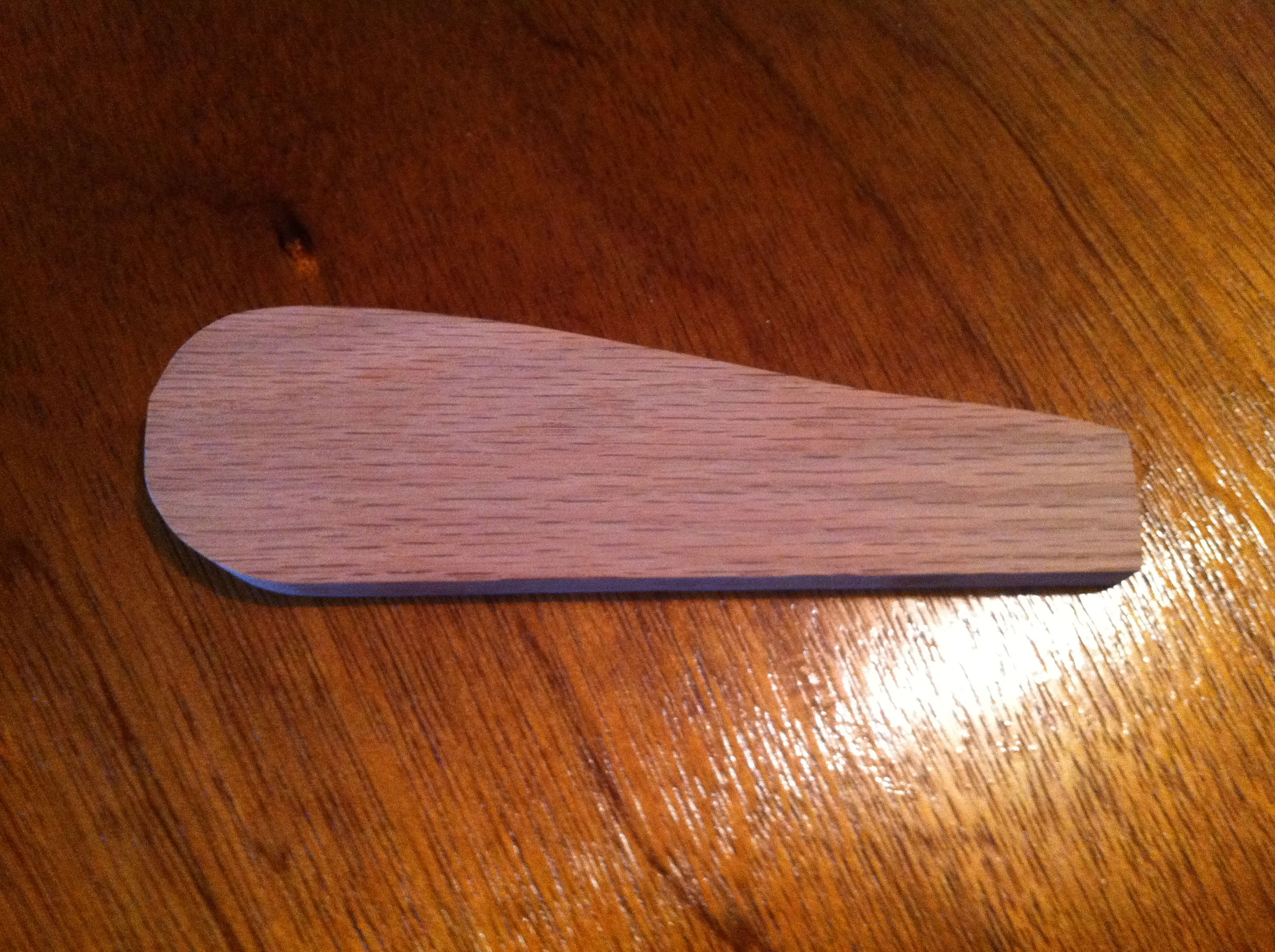
4. Create the tenon keys. The tenon key is the tapered bit of wood that will fit into the mortise and hold the legs and stretchers in place). You need four of them. Use the oak board (or just leftover pine) and cut the board into two 4″ x 7″ x 1/2″ pieces, then cut each of those boards diagonally in half and round the ends. Each key should be 1″ at the bottom and about 3″ at the top. You can this diagram (PDF file) to cut your tenon keys: trestle-table-tenon-key.pdf

One of the tenon keys

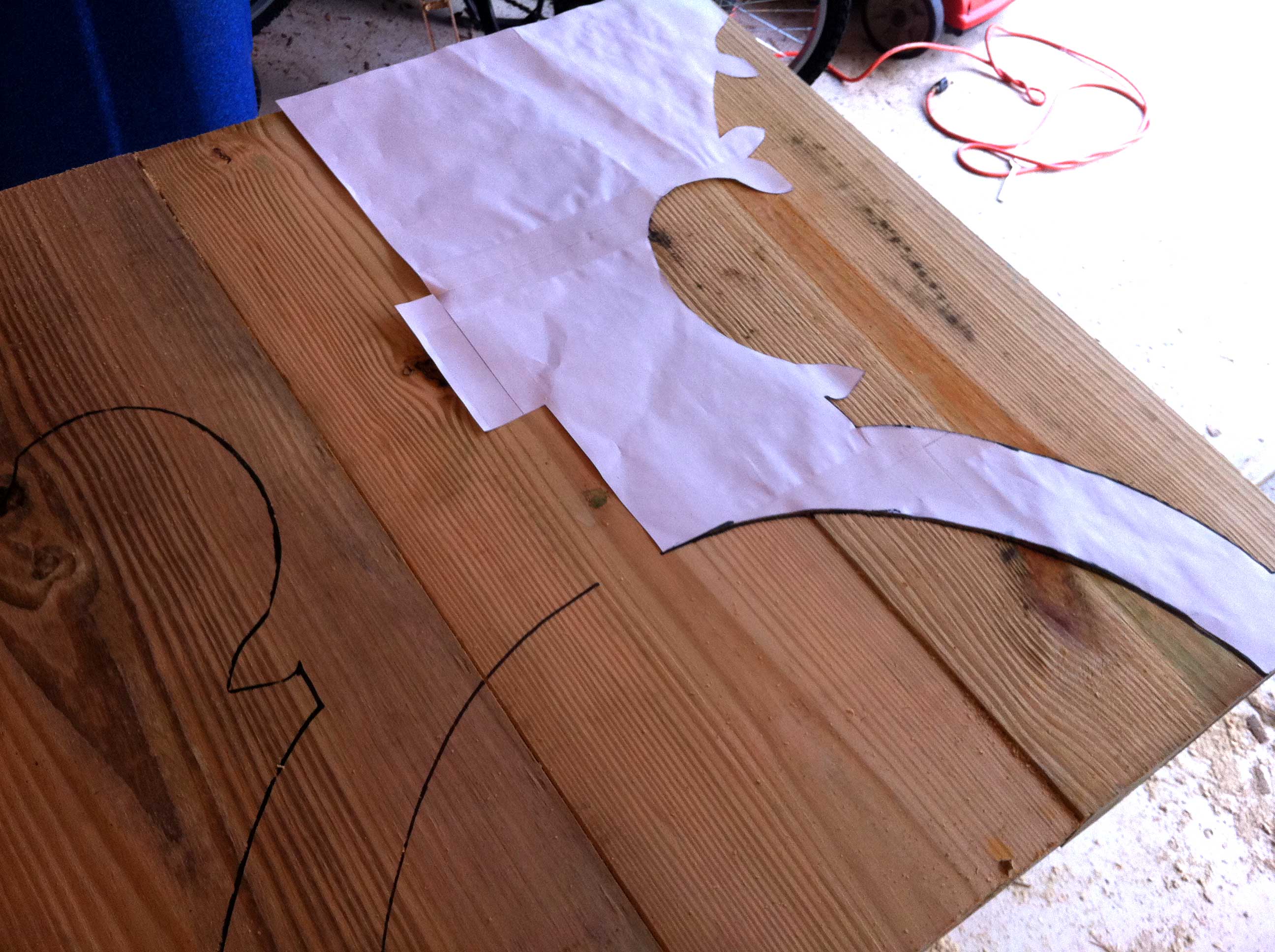
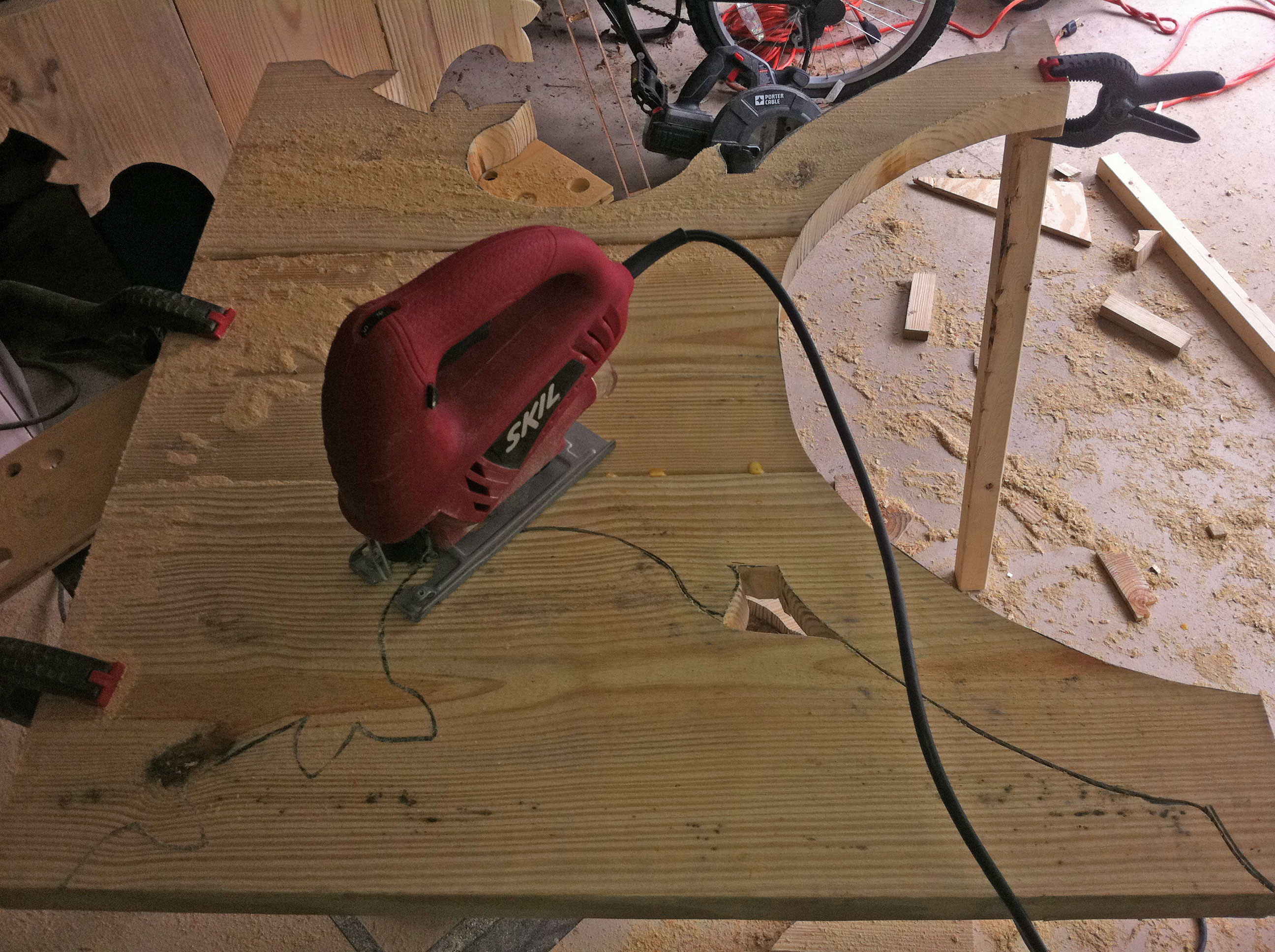
5. Cut away the extra wood in your table legs once the wood glue has dried (wait at least 24 hours). Here is the diagram I used for my table legs. I drew the pattern in Adobe Illustrator, printed it out tiled, taped the pages together, cut it out, and drew the pattern onto my wood. Just flip the pattern over to do the other side of the wood. Here’s the pattern I used in a PDF: trestle-table-leg-design.pdf

Marking my pattern on the wood

Cutting out the design on the legs

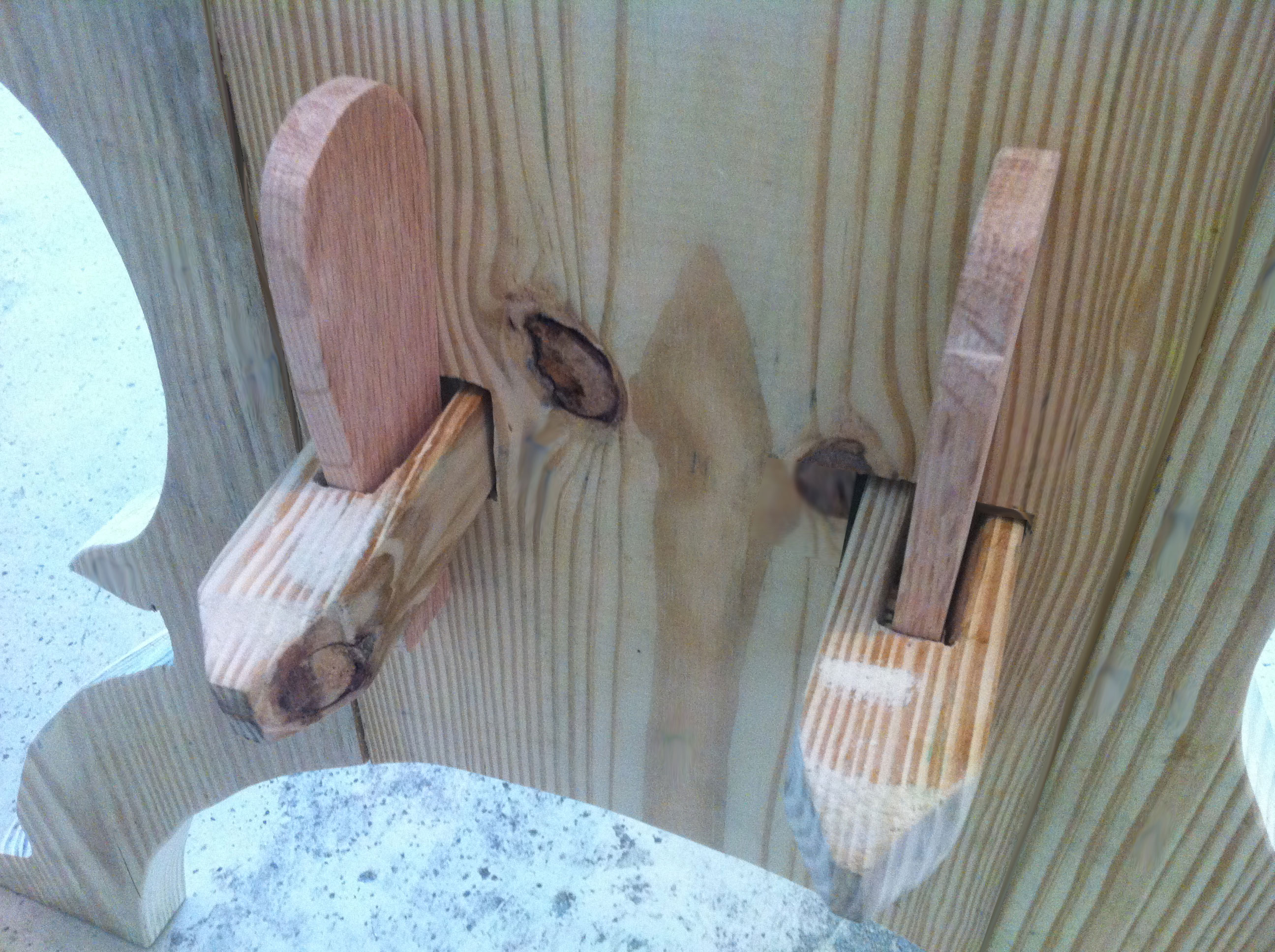
6. Assemble your table legs, stretchers, and tenons. Now that everything is cut out, put your table legs and stretchers together. You may find that some tenons don’t quite fit in some mortises, and now is the time to narrow/widen as necessary. Once it’s all put together just the way you like, take a permanent marker and write indicators on each board so you now how to assemble it quickly and easily next time.

Assembled legs with tenons firmly wedged in mortices

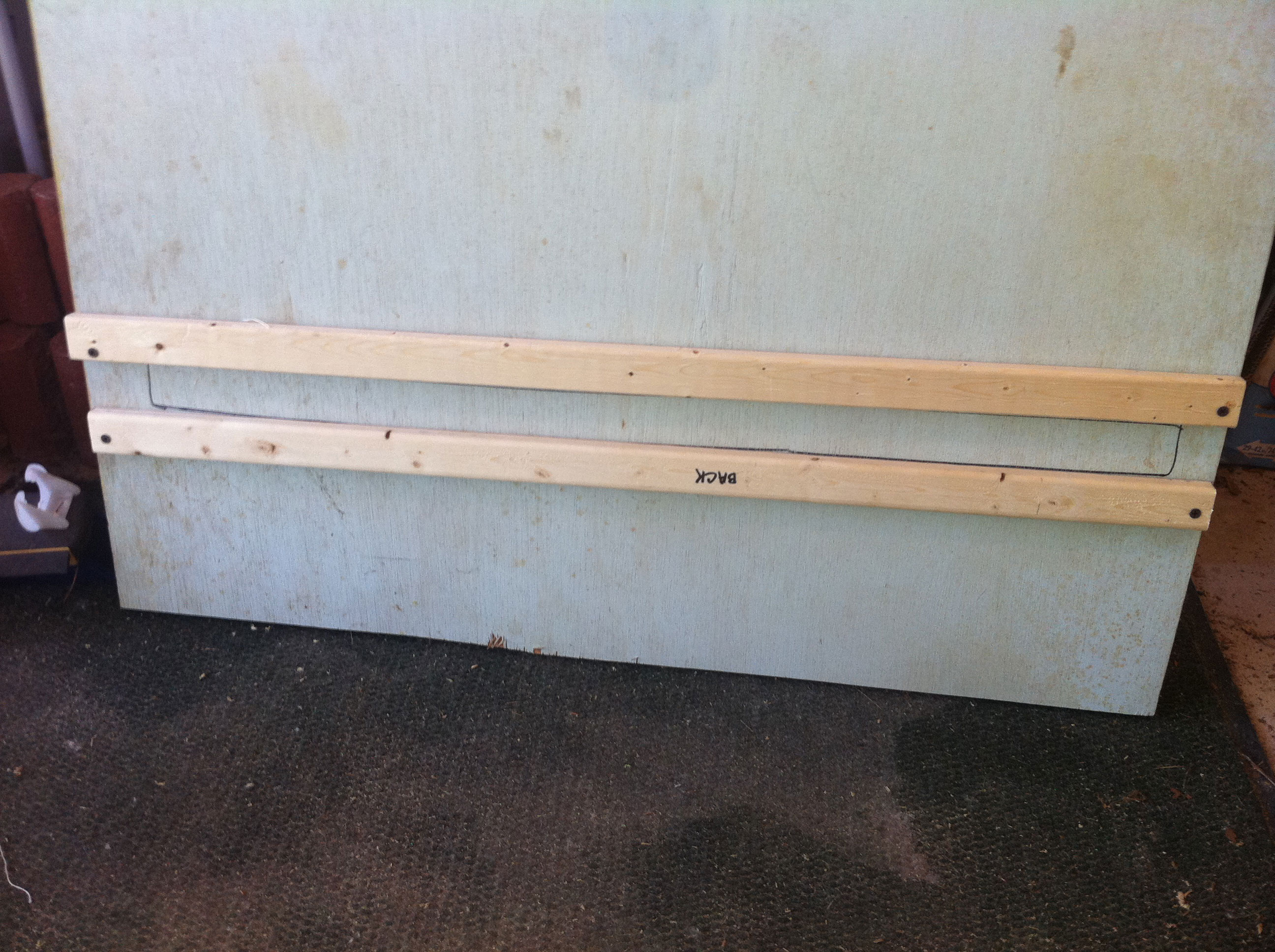
7. Attach tabletop anchors. As the tabletop is so light, I want to avoid actually attaching the tabletop to the legs, just in case the legs were a bit too heavy for it when it was picked up or otherwise moved. So I attached simple 1″ x 2″ boards to the underside of the table, on either side of where the legs meet the table, to hold the table in place and prevent it from moving about when used. I attached the boards to the very sides of the door, where it is solid, for the most secure hold — and this has the added advantage of strengthening the underside of the door a bit. Now the tabletop just rests on top of the legs, but doesn’t slide or move thanks to the anchor boards. (Note: If I find the tabletop moves or tilts during use, I’ll simple drill holes through the anchor boards and into the top of the legs, then slip a dowel through for stability.)

Anchor boards attached to the underside of the door/tabletop

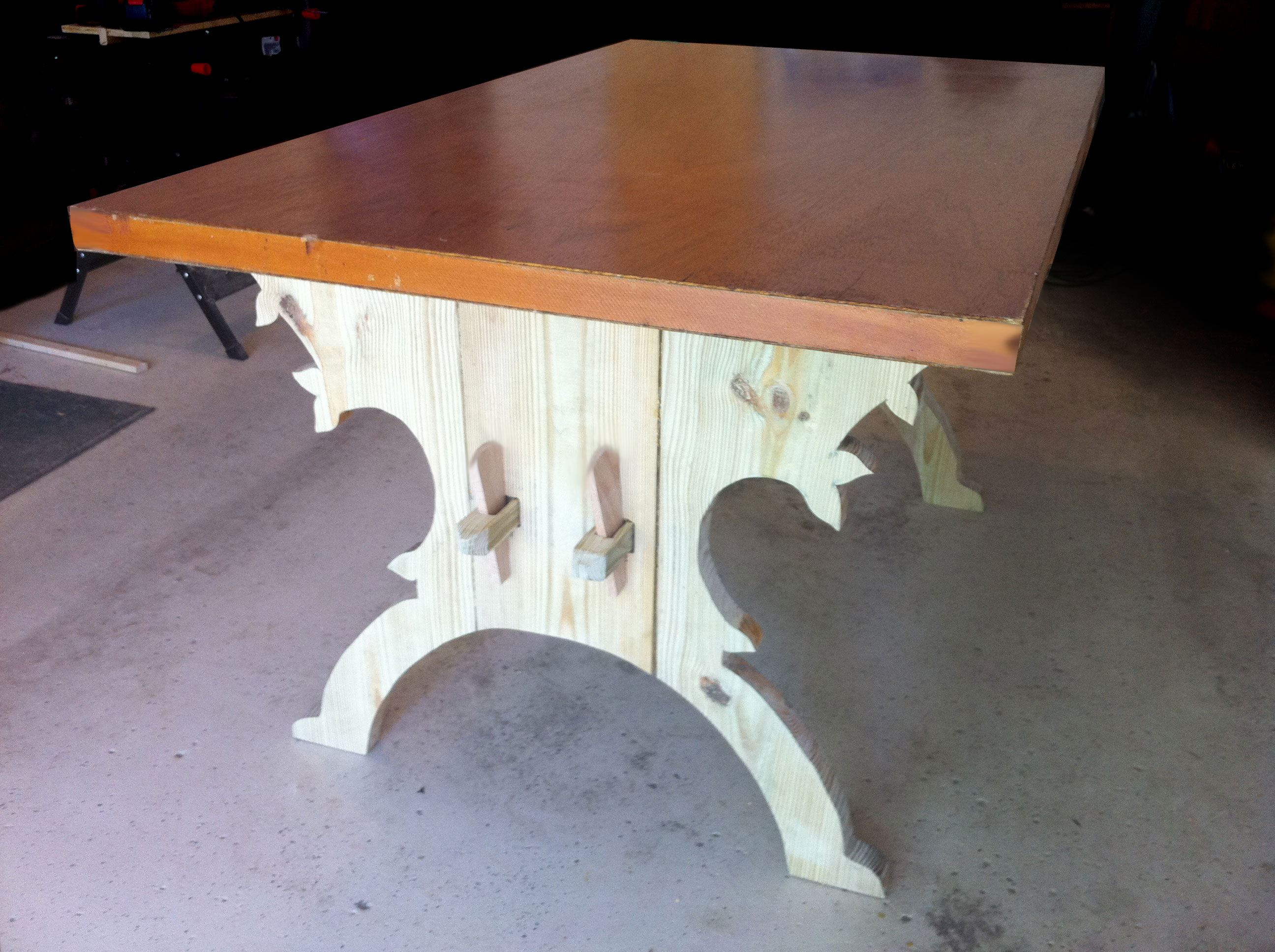
And that’s it … the table is done!


A functional trestle table for under $35!

Now you can fancy it up, if you like. Since I’d saved so much in the construction of the table, I decided to put moulding around the edges and stain the moulding, legs, stretchers, and tenons. That cost an extra $32, although I’d already bought the stain for another purpose (my cooler cooler and my benches). Here is my completed table:


My inexpensive but lovely trestle table

Tips I Learned the Hard Way:

  • Buy dry wood. Wet wood is super heavy and hard to cut! And it won’t take any stain until it dries anyway.
  • If possible, smooth or otherwise plane the sides of the wood boards before you dowel and glue them together in step 1. This will really help the boards stay strong and stable.
  • When you apply any wood glue, put glue on all surfaces to be glued in a thin, even coat. And clean up any wood glue that beads or globs during the drying process — it’s really hard to get this glue off once it has dried.
  • When staining with tinted polyurethane like I did, keep a cloth handy to wipe drips — it gets tacky VERY FAST and is hard to wipe up later. Also, do not go back over previously stained areas (anything older than, say, 3 minutes) until it is absolutely dry because it will glob and gunk and look yucky. This happened with mine, and I got better at the staining thing as I went along (told you I wasn’t that experienced!)

All comments, questions, and suggestions for improvements most welcome!

Gregor Reinhardt: An Introduction

5 June 2011

Gregory Reinhardt von Holstein

Gregor Reinhardt

A persona set in the 1400s – A toast to the medieval German fighting man. I have adopted this persona to attempt to get a glimpse into what is was and how it felt to live in the time of kings and castles. Over the next many months I shall be writing various articles relating to the medieval man-at-arms. This will include articles on medieval combat (S.C.A. as well as historic) armor working, matters of honor, and medieval life. This blog will grant me the opportunity to share my various projects with anyone interested – projects that will be focused on doing things as historic as possible without sacrificing the safety of myself and others… nor the common sense and practicality that modern materials provide.

Stay tuned…


We Have a New Rattan Stave!

5 June 2011

A 9-foot-long rattan stave

Look at that thing! It’s very long … I wonder how many swords Gregor can get out of this.

This appears to be a great piece of rattan — dense, straight, smooth, and uniform in diameter. (At least, that is what swordbrother.com defines as a good piece of rattan for an SCA weapon, and they know considerably more than I!) Here’s what the site says about choosing rattan:

You want a smooth stick of rattan because imperfections are weak spots. A piece of rattan that has a ridge along one of its segments should not be bought, in my opinion, because that ridge will cause some problems when it hits an opponent or a shield. It will channel more energy into your opponent in a focused edge, which is exactly what we’re trying to avoid by using rattan in the first place. Also, when you hit a shield, or other non-yielding object with that ridge, you will transmit all your energy back into that edge, which will lead to a much shorter lived stick.

Many thanks to Lord Jason Irenfest for purchasing this for us at the Midrealm Crown Tourney!