Embroidery

Blackwork Embroidery Booklet Updated: Bigger, Better Stitch Diagrams and Photos!

13 February 2012

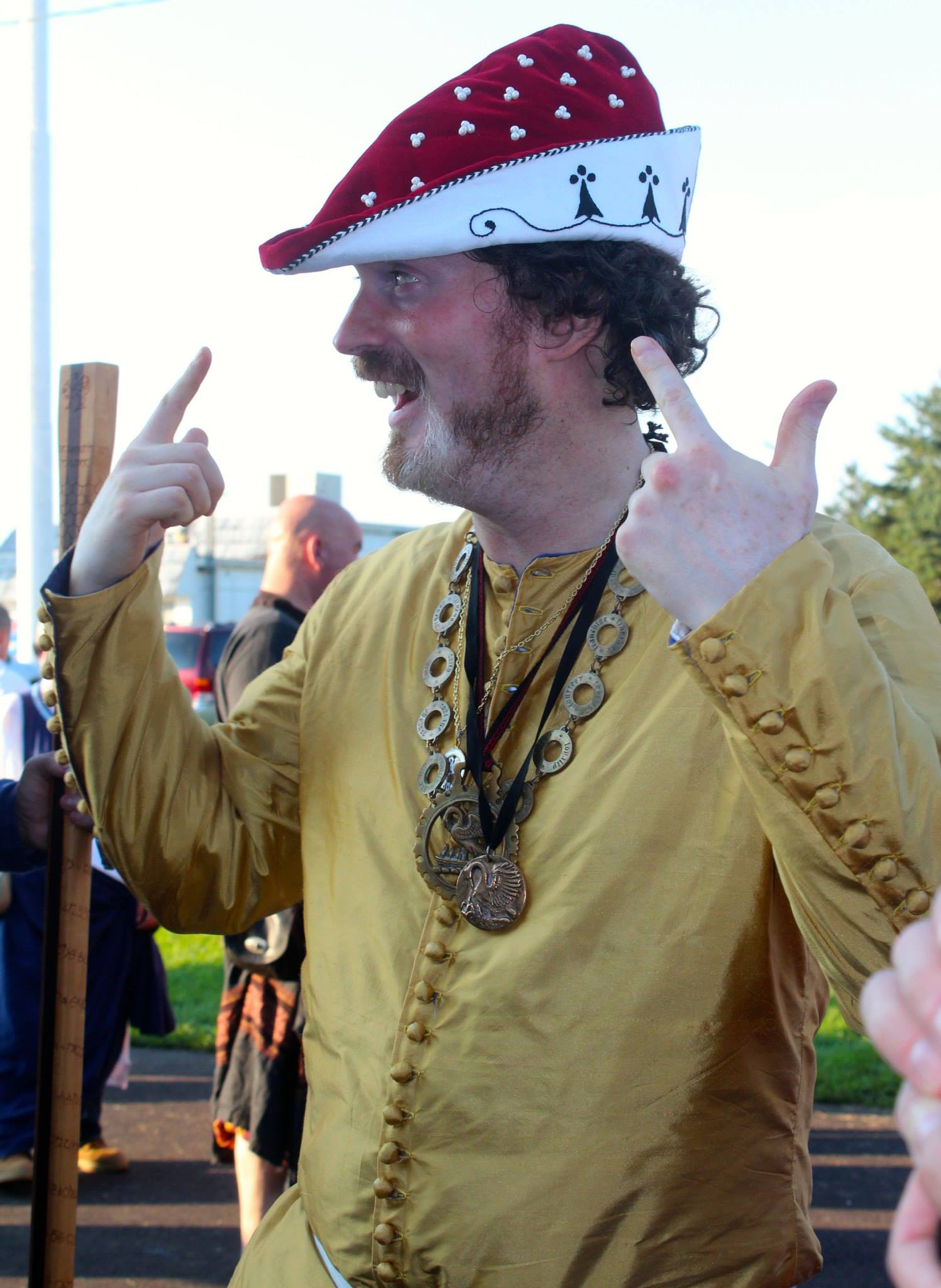
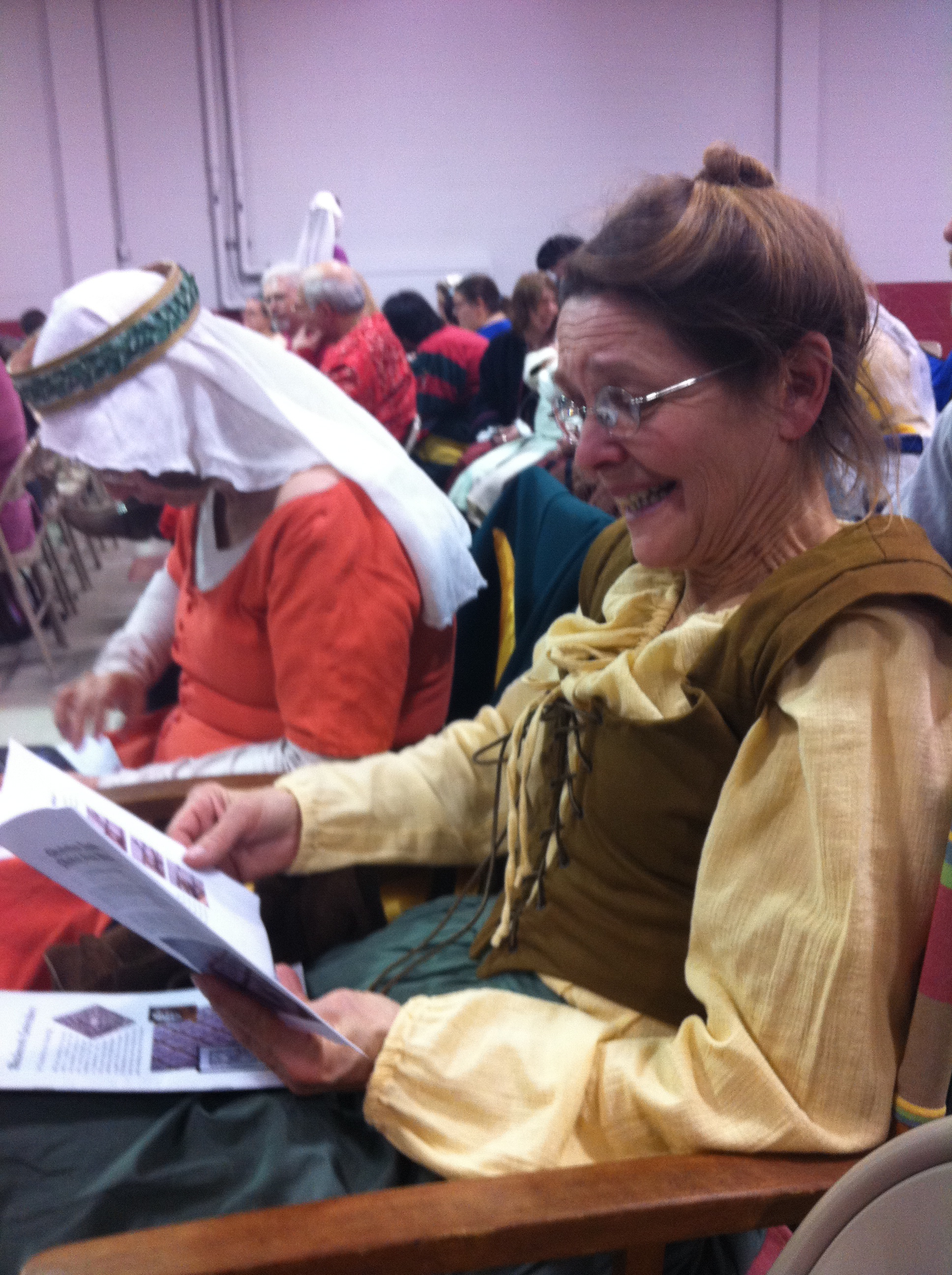
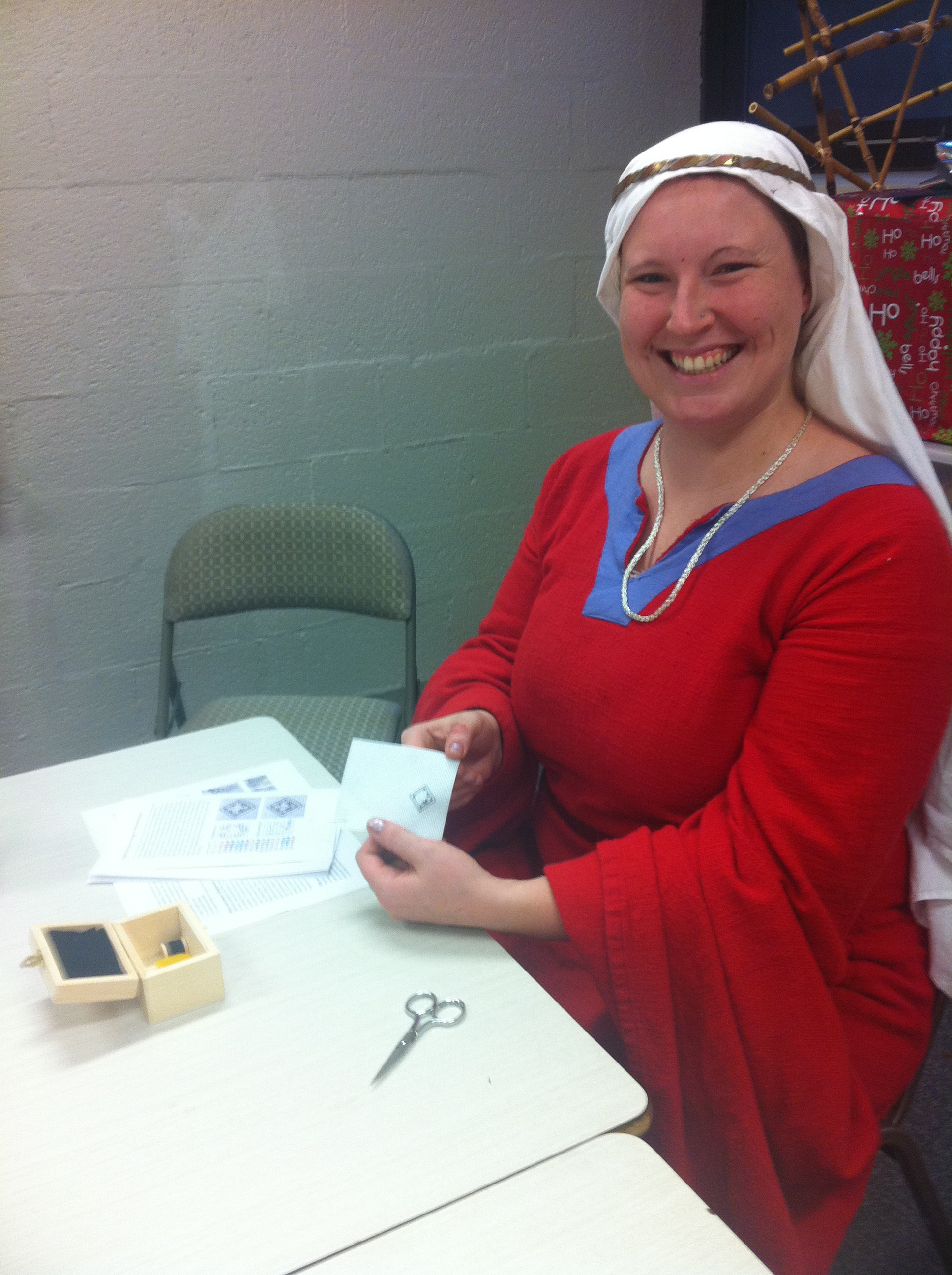
A student reading my booklet during court at Val Day

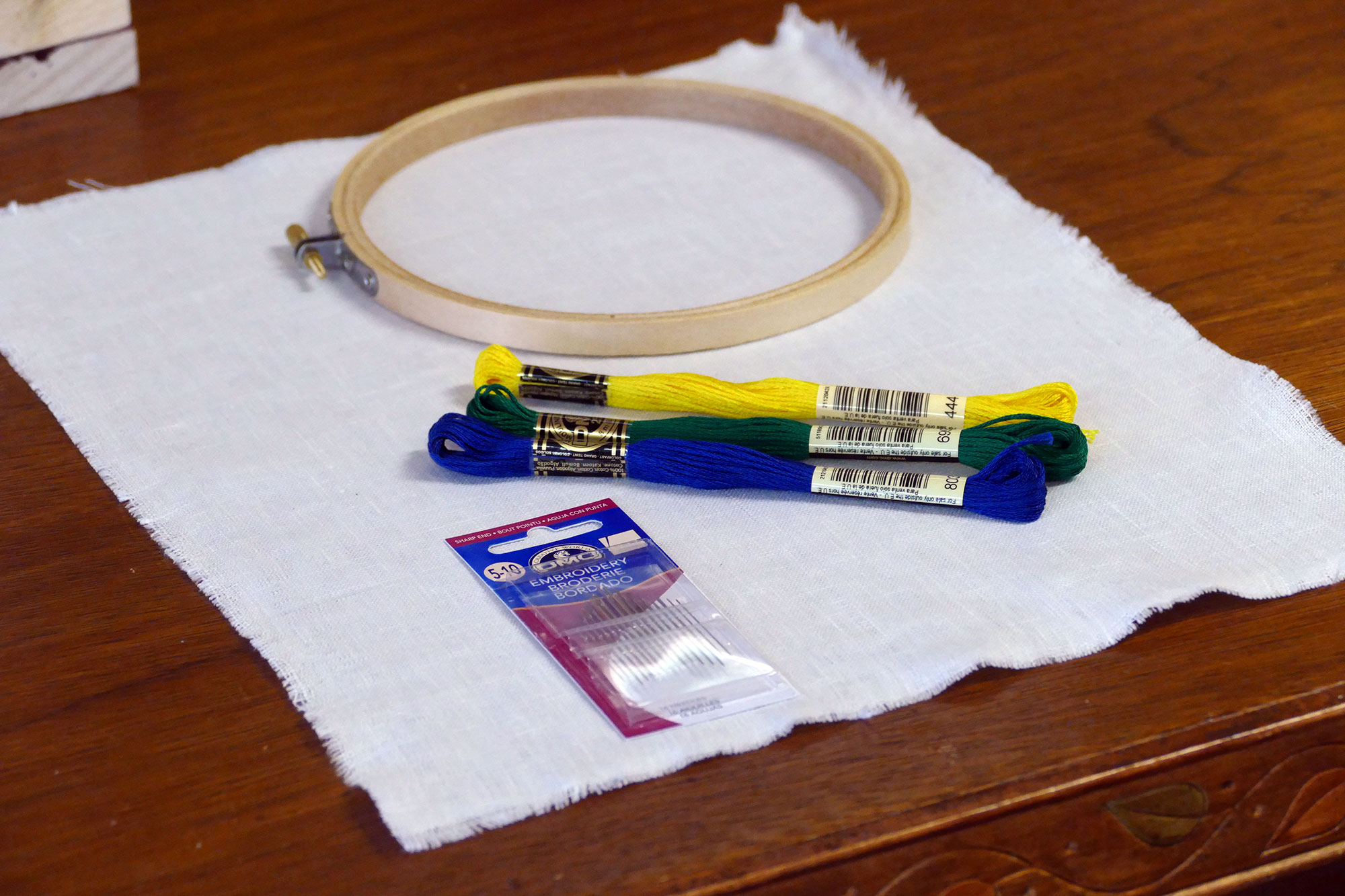
Based on feedback from one of my first students (Erica), I’ve updated my Blackwork Embroidery booklet to show stitches from the previous stages on the patterns. While I was at it, I made the patterns larger and added several photos of things like needles, hoops/frames, and various accoutrements useful in blackwork embroidery. This added four pages to the little booklet, bringing it to a grand total of 20. The booklet is completely free and you can download it at:
http://honorbeforevictory.com/wp-content/uploads/2012/02/Blackwork-Embroidery-Booklet-v2b.pdf

Please note that I retain copyright. You may print it out for personal use. If you want to make multiple copies, please contact me for permission. All I ask in return is if you make something from the booklet, please share a photo of it with me!

Suggestions, comments, and all feedback always welcome!

Update: Many thanks to Jackie for noticing a couple of mistakes which have now been corrected!


Period Embroidery Pattern Books and Modelbuchs: References and Links

7 February 2012

I find it fascinating that there are still copies and facsimiles of embroidery pattern books from the 16th century. I know that those pattern books were used by embroiderers, needleworkers, and ladies alike, so to be able to refer and use them myself really strikes a chord with me. But, because these pattern books are scattered about, I keep losing track of them. Some of these books are just illustrations, but were also used as inspirations for embroidery work (such as emblem books), so I’m including them here as well. I’m also listing books just a bit into the 17th century because I’ve seen the designs in them on late 16th century artifacts — often these books may have been assembled or printed earlier, and additional printings were made at the later date. So here, for my references and yours, is a list of 16th century pattern books for needlework:

Modelbuch aller art Nehewercks und Stickens – George Gilbers, reprint of 1527 book

Punti Tagliati – Giardineto Novo, 1921 reprint of a 1550 book

A Scholehouse for the Needle – Richard Schorleyker, 1632

Les Singvliers Et Novveaux Povrtraicts – Federic Vinciolo, first printed in 1587, French

New Modelbuch – Federico di Vinciolo, 1594

Schön Neues Modelbuch – Johann Siebmacher, 1597

Patrons de broderie et de lingerie du XVle siecle – Hippolyte Cocheris, Bibliothèque Mazarine

La Vera Perfezione del Disegno – Giovanni Ostaus, 1561

Musterbuch für Stickereien und Spitzen – Ernst Wasmuth, 1616 (and here is part 2)

Needlework Patterns from Renaissance Germany: Designs recharted by Baroness Kathryn Goodwyn, OL from Schon Neues Modelbuch, 1597

Flowers of the Needle: A compendium of seven Italian needlework pattern books of the 16th century, from 1531 to 1567 by Baroness Kathryn Goodwyn, OL

I will update this list as I find more. If you know of more, please post a comment!


Blackwork and Plaited Braid Caul: 16th. Century Embroidered Headgear

9 January 2012

My Embroidered Caul

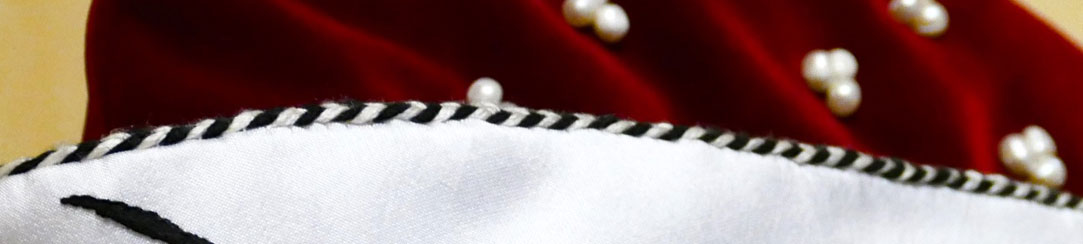
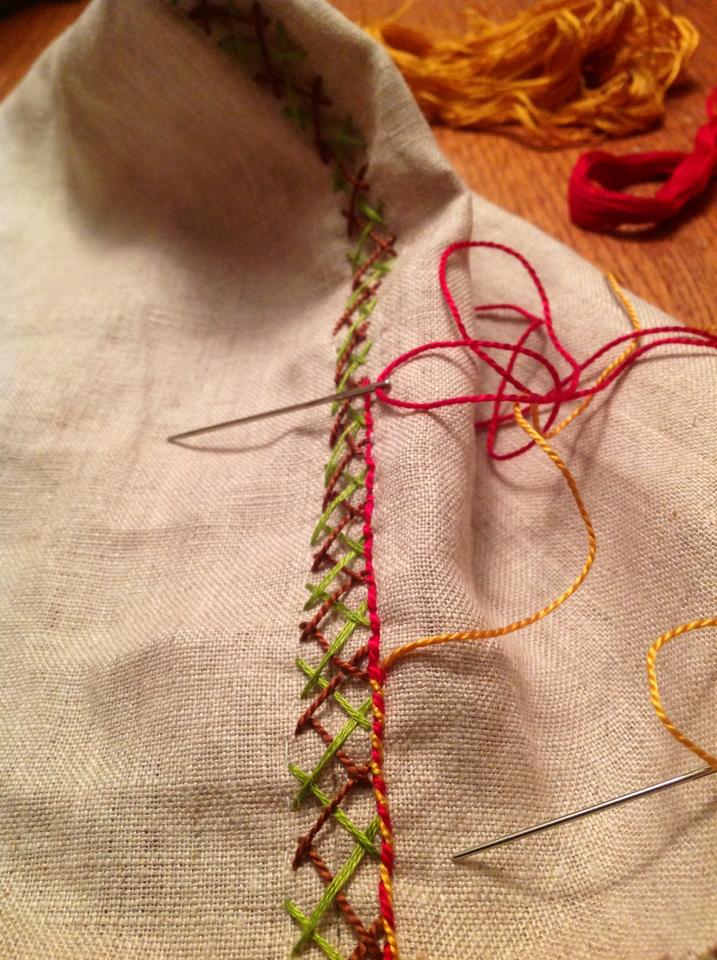
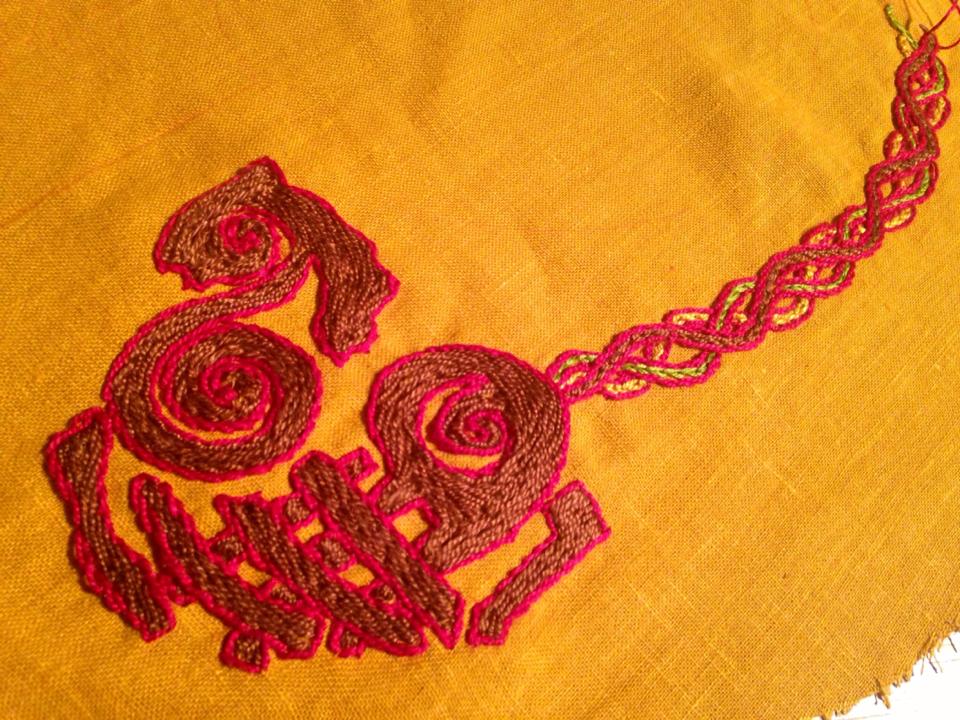
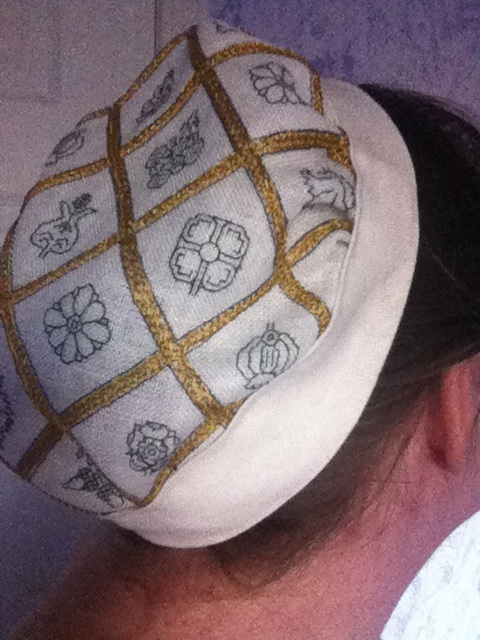
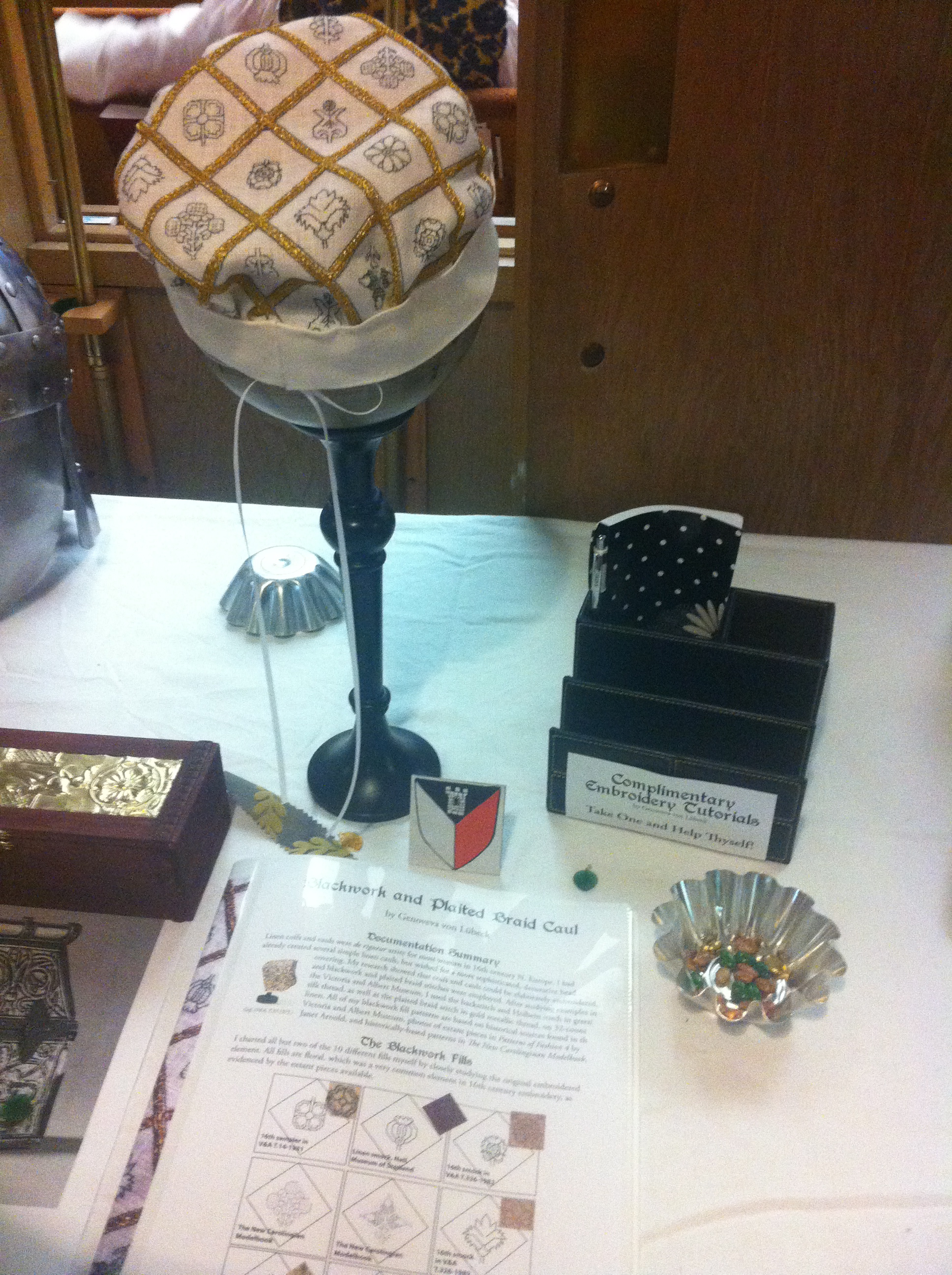
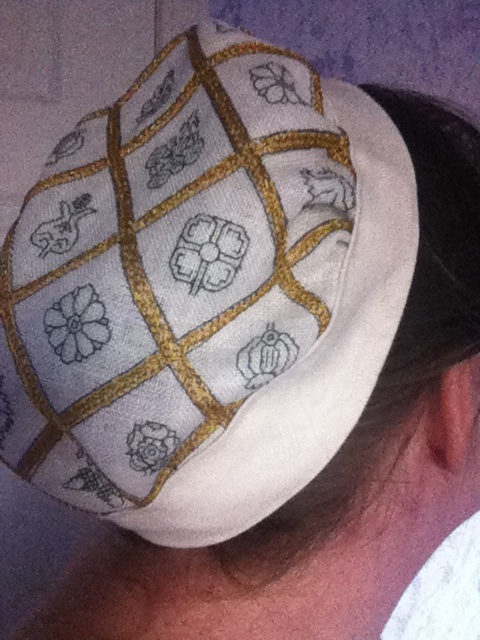
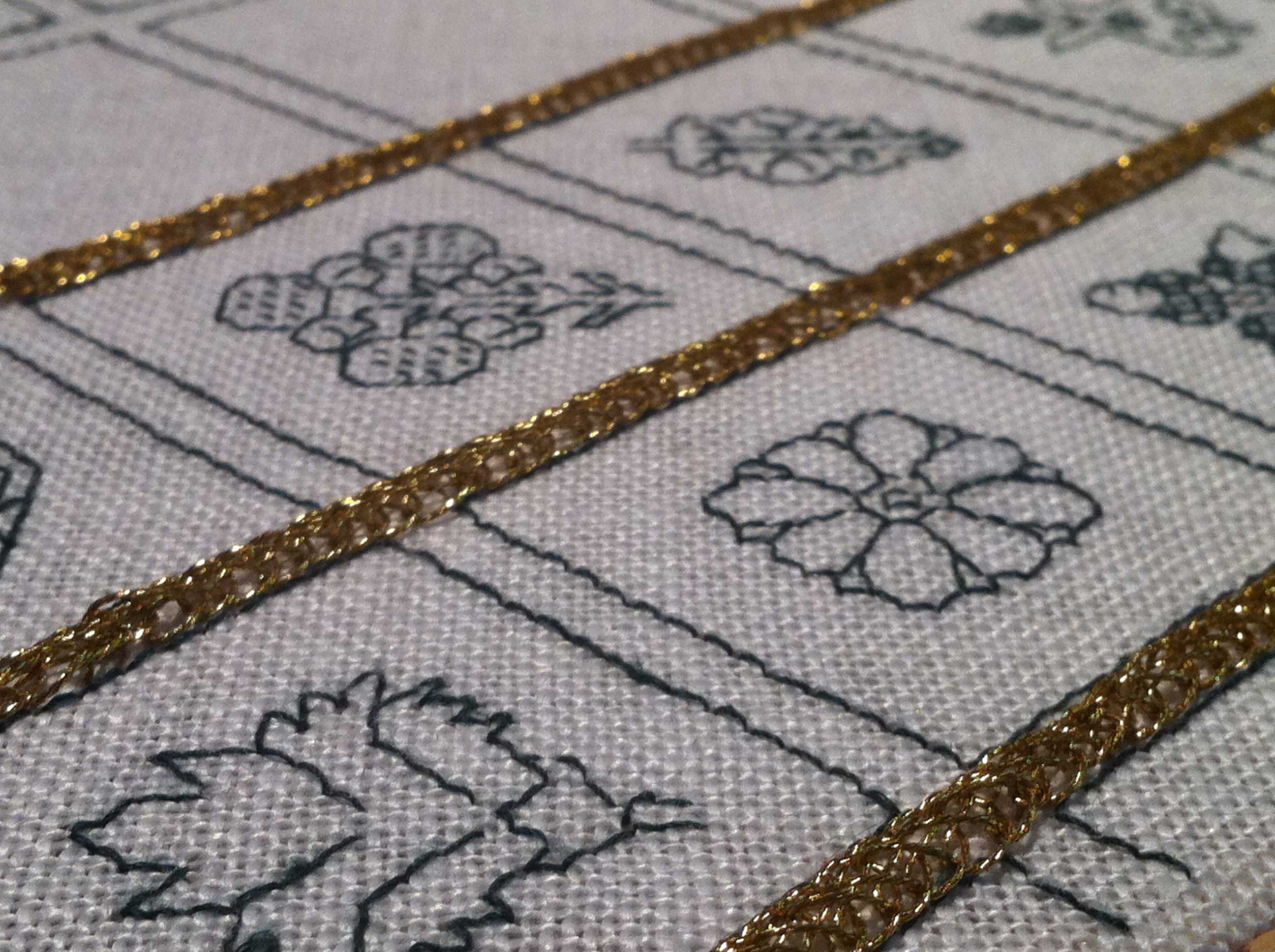
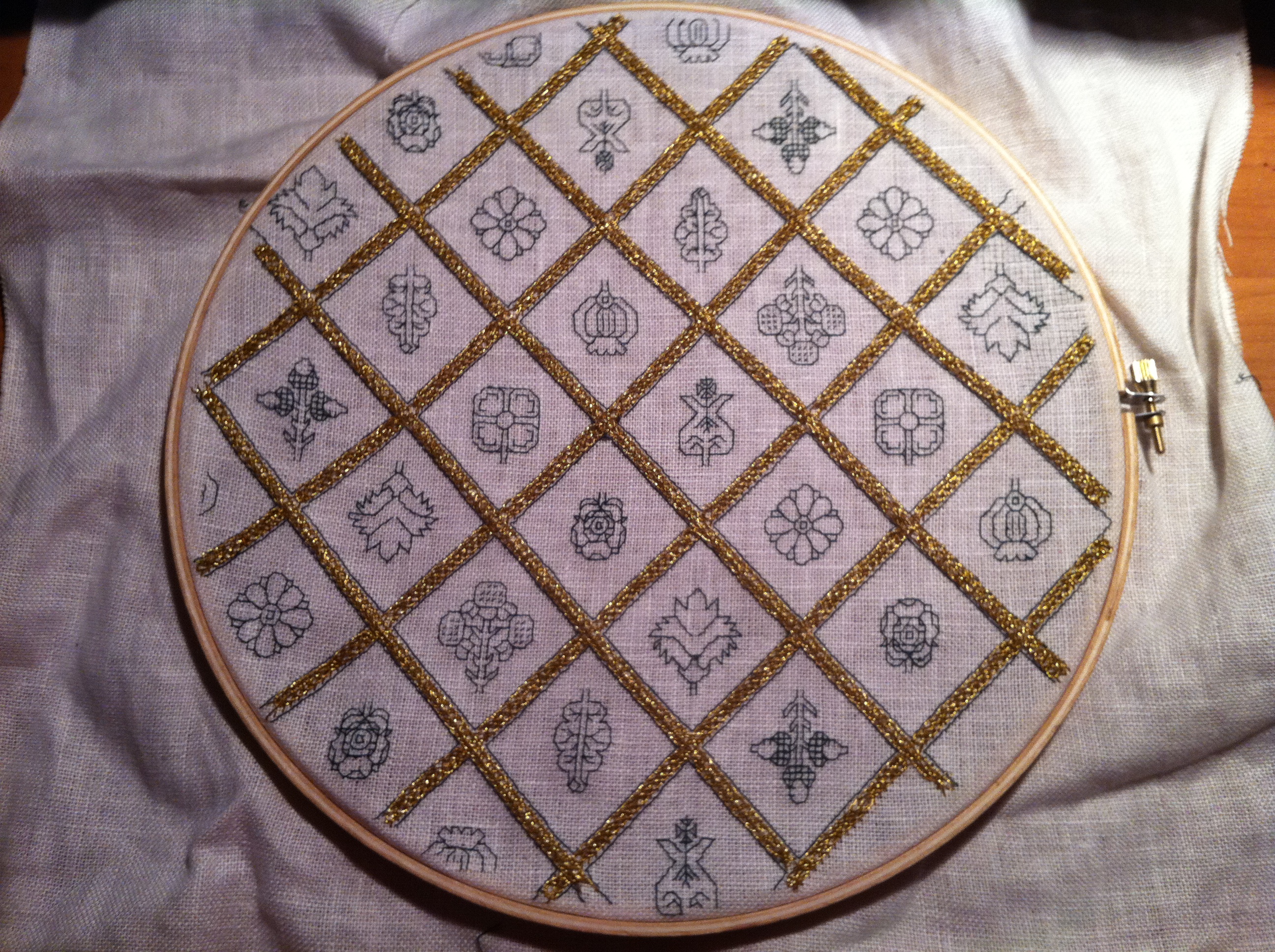
I’m pleased to report that I have finished my blackworked and plaited braid caul. I had the pleasure of displaying and wearing the caul the first time two days ago at 12th Night! It looks really lovely and I’m very pleased with it. Many thanks to Countess Ianthe d’Averoigne, author of The New Carolingian Modelbook and member of the Order of the Laurel, for the use of two of her charted botanicals which appear as fills in my design. I charted the rest of the fills from various period extant pieces, which you can read all about in my documentation below! If you’re interested in making your own caul, cap, or other blackwork/braided item, I refer you to my tutorial booklets on Blackwork Embroidery and the Elizabethan Plaited Braid Stitch. All I ask in return is that if you make something that was inspired by something I did or wrote about, please send me a note and a photo!

Photos of my blackwork and plaited braid caul, both in progress and completed:

Documentation for my blackwork and plaited braid caul:

Blackwork and Plaited Braid Caul

by Genoveva von Lübeck

Documentation Summary
Linen coifs and cauls were de rigueur attire for most women in 16th century N. Europe. I had already created several simple linen cauls, but wished for a more sophisticated, decorative head covering. My research showed that coifs and cauls could be elaborately embroidered, and blackwork and plaited braid stitches were employed. After studying examples in the Victoria and Albert Museum, I used the backstitch and Holbein stitch in green silk thread, as well as the plaited braid stitch in gold metallic thread, on 32-count linen. All of my blackwork fill patterns are based on historical sources found in th Victoria and Albert Museum, photos of extant pieces in Patterns of Fashion 4 by Janet Arnold, and historically-based patterns in The New Carolinginan Modelbook.
(more…)

Blackwork Embroidery Primer Booklet: Learn Counted Blackwork in Four Phases!

8 January 2012

Blackwork Embroidery Booklet

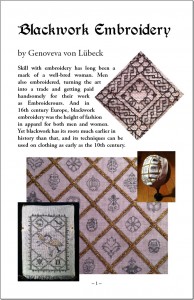
I’ve written a 16-page booklet on Blackwork Embroidery for those interested in learning how to do it. The booklet introduces blackwork, offers a brief history, illustrates the two main stitches (double running, or Holbien, and backstitch), and offers hands-on practice in four phases of increasing difficulty with a pattern based on a period design. Included are photos, stitch diagrams, and color-coded patterns. This is the same booklet I handed out during my Blackwork Embroidery class at 12th Night in the Canton of Ealdnordwuda, with a few minor updates based on questions asked during class. The booklet is current available as a PDF file, and I will put it online as a web-based booklet in the future as well.

Click Here to Download My Blackwork Embroidery Booklet

The booklet is completely free, though please note that I am retaining the copyright. The only thing I ask in return is that if you do any of the hands-on activities, and are pleased with your progress, please send me a photo! Any and all feedback is welcome, as are questions!

One of my students at my first blackwork class!

By the way, my Blackwork Embroidery class was a success! The tiny classroom I was in had only 10 chairs, but 13 people showed up and were willing to crowd around the table to learn about blackwork! Everyone managed to complete phases 1 and 2 in the short time we were there (everyone!) and several people started phase 3. I was so happy to see everyone embroidering and making progress. I used a pegboard painted white and black yarn to show how blackwork stitches work on a larger scale, and that seemed to help everyone. I am just hoping someone finishes the project and sends me a photo. In fact, I am going to issue a challenge — anyone who takes one of my blackwork classes (as I will definitely be doing more) and completes their project gets a little reward from me. Just show me your completed blackwork at a future event/class to redeem your reward!

Blackwork Embroidery Make-and-Take Needlebook Class

31 December 2011

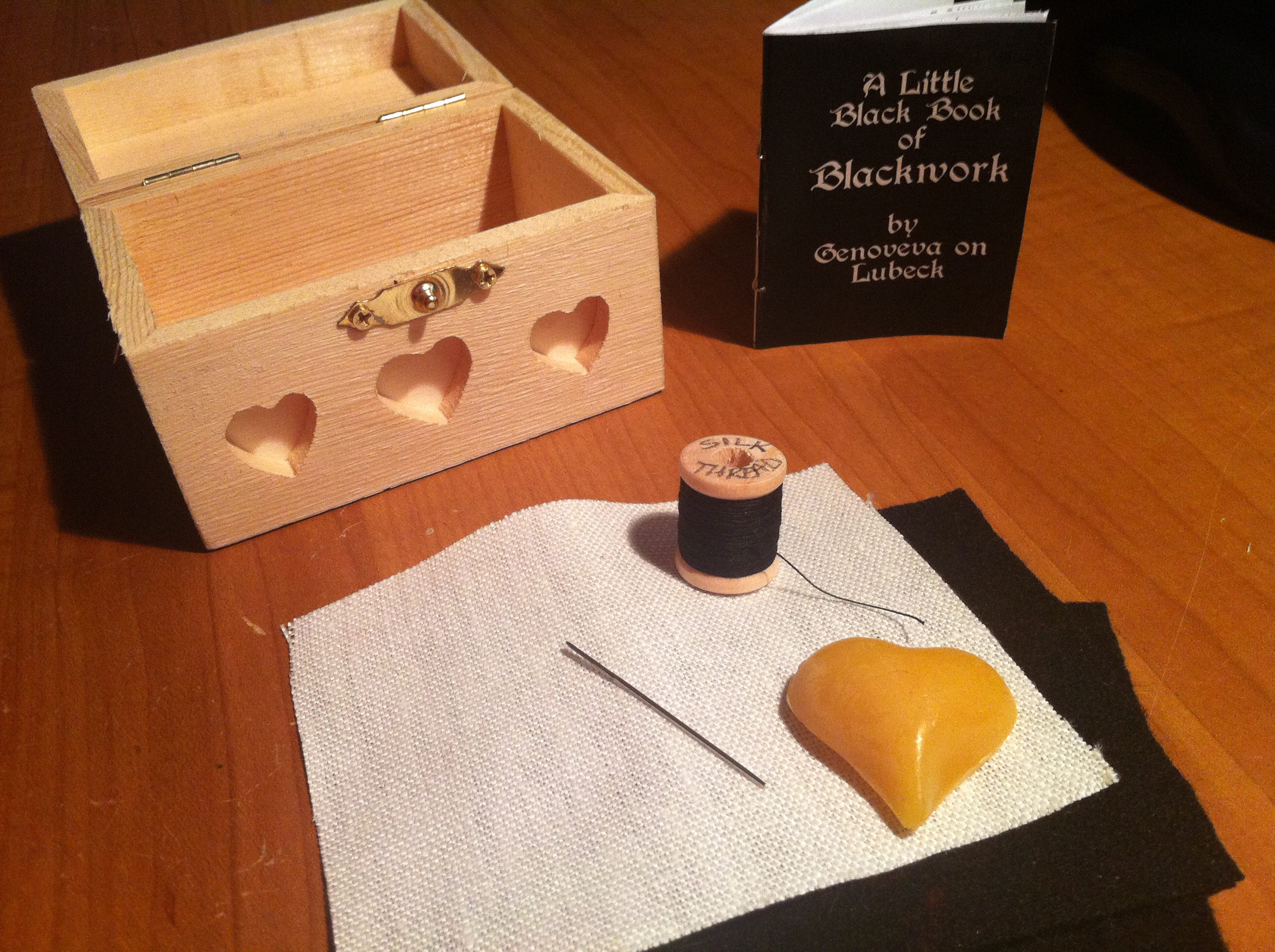
I am teaching my first class in blackwork embroidery at Twelfth Night in the Canton of Ealdonordwuda on at 2:00 pm on January 7th, 2012, and my next class will be at Val Day on February 11 in the Canton of Three Hills! The class is an introduction to the beautiful blackwork embroidery popular during the 16th century. Students will receive a small kit with everything they need to make a simple needlebook case, including:

Blackwork Embroidery Kit

  • 10 yards of black silk thread
  • One #24 tapestry needle
  • One 3″ x 4″ piece of 18-count Aida cloth
  • One 3″ x 4″ piece of 32-count linen cloth
  • Two 3″ x 4″ pieces of black wool
  • Beeswax
  • A Little Black Book of Blackwork (16-page booklet with instructions and pattern)
  • Wooden box
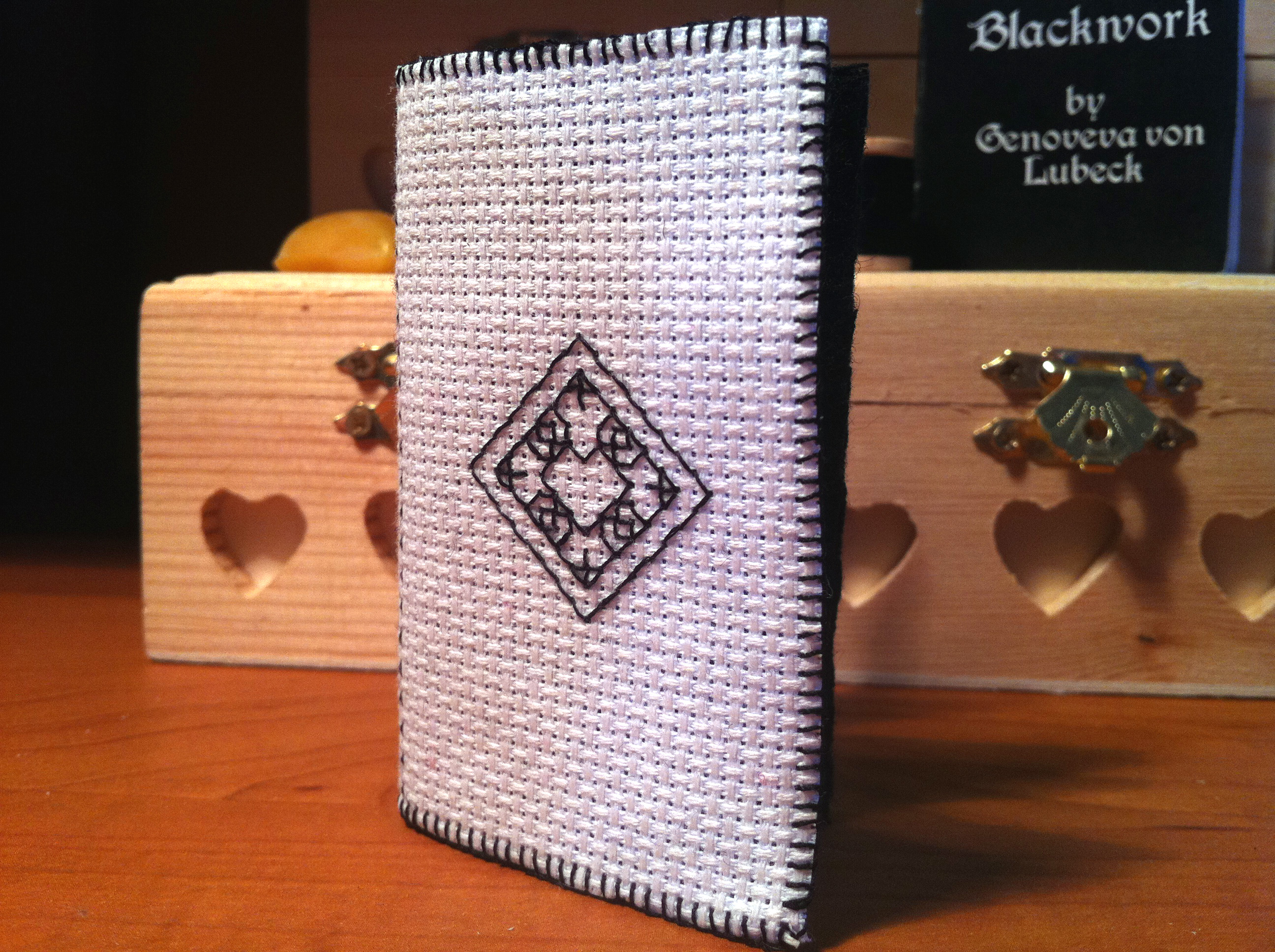
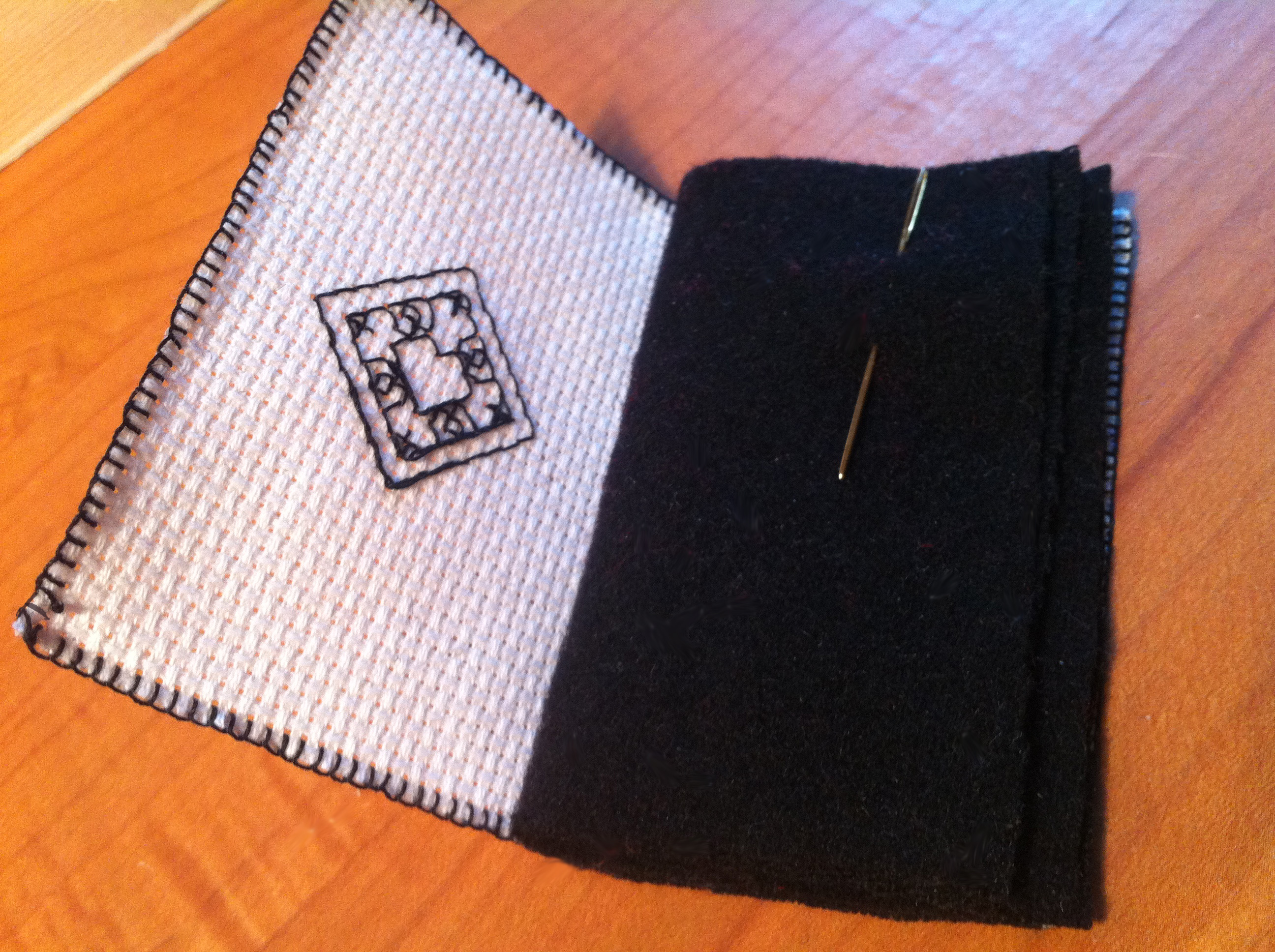
  • Students will have the choice to use either the Aida cloth or the linen cloth (it’s easier to see the threads on the Aids cloth, but the linen cloth is actually period-appropriate) as well as the choice to make a small design or a more elaborate one. It’s possible to start with the simple design and move to the more elaborate design if it’s appealing. Here is the simple design on Aida cloth, which I anticipate can be completed within the space of my class:

    A Simple Blackwork Needlebook

    The blackwork design on my needlebook is based on the blackwork collar seen in the miniature of Mrs Jane Small by Hans Holbein in 1536. I did alter the pattern very slightly to depict a small heart rather than a cross inside the diamond, but otherwise I believe it appears very similar.

    Jane Small and her blackwork (red and gold line = original; blue line = my modifications)

    I’ve charted the pattern out so that it can be stitched to appear the same on the reverse side of the fabric, too! Here is the reverse of the simple diamond-and-heart design:

    Blackwork can be reversible!

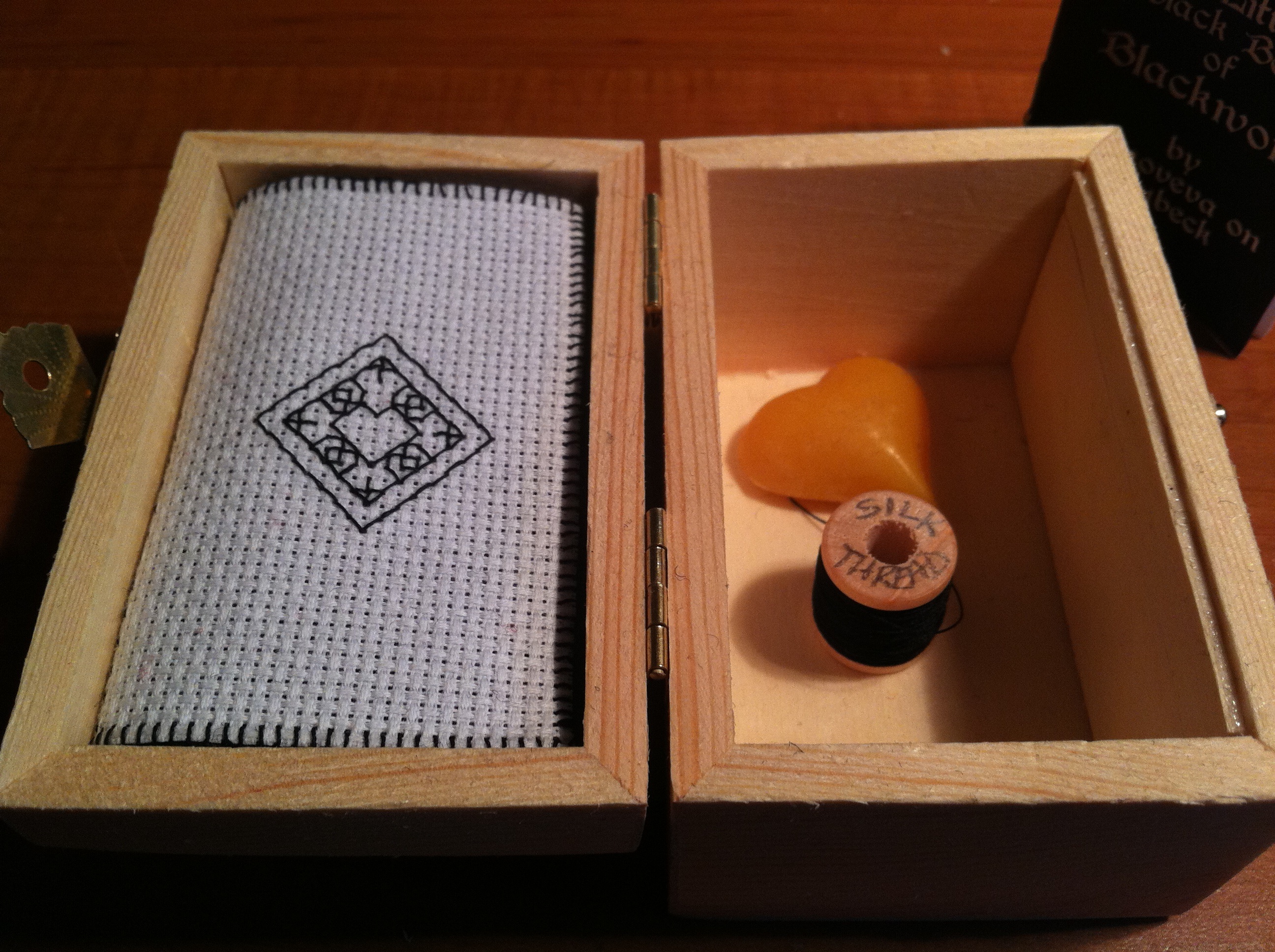
    When the needlebook is complete, it fits neatly inside the lid of the wooden box, which an in turn be used as a small sewing kit!

    Needlebook inside box

    Concepts that will be taught during the class and/or covered in the booklet:

    • Brief history of blackwork
    • Stitches employed in blackwork embroidery (backstitch, Holbein, etc.)
    • Materials required (fabric, thread, needle, etc.)
    • How to count threads in fabric
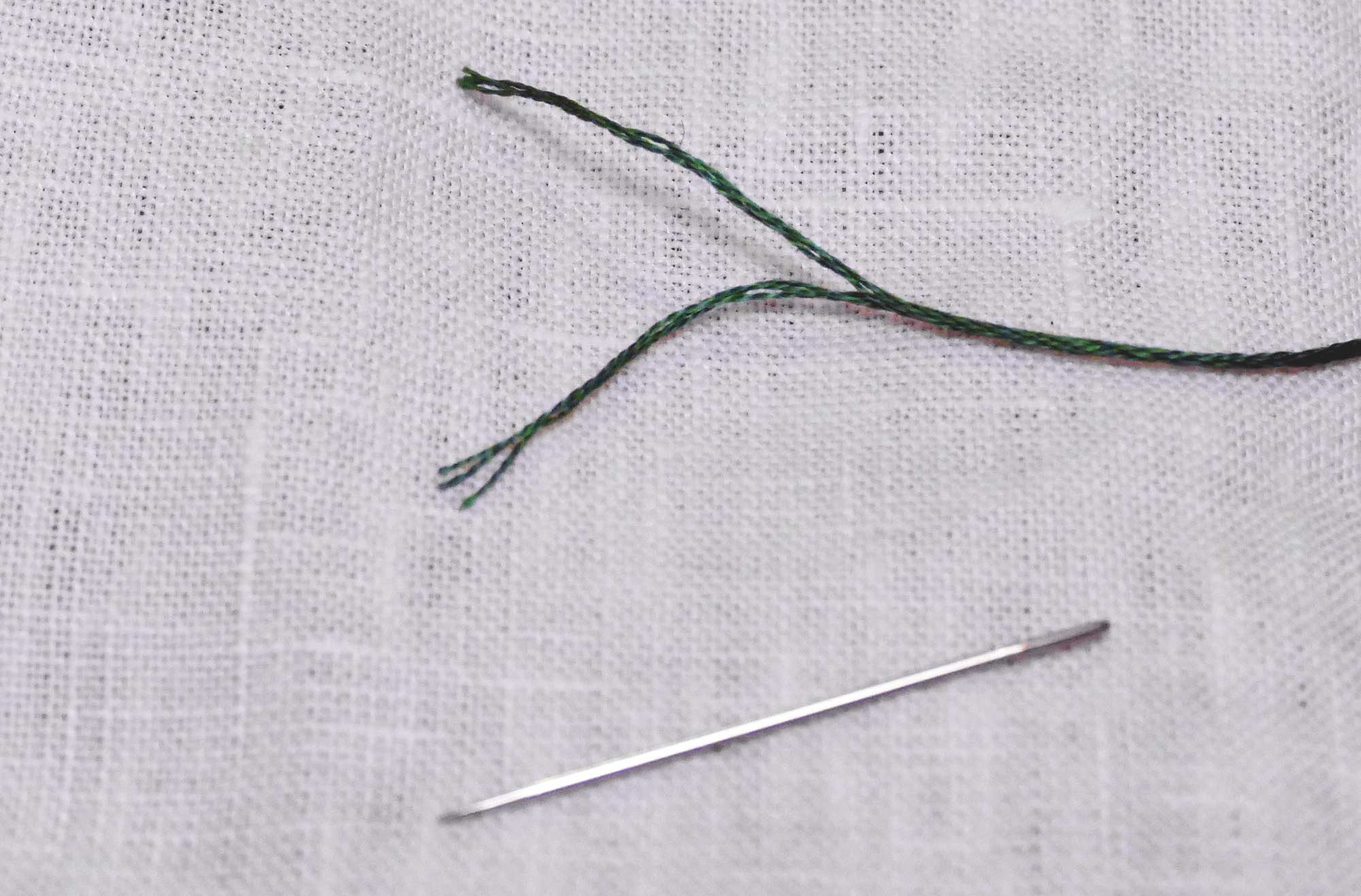
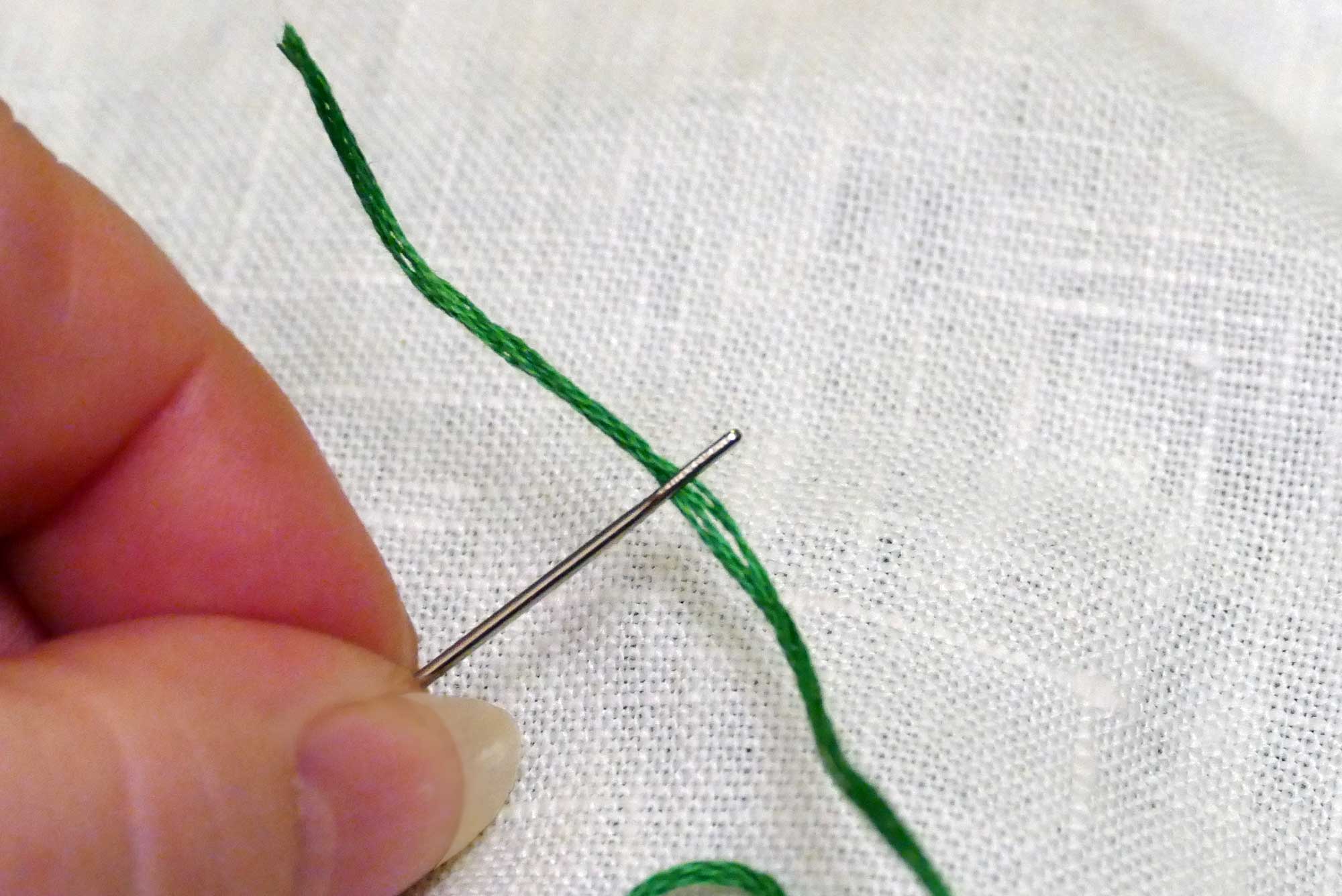
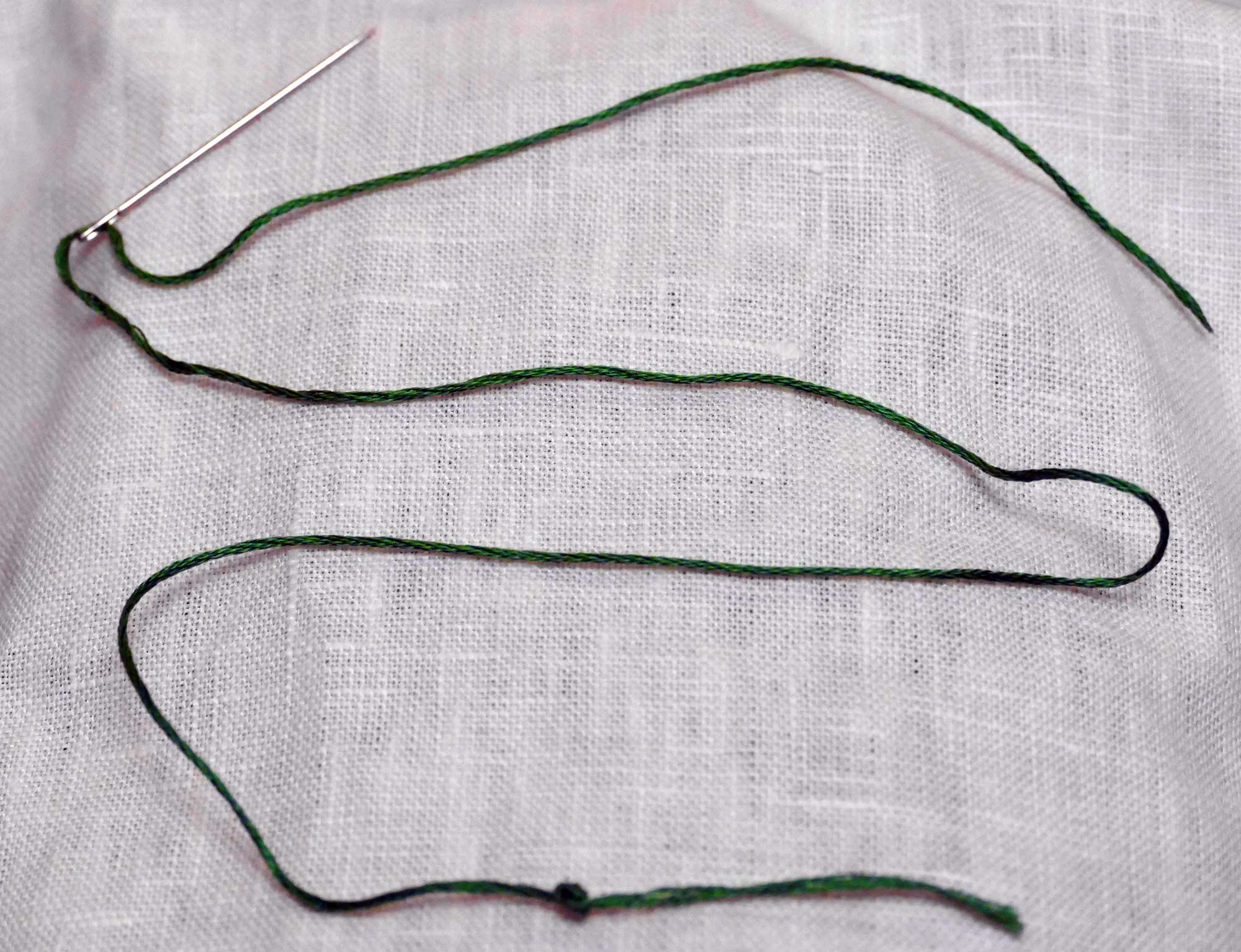
    • How to wax and thread the needle
    • How to start with a “waste knot” and how to finish to minimize knots and tails
    • How to stitch a reversible design
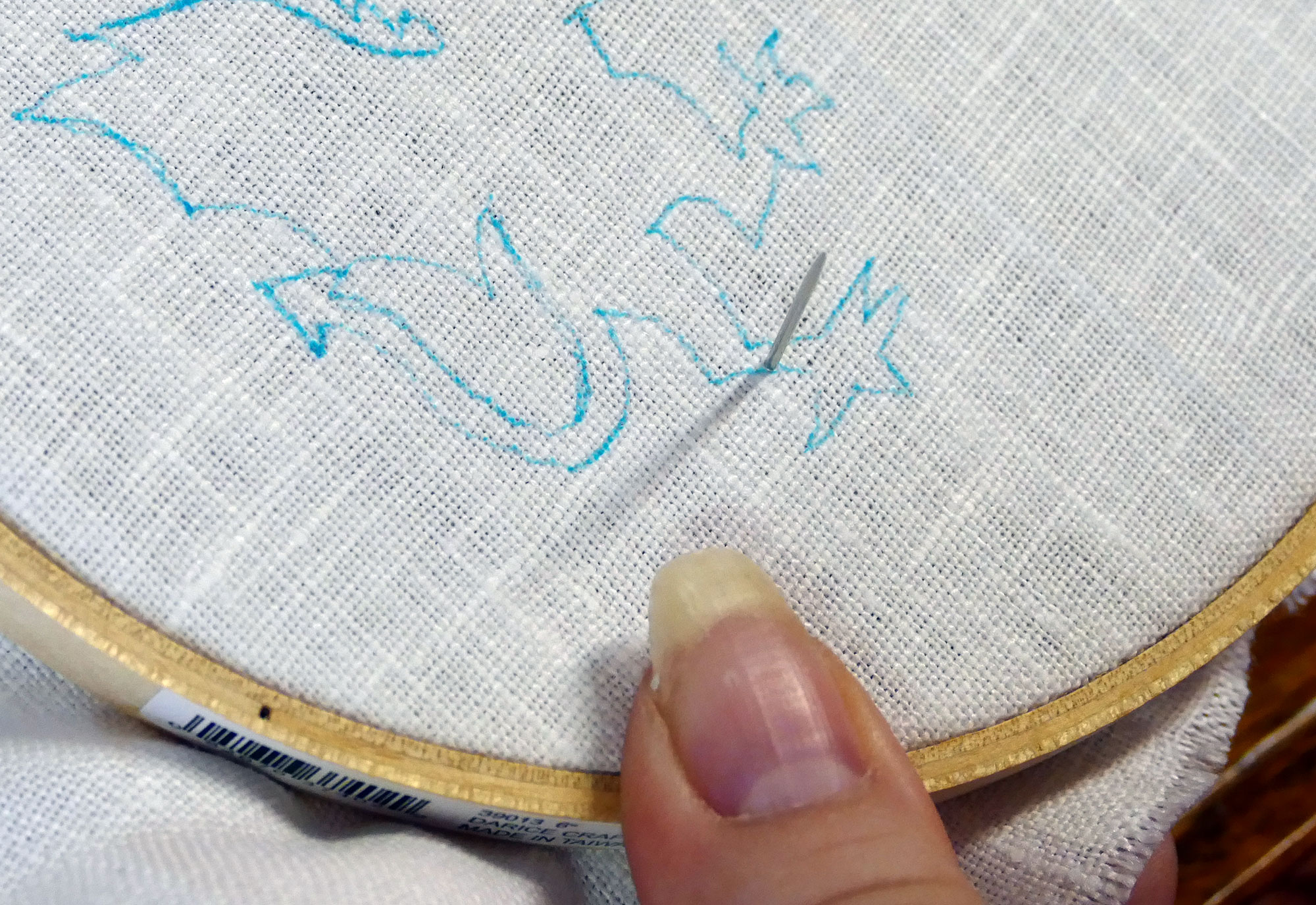
    • Tips and tricks (lighting, posture, untwisting thread, pattern marking, etc.)

    There is no fee for the blackwork kit. Students should bring a pair of scissors and reading glasses if they need help to see small things up close. There is a limit of 12 kits (first come, first serve), but observers are welcome. This is the actual class description as it appears on the Class Schedule:

    Blackwork Embroidery Make-and-Take
    Instructor: Lady Genoveva von Lübeck
    Ever been curious about the stunningly detailed blackwork embroidery popular during the later periods? In this class you will learn the basic techniques of blackwork, including the Holbein (double running) stitch and backstitch, and tips on preparing your ground cloth, starting and stopping stitches, and using beeswax to strengthen and aid stitching. No embroidery experience necessary! Also covered will be a brief history and ideas on finding historically-based patterns. Participants will receive a “make-and-take” blackwork kit that includes everything you need to make a small needlebook with a blackworked embroidery cover (thread, needle, cloth, and instructional booklet). Please bring a pair of scissors and magnifying glasses if you have any difficulties seeing up close (I will have a couple of these on hand if necessary, too).
    Class limit: 12 for hands-on and kits, but watchers are always welcome.

    I’m really excited about teaching this class, and I hope I get to pass on what I’ve learned to others.

    Update: My first class was a success! So far I have seen evidence that four of my students completed their blackwork kits at home, which thrills me to no end! Read about it here.

    Elizabethan Double Plaited Braid Stitch: A Step-By-Step Tutorial in Photos

    30 September 2011

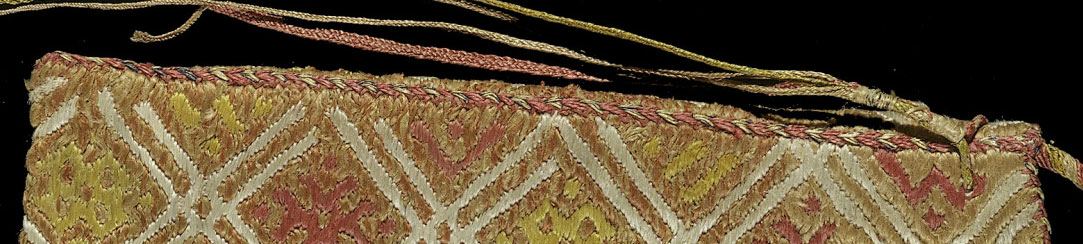
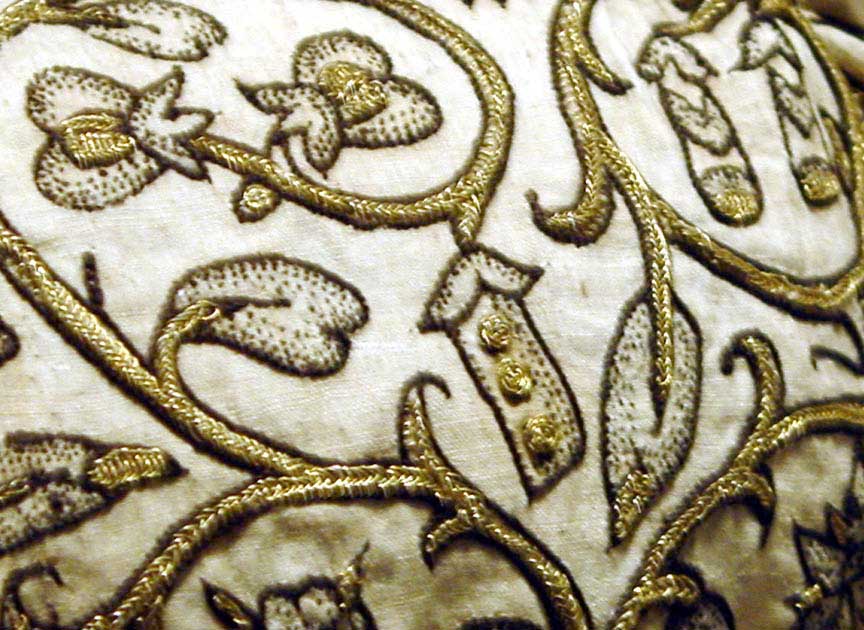
    The Elizabethan Double Plaited Braid Stitch is a very lovely, intricate embroidery stitch that was used on coifs, sweet bags (purses), samplers in the 16th century. The braid stitch was usually done in gilt or silver-gilt thread. Examples can be found in the Victoria & Albert Museum (see examples: coif, sweet bag, sampler).

    I tried for several weeks to master this braid stitch. My early attempts were close, but not quite right. Finally, after just keeping after it for a while, watching videos, studying photos of braid stitches, and scouring the web for ideas and tips, I finally figured it out. Here I present my method of working the Elizabethan double plaited braid stitch:


    Materials:

    • Fabric (I’m using 32-count evenweave linen)
    • Thread (I’m using DMC Gold Metallic)
    • Blunt end needle (you want a blunt-end needle, NOT a sharp, so that the needle does not catch or pierce other threads — I’m using a tapestry needle)
    • Stick pin

    Starting the Stitch – Step by Step:

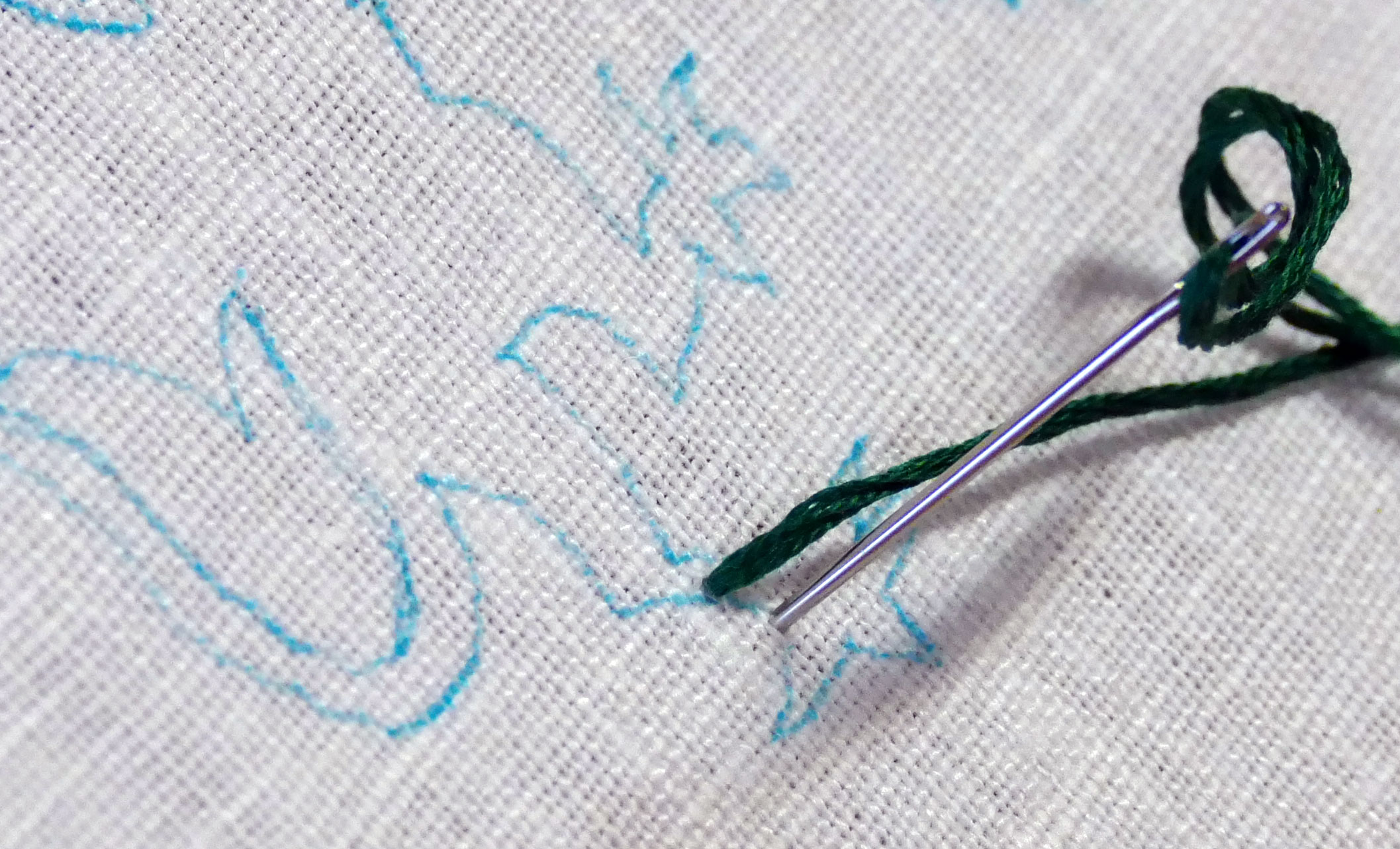
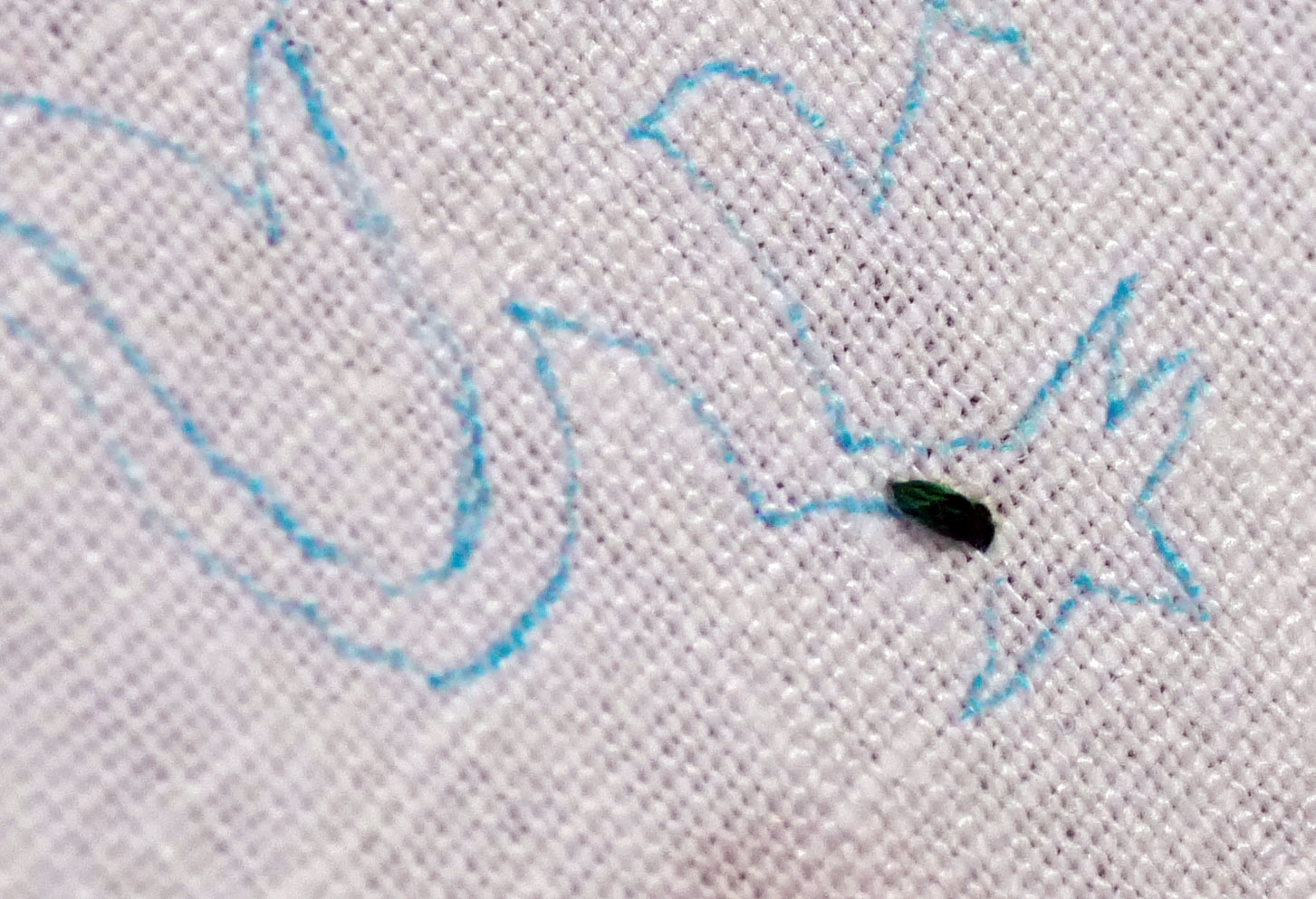
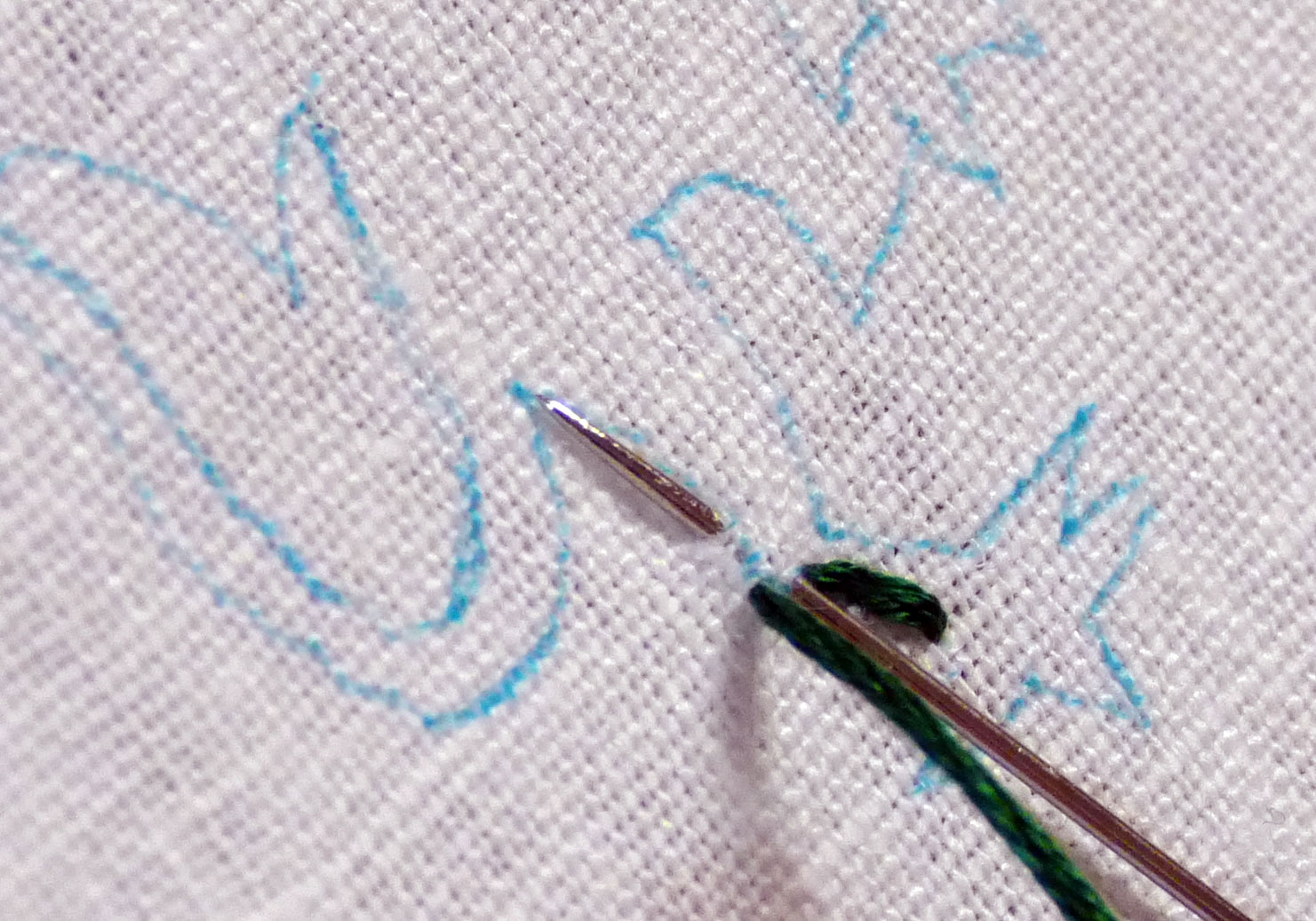
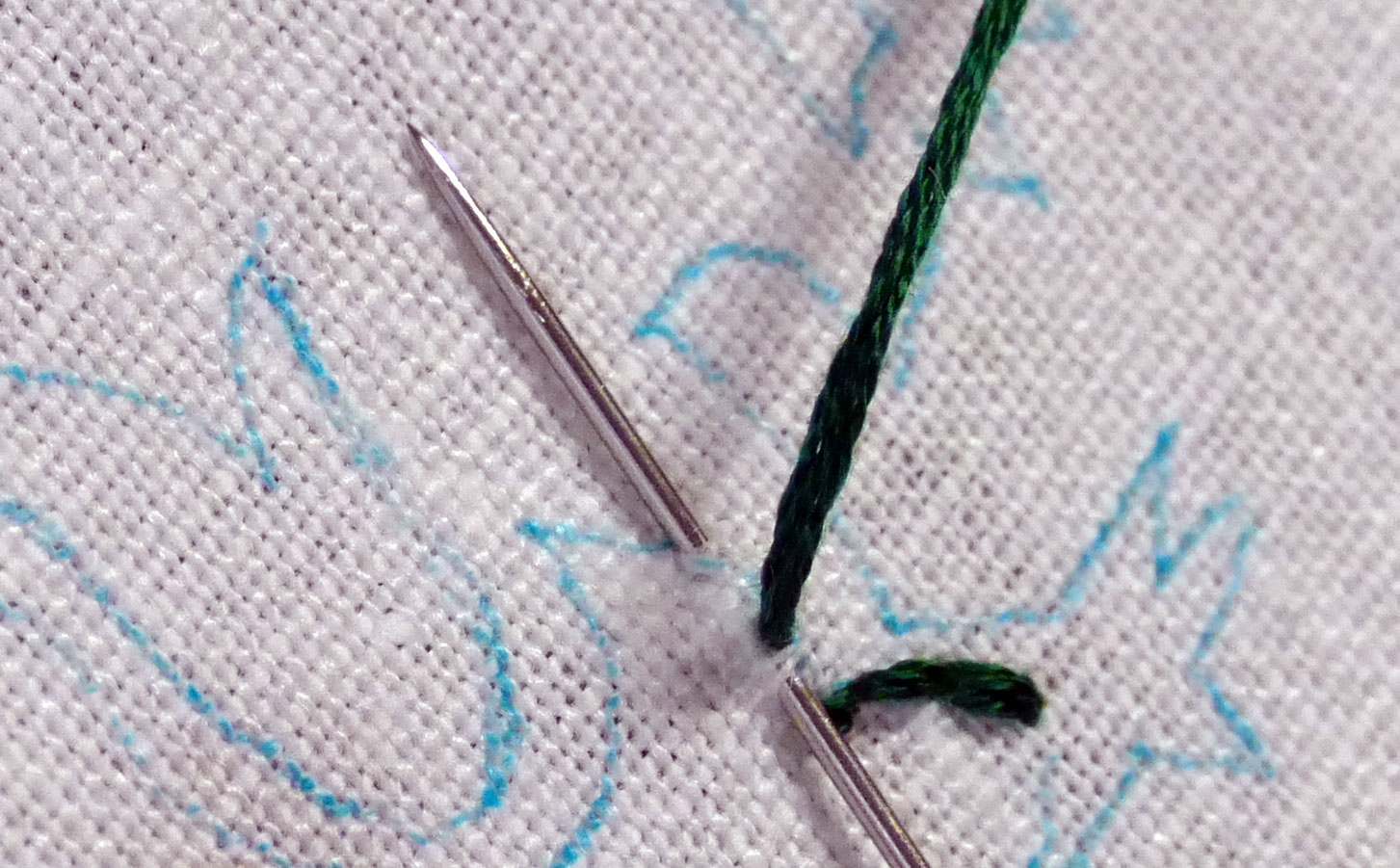
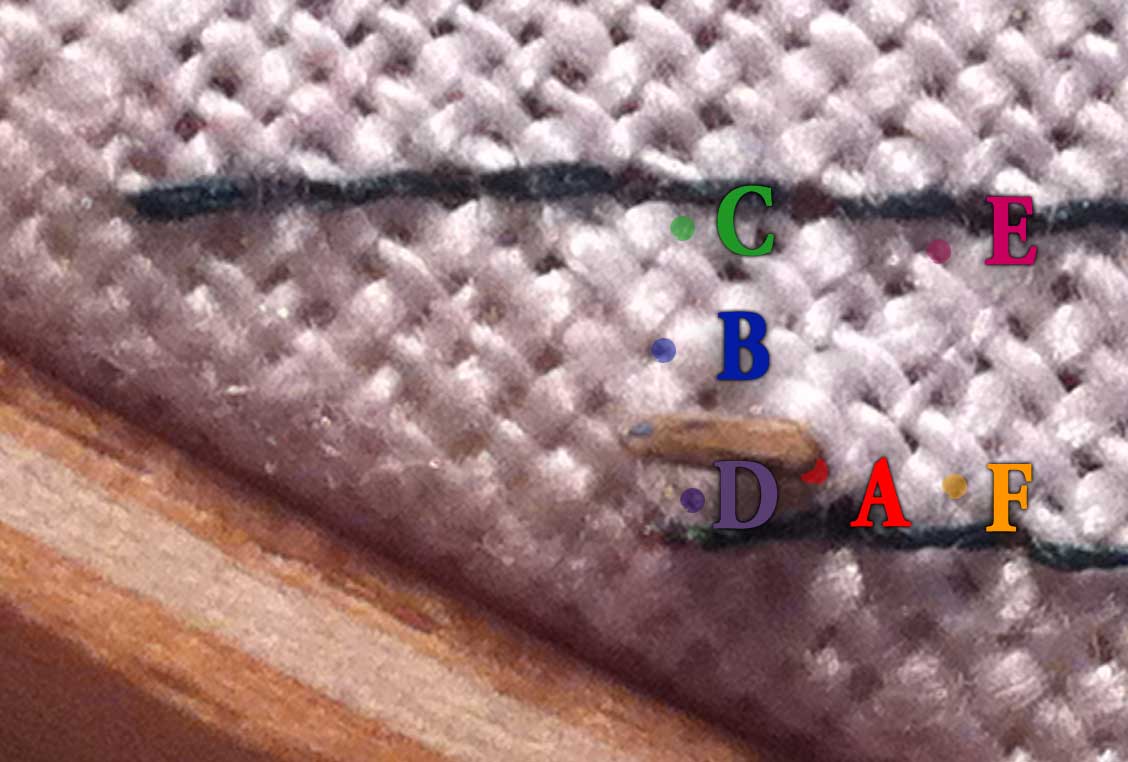
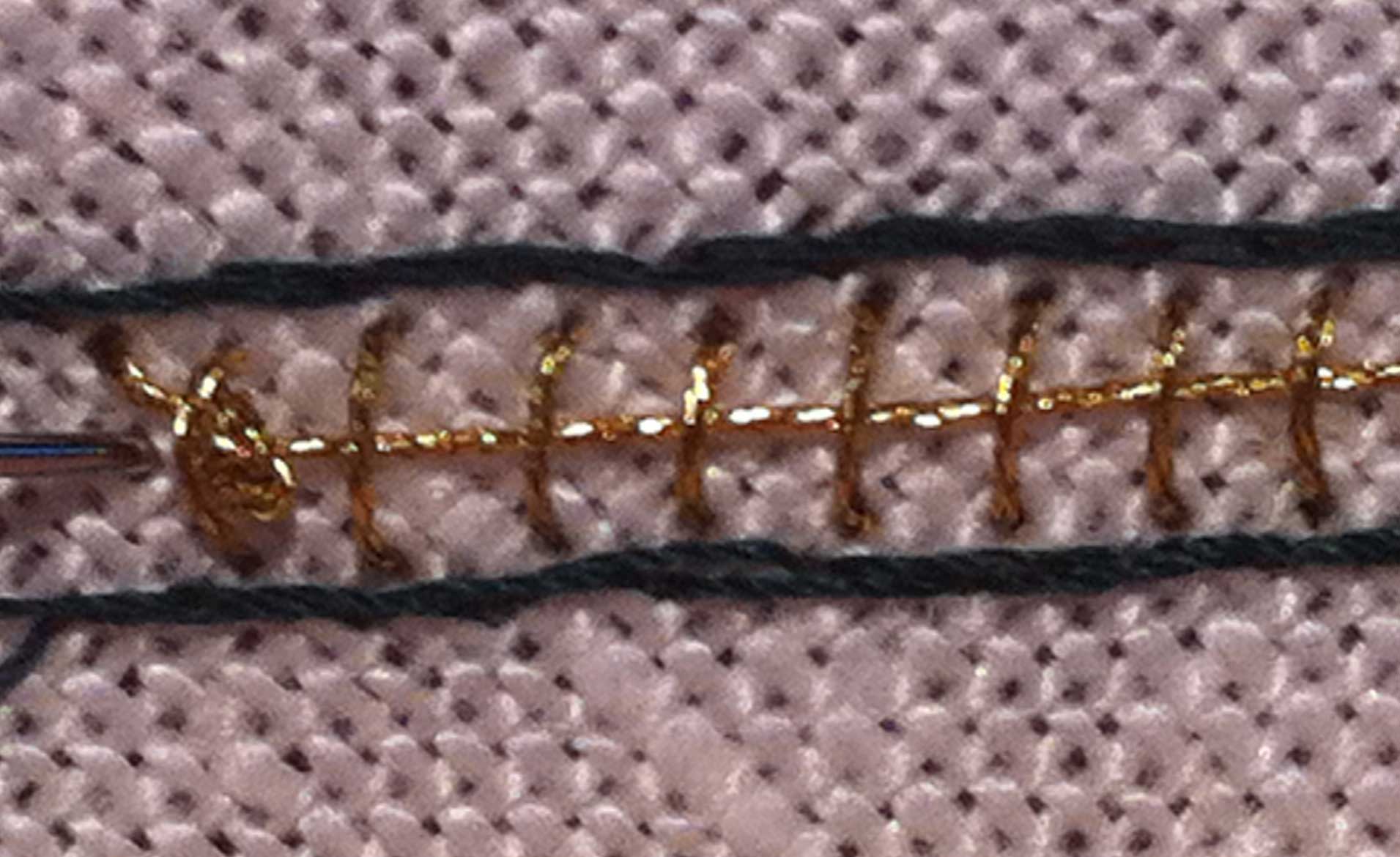
    1. First we need to get the stitch started. Thread your needle and mark your fabric with two parallel lines in some fashion, either by stitching it with thread (as I have done with the green in the photo below) or with a water-soluble marking pen. Bring your needle up at point A, as shown below on my fabric (you can click the image to see it larger):


    Step 1; Bring Your Needle Up at Point A

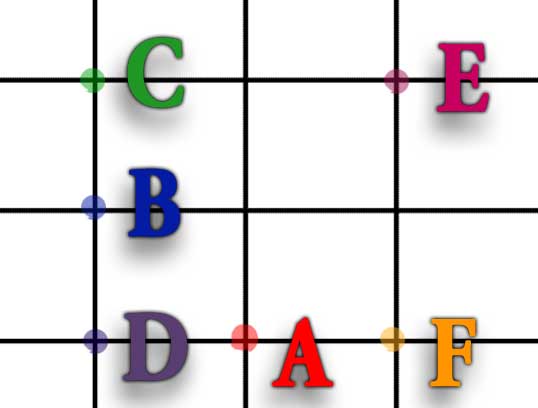
    If you’re having problems figuring out where each of these points are in your own fabric, here is a simpler chart of points A-F:


    Point Chart

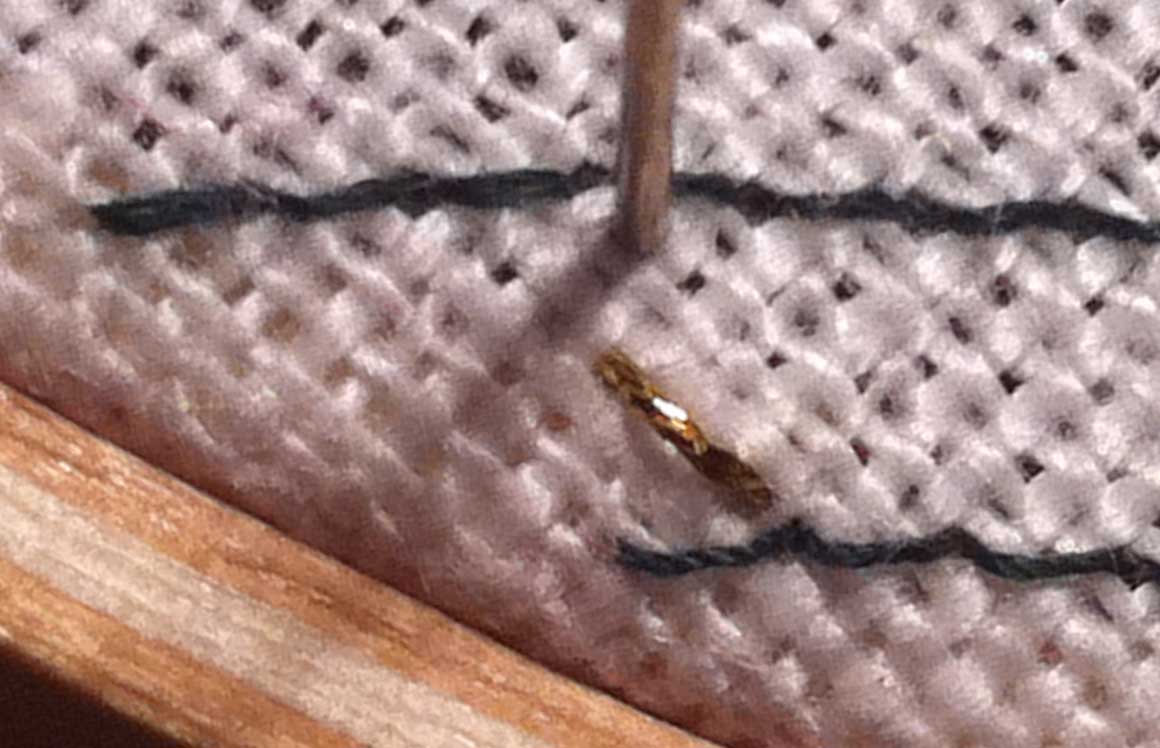
    Step 2: Go down with your needle at point B, as shown below. Pull taut enough so the thread lies flat. (Sorry for the blurry photo!)

    Step 2: Go down at point B.

    Step 3: Come up with your needle at point C. Again, pull taut.

    Step 3: Come up at point C.

    Step 4: Go down with your needle at point D.

    Step 4: Go down at point D.

    Step 5: Come up with your needle at point B (yes, you’ve already got thread in this hole, but you need to go back in here), as shown:

    Step 5: Come up at point B.

    Step 6: Go down with your needle at point E. Pull taut.

    Step 6: Go down at point E.

    Step 7: Come up with your needle at point F. Pull taut. All threads should lie flat, though you don’t want anything TOO tight, as that will make it hard to braid and pucker your fabric.

    Step 7: Go down at point F.

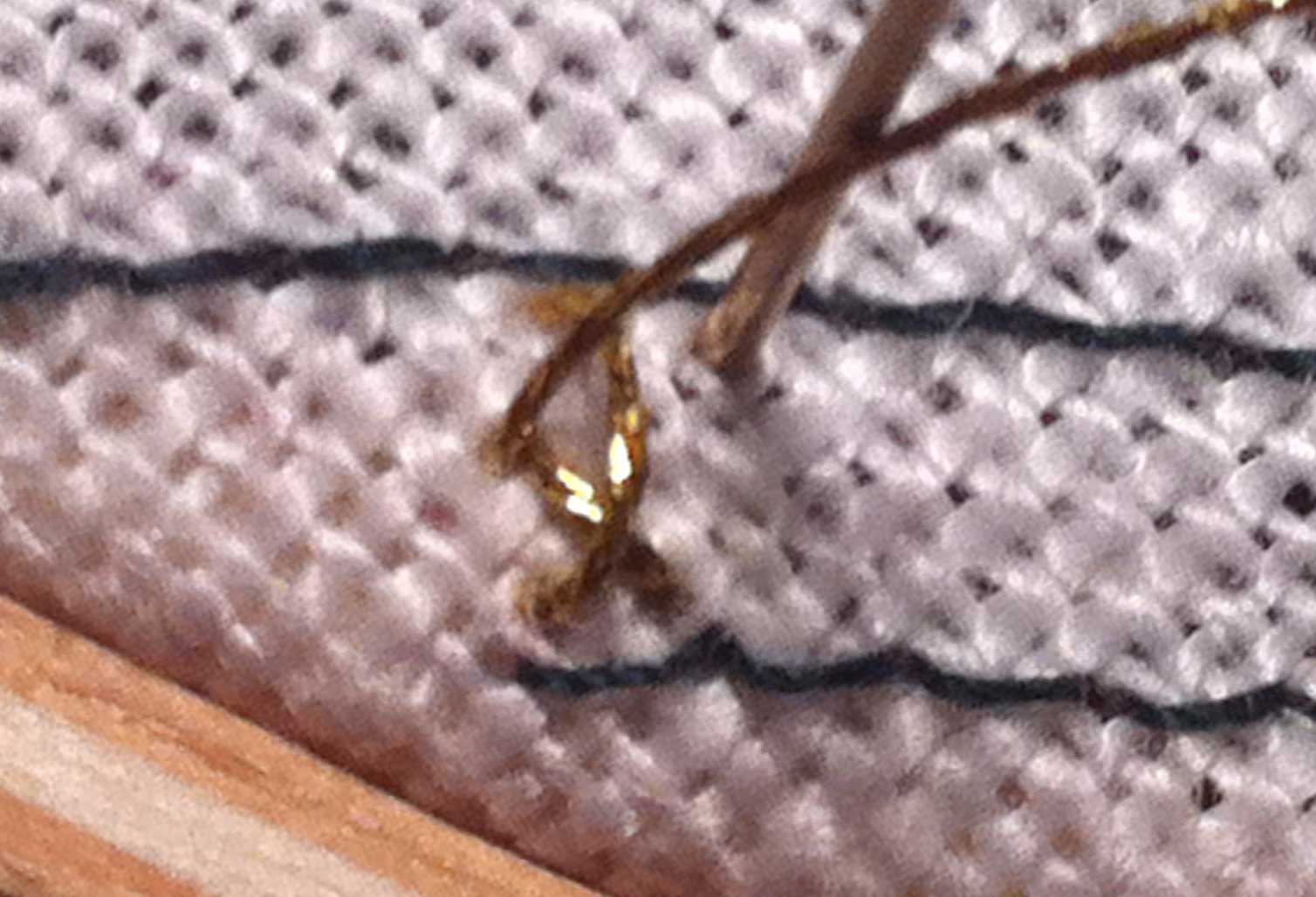
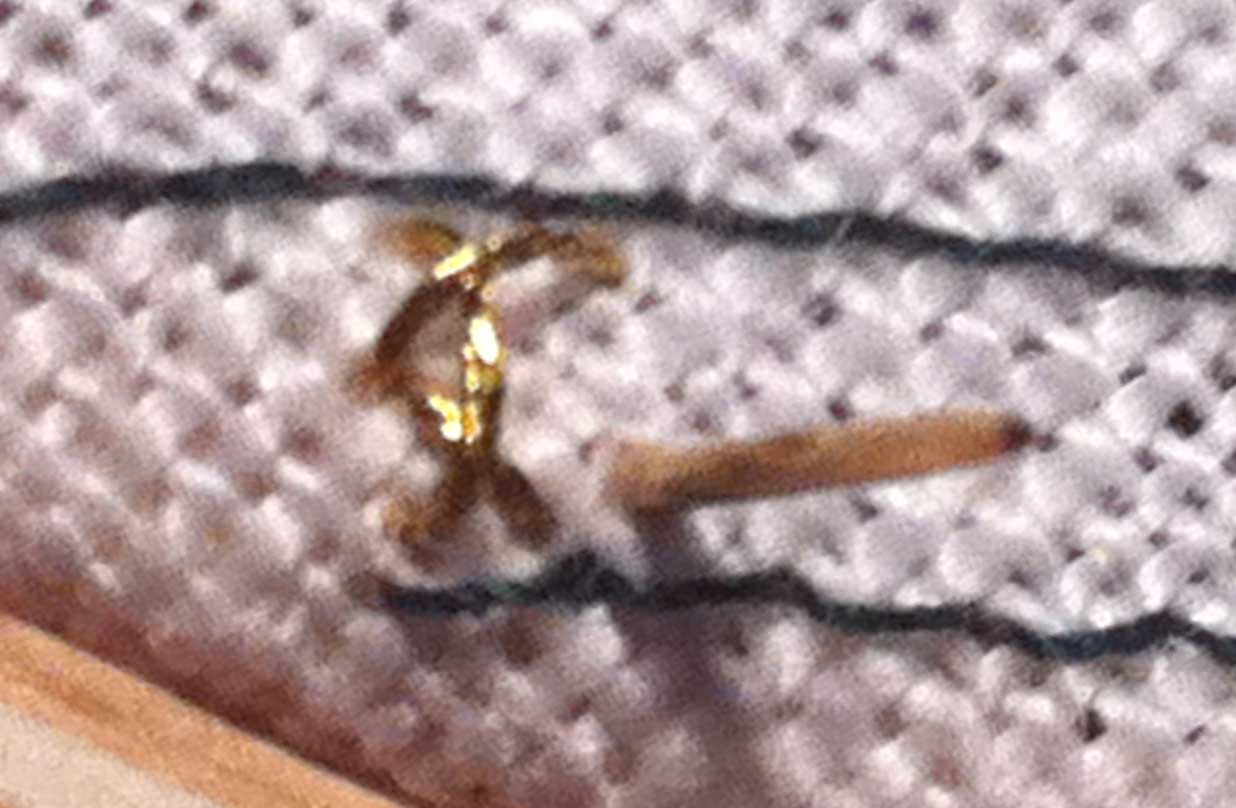
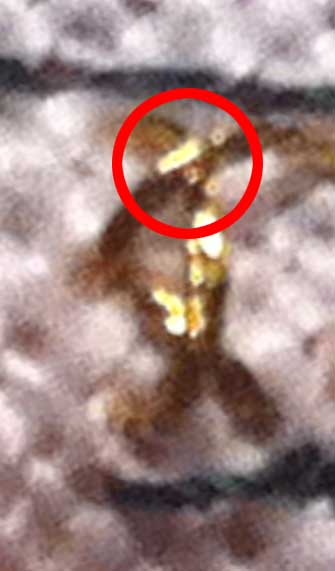
    Step 8. Now, identify the the TWO crossed threads at the top of your stitch shown in this photo:

    Identify your top cross

    Now slide your needle under this cross, going under both threads, from bottom to top as shown below:

    Step 8: Slide your needle under this cross.

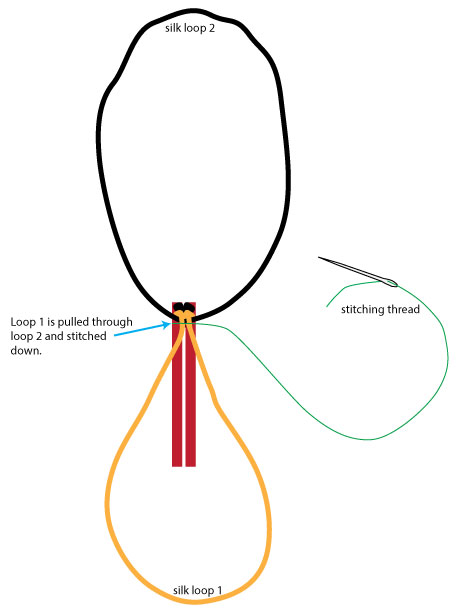
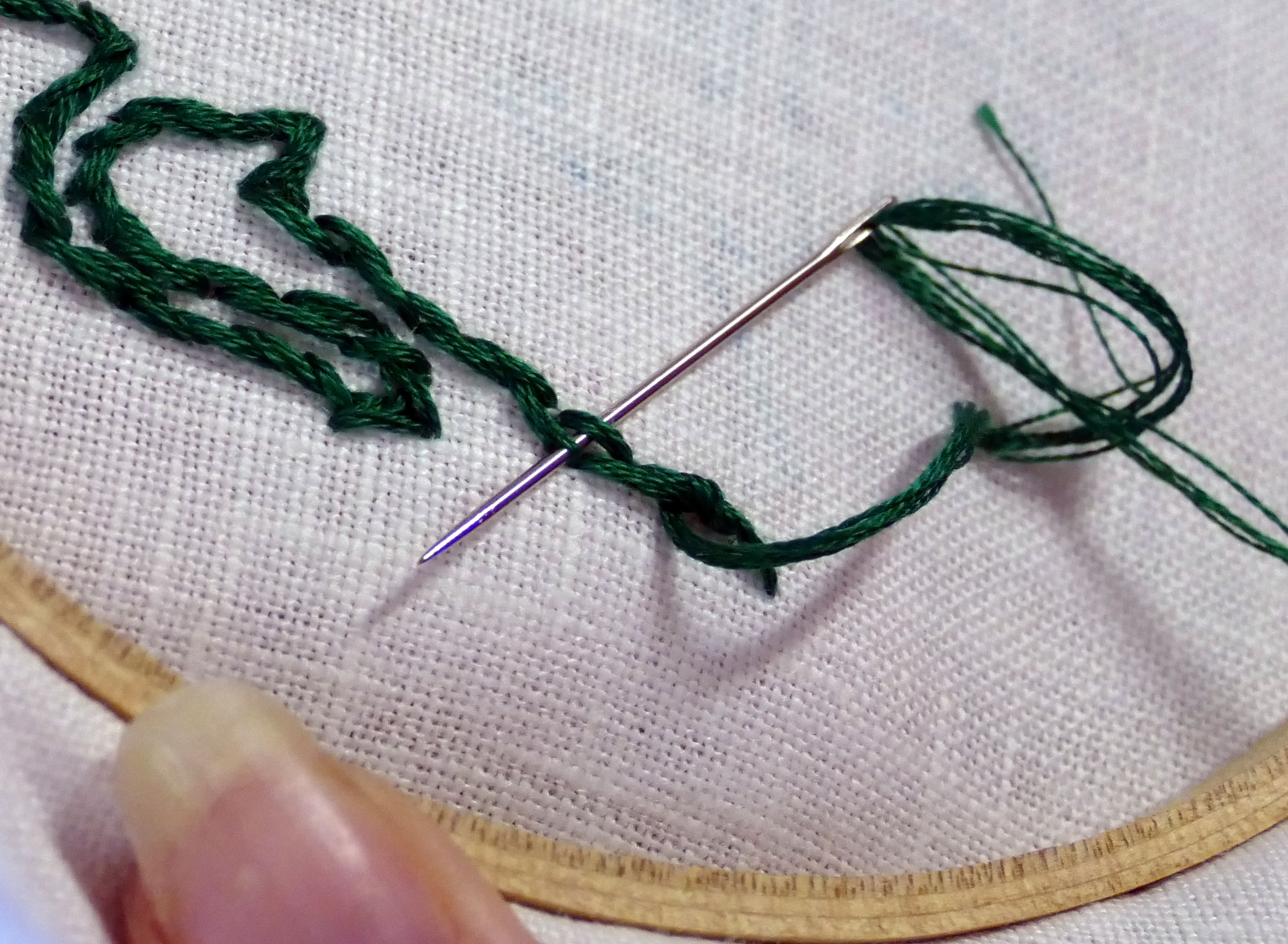
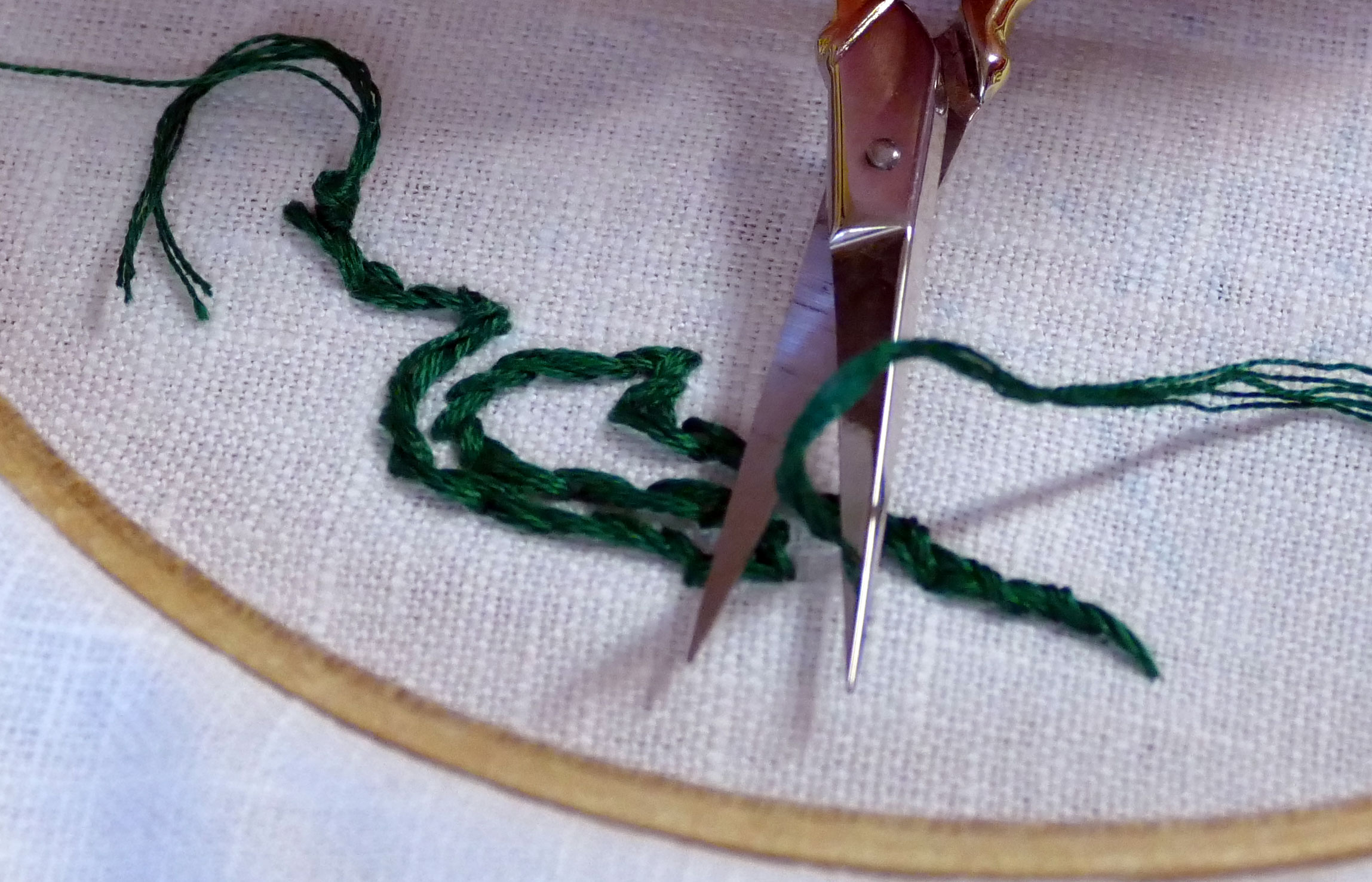
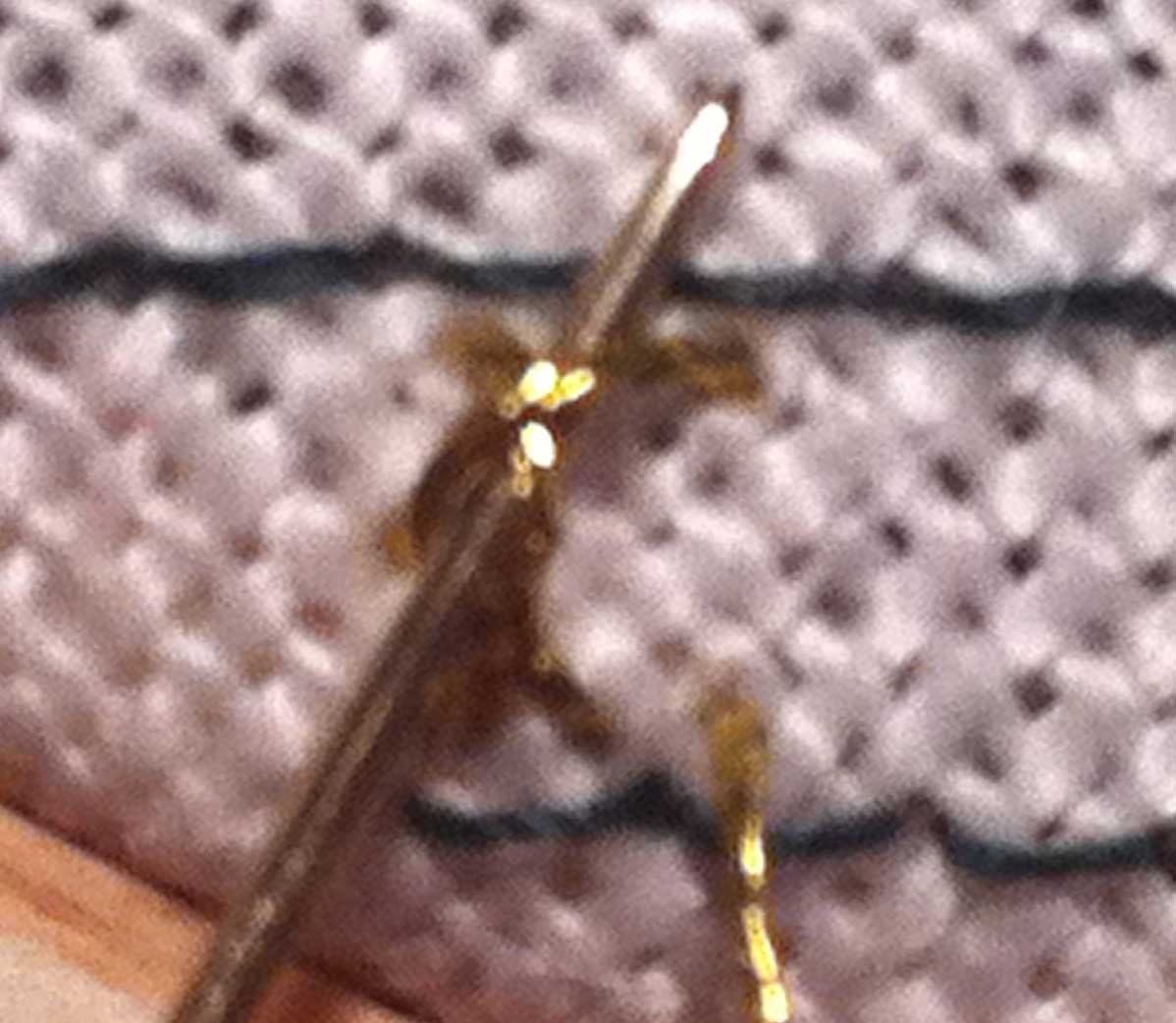
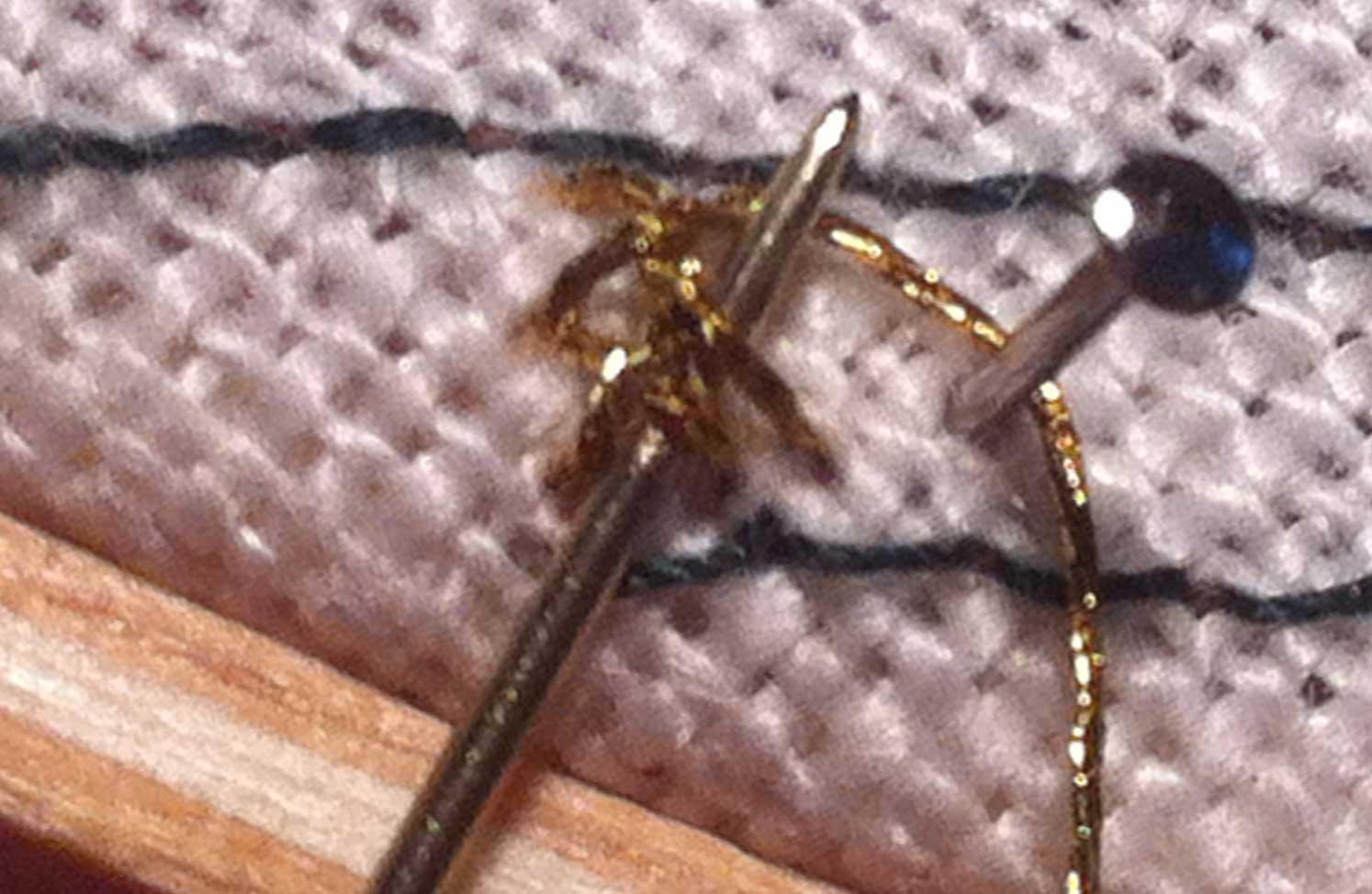
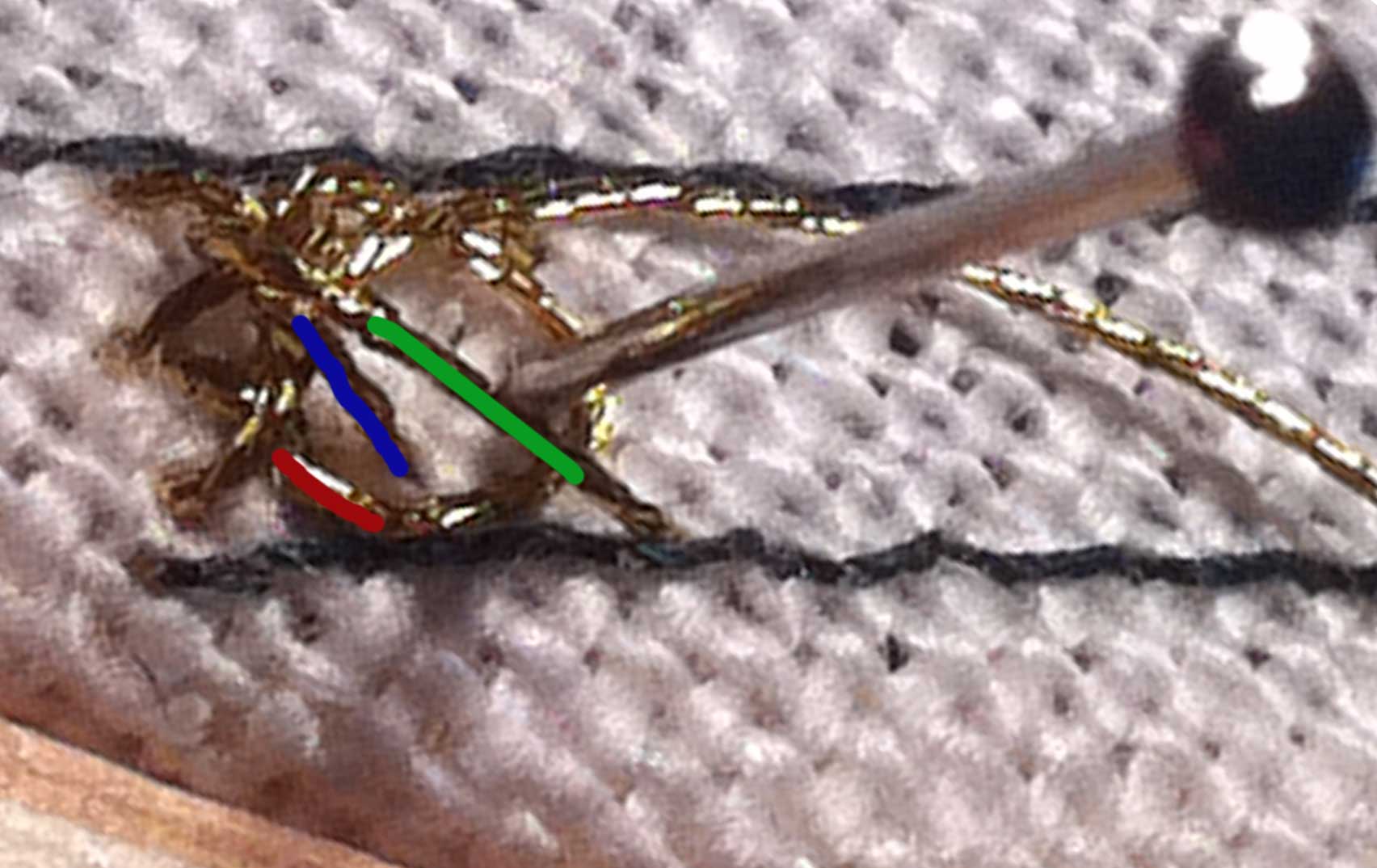
    Step 9: Next, identify the the THREE crossed threads at the bottom of your stitch shown in the photo below and slide your needle through. The three threads are the very first one you created in steps 1 and 2 above, the one you made in steps 4 and 5, and the one you just made in step 8. It can be tricky to locate these three threads — you may need to move your threads around a bit with your needle. But it’s important to go under all three threads, or your stitch won’t properly braid.

    Step 9: Slide under the three threads at the bottom.

    Important Tip: See the straight pin sticking out in the above photo? I put that there, just ahead of my stitching, to keep the loop I create in step 9 large enough for future steps. This was the key for making my braid look good. I highly recommend using a pin when you’re getting started.


    The Four Main Stitches – Step by Step

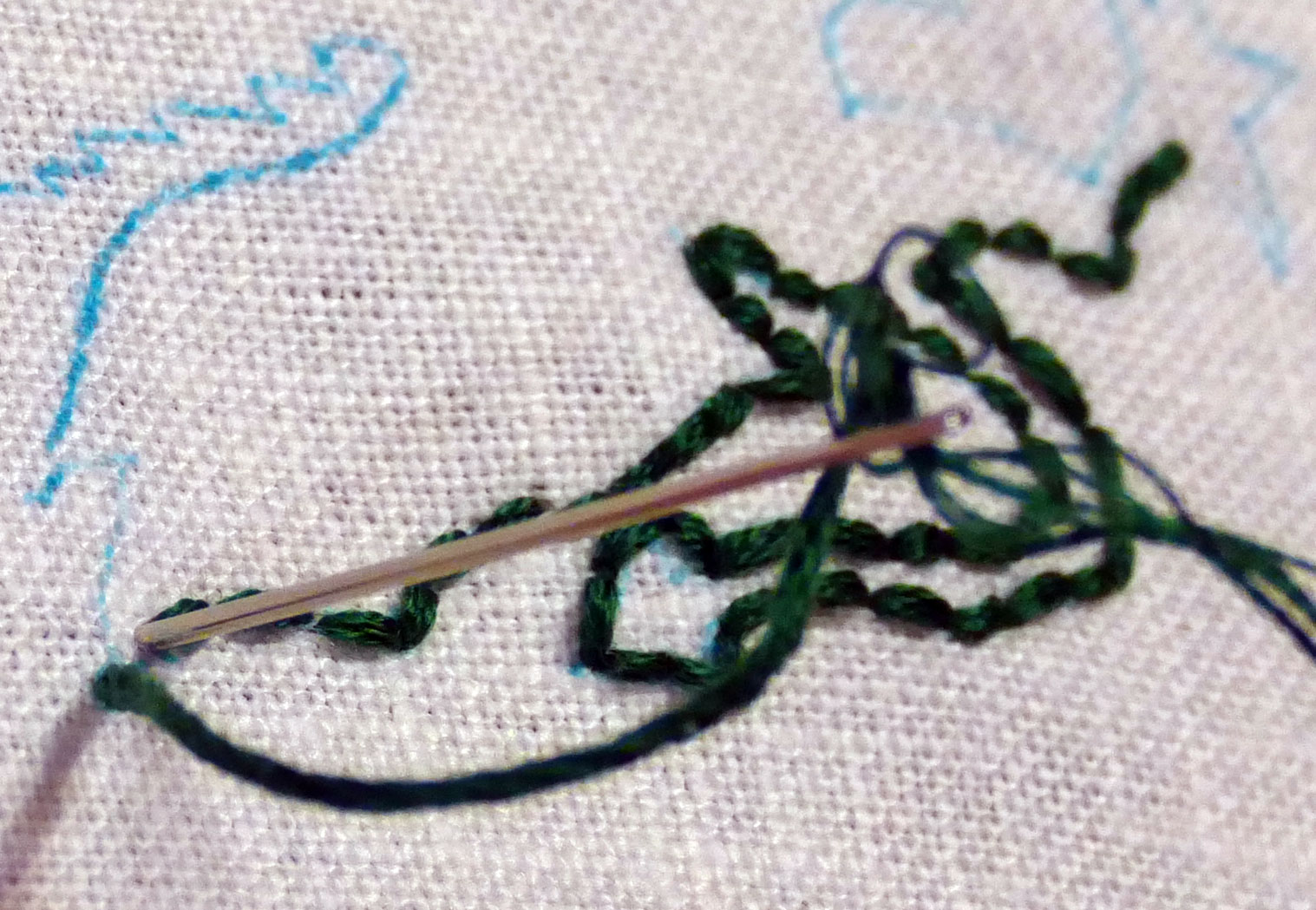
    At this point, you’ve started your stitch! Now I will explain the four steps you will do immedately fter this point, over and over, to continue stitching your braid. To differentiate from the above steps, I will use roman numerals. Step X: Bring your needle down at the top left. Keep your needle in place if you’re using one. You should pull taut, though not so tight that you strain your loop.

    Step X: Go down at the top left.

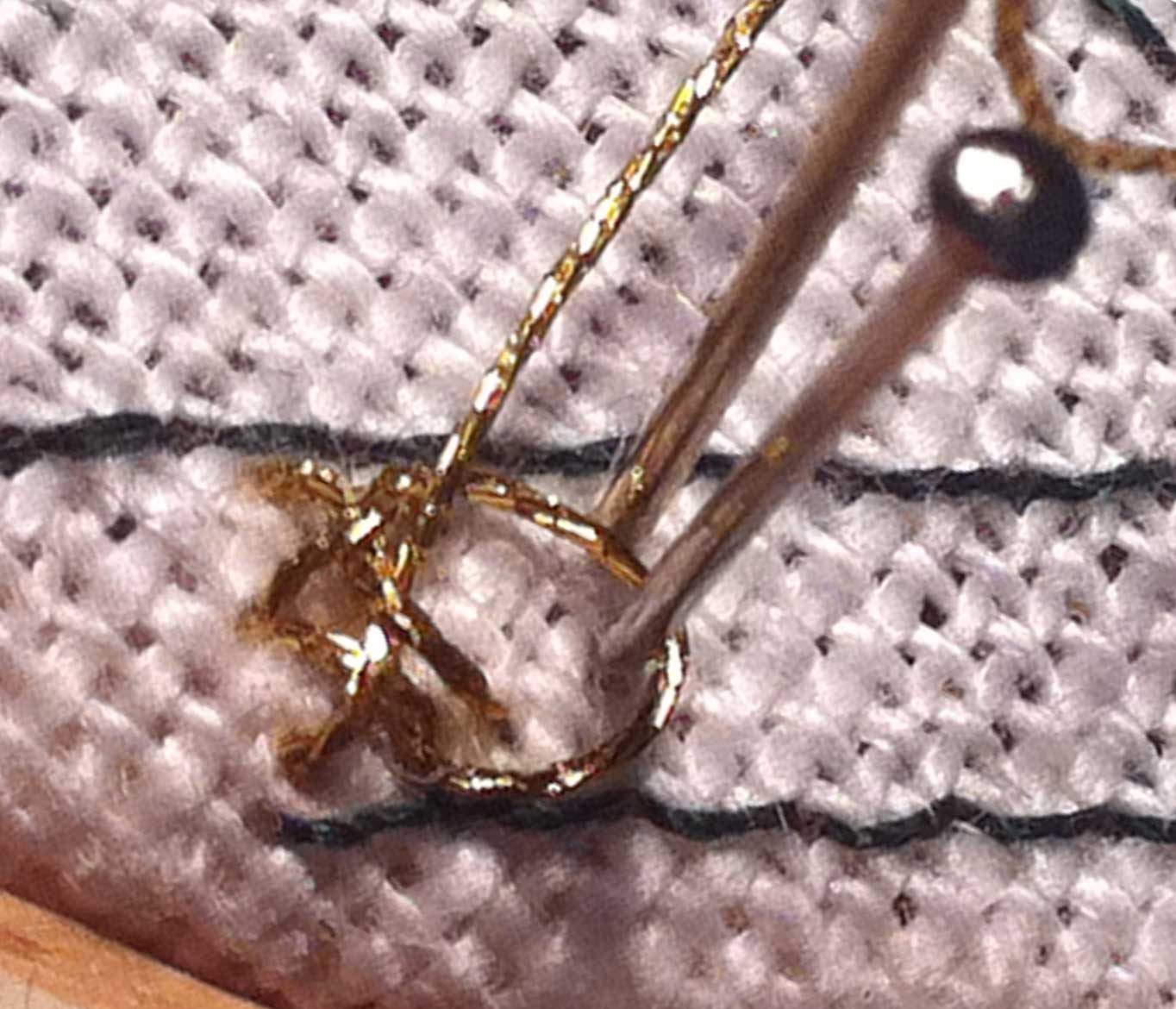
    Step XI: Come up with your needle at the bottom left, as shown below:

    Step XI: Come up at the bottom left.

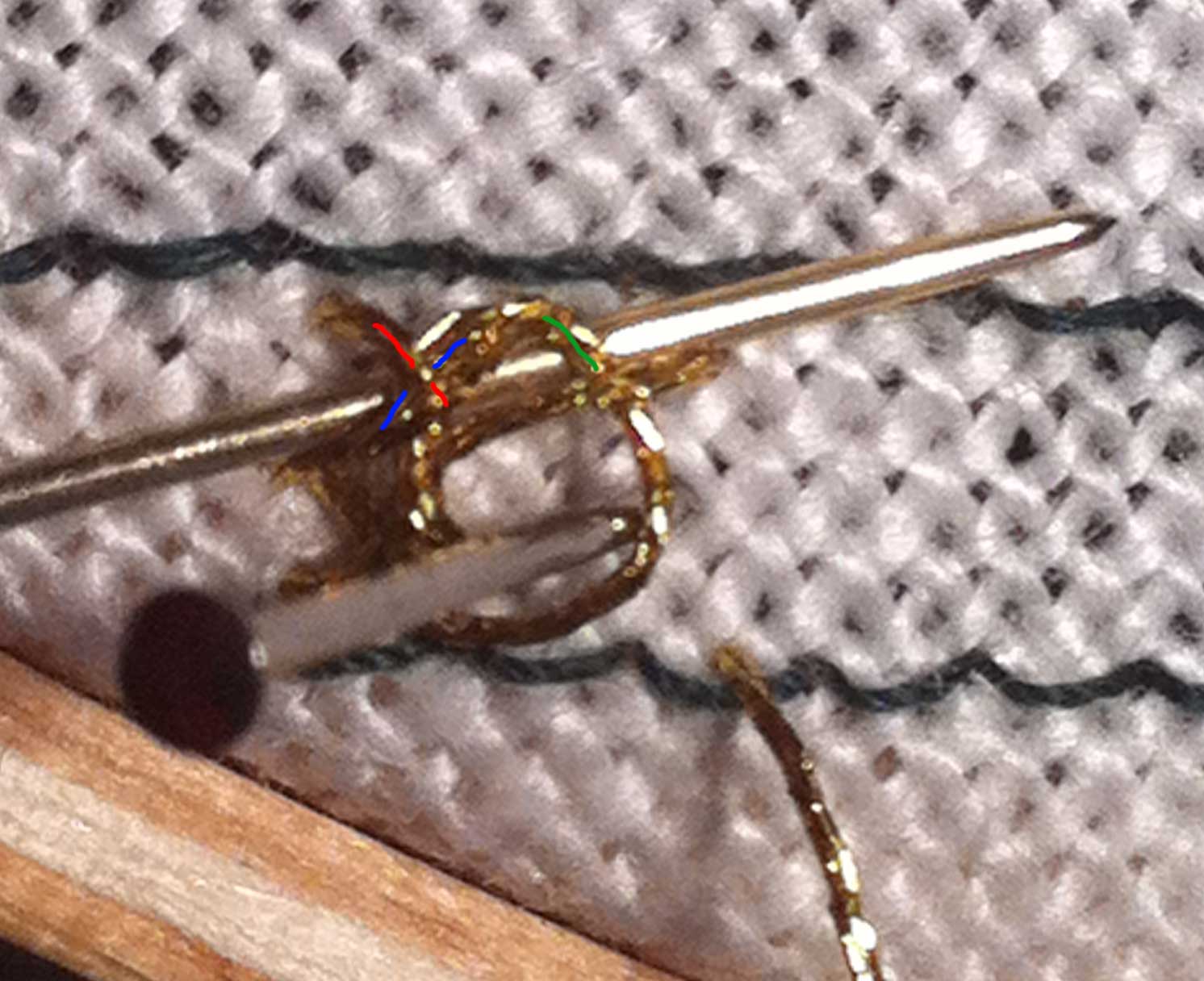
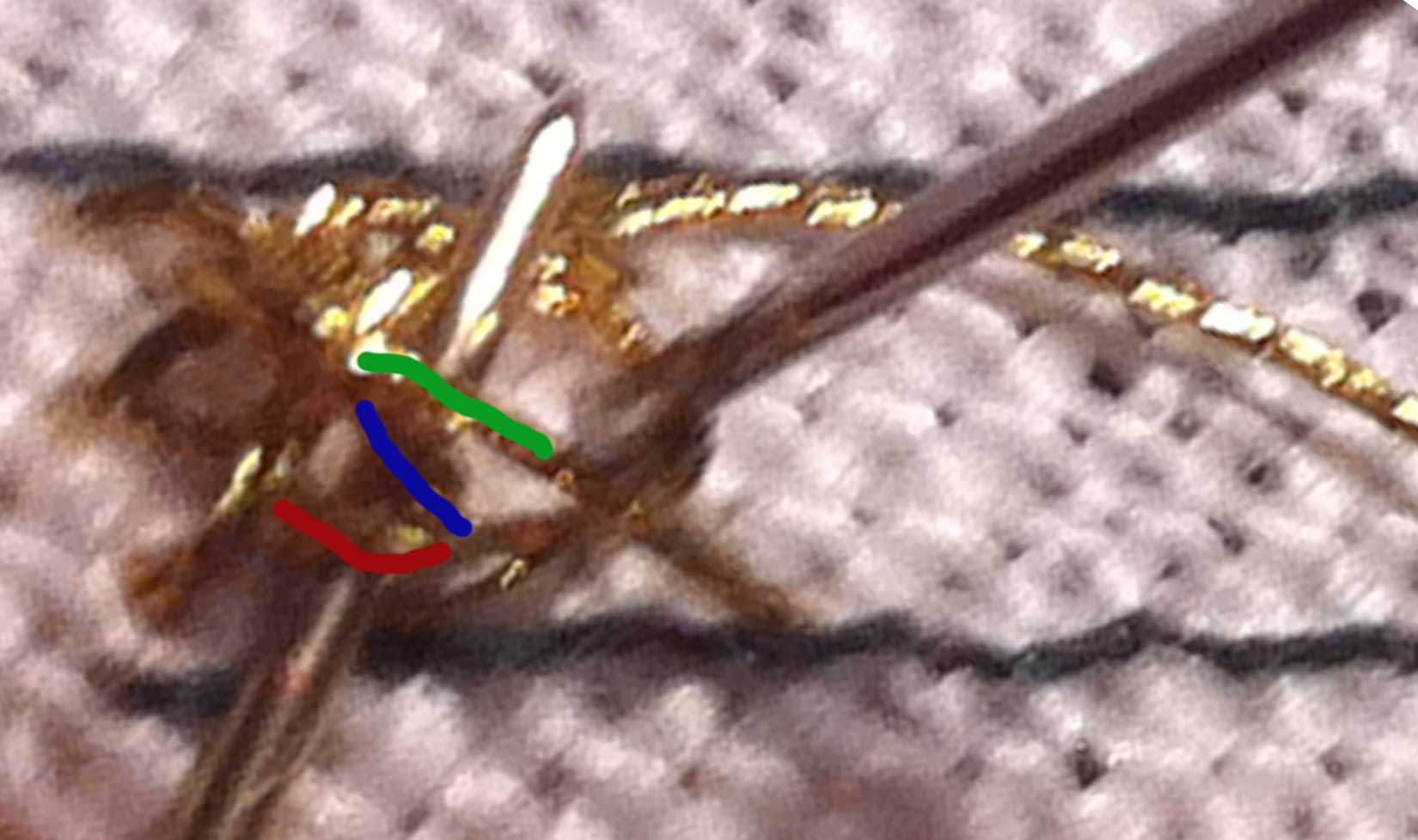
    Step XII: Slide your needle through the THREE crossed threads at the top of your stitch, as shown below. To help you identify these three threads (it can be tricky until you know what to look for), I’ve colored them in the photo below (click to see it larger).

    Step XII: Slide your thread under the three top crossed threads

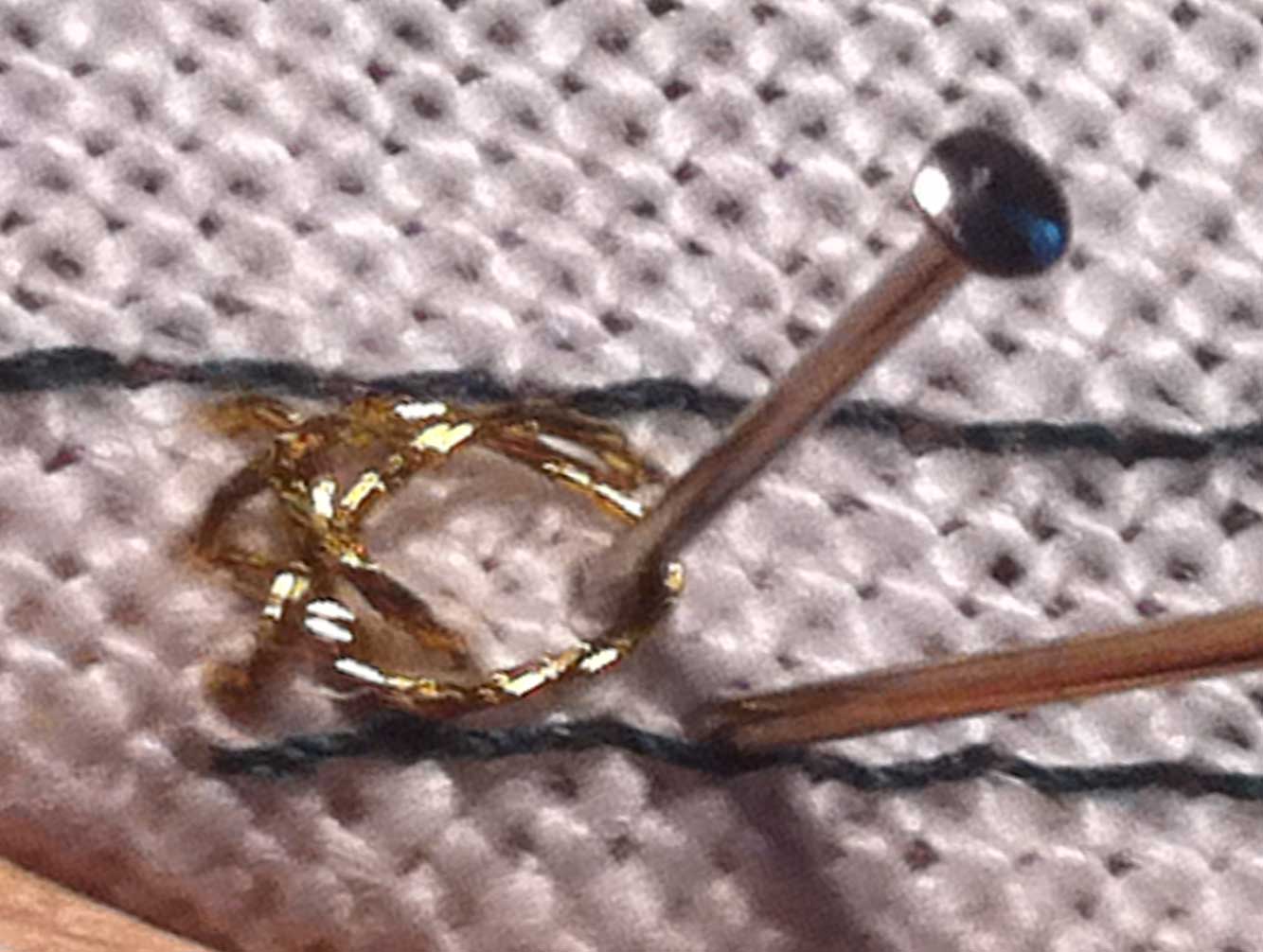
    Step XIII: Bring your thread around in a loop to the right and slide your needle up under the THREE cross threads at the bottom. Again, it’s hard to identify before you get practised, and I’ve colored the three threads again. (Note: My photo came out blurry, so I’m showing you two images — one with the threads before the needle goes through, to help you find them, and one with the needle sliding through.) If you’re using a pin to keep your loop in place, you can now move it over to the left in preparation for the new loop you’ll be making in this step.

    Identify your three bottom crossed threads

    Step XIII: Slide your needle through the bottom three crossed threads

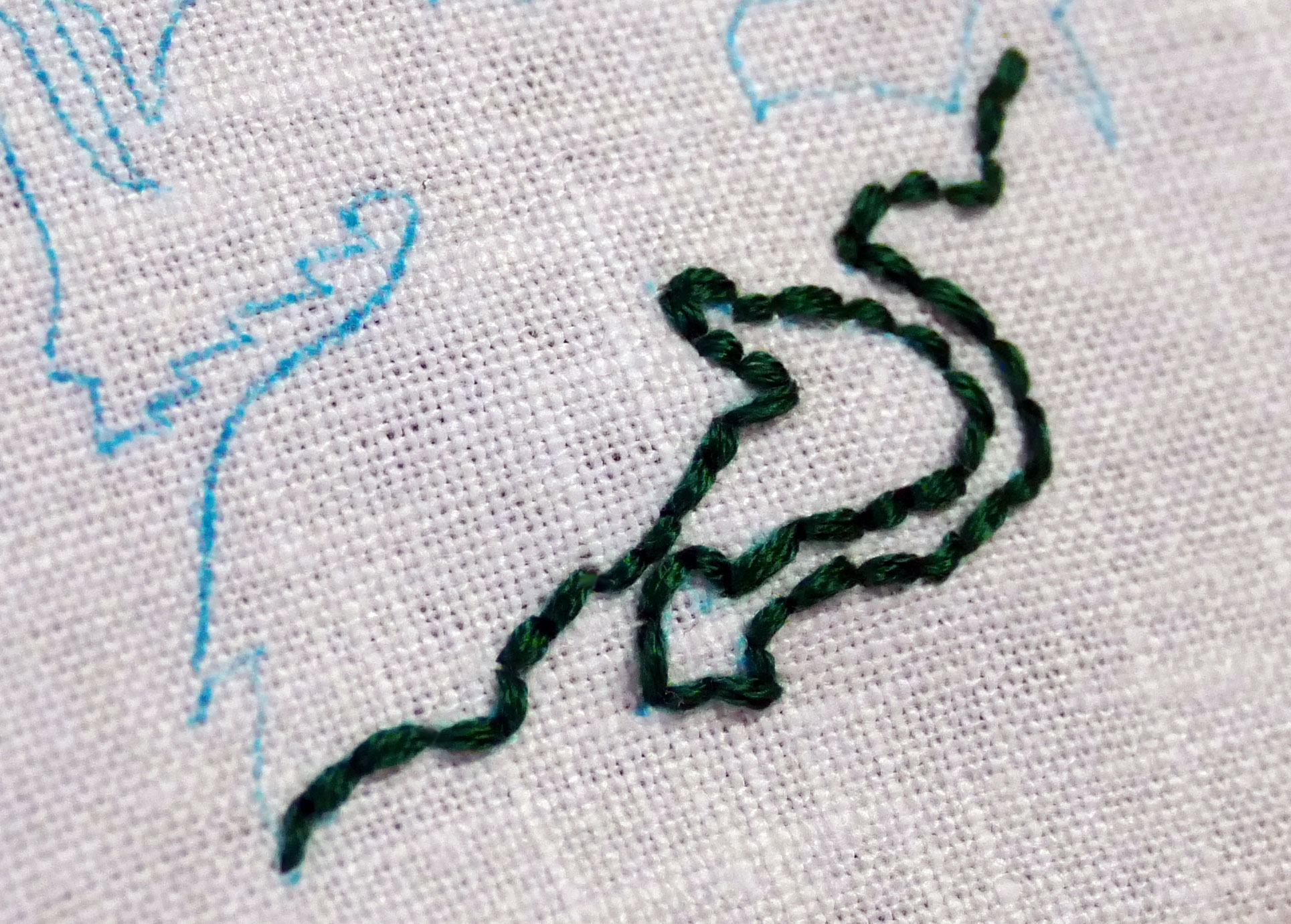
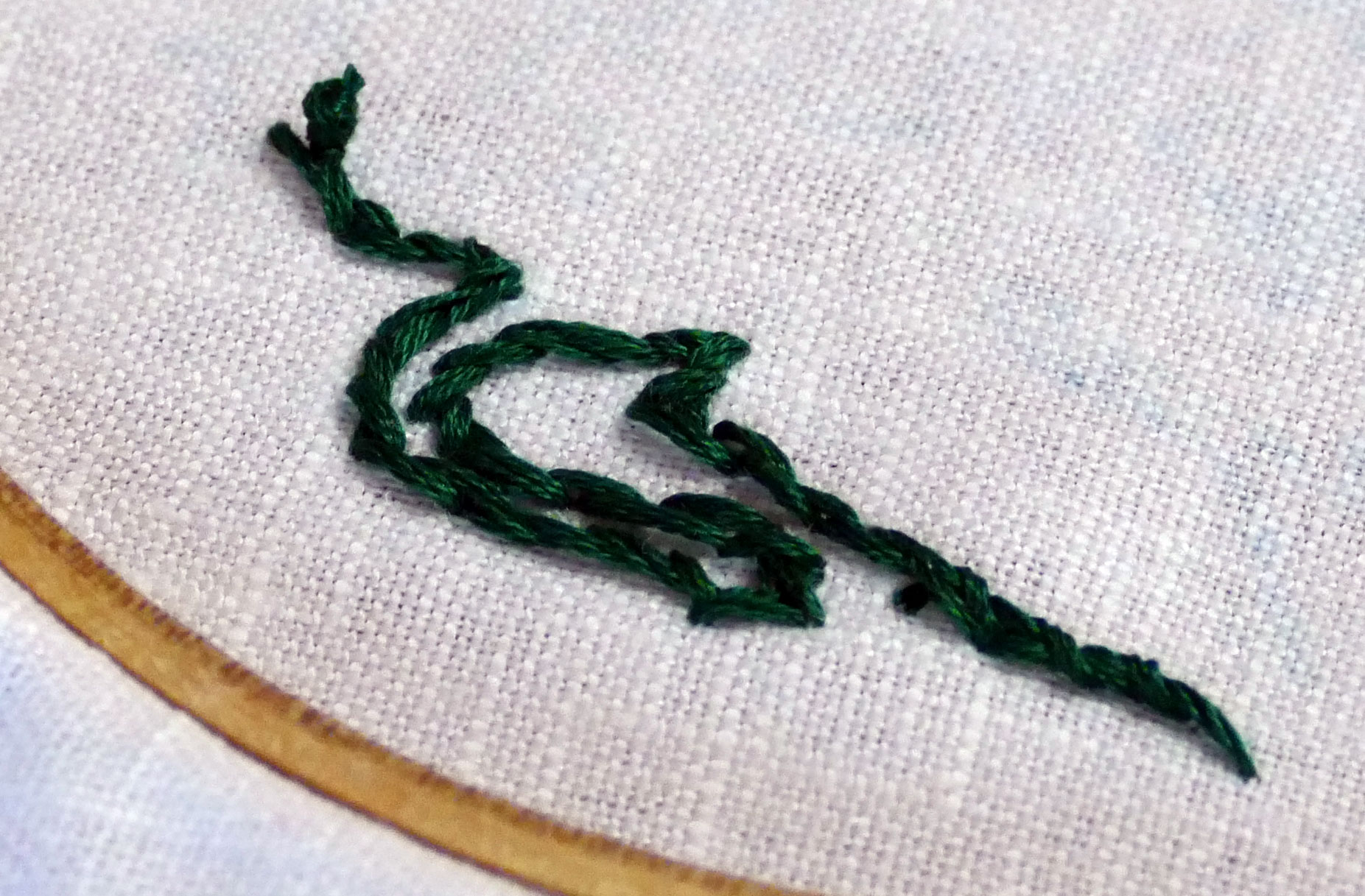
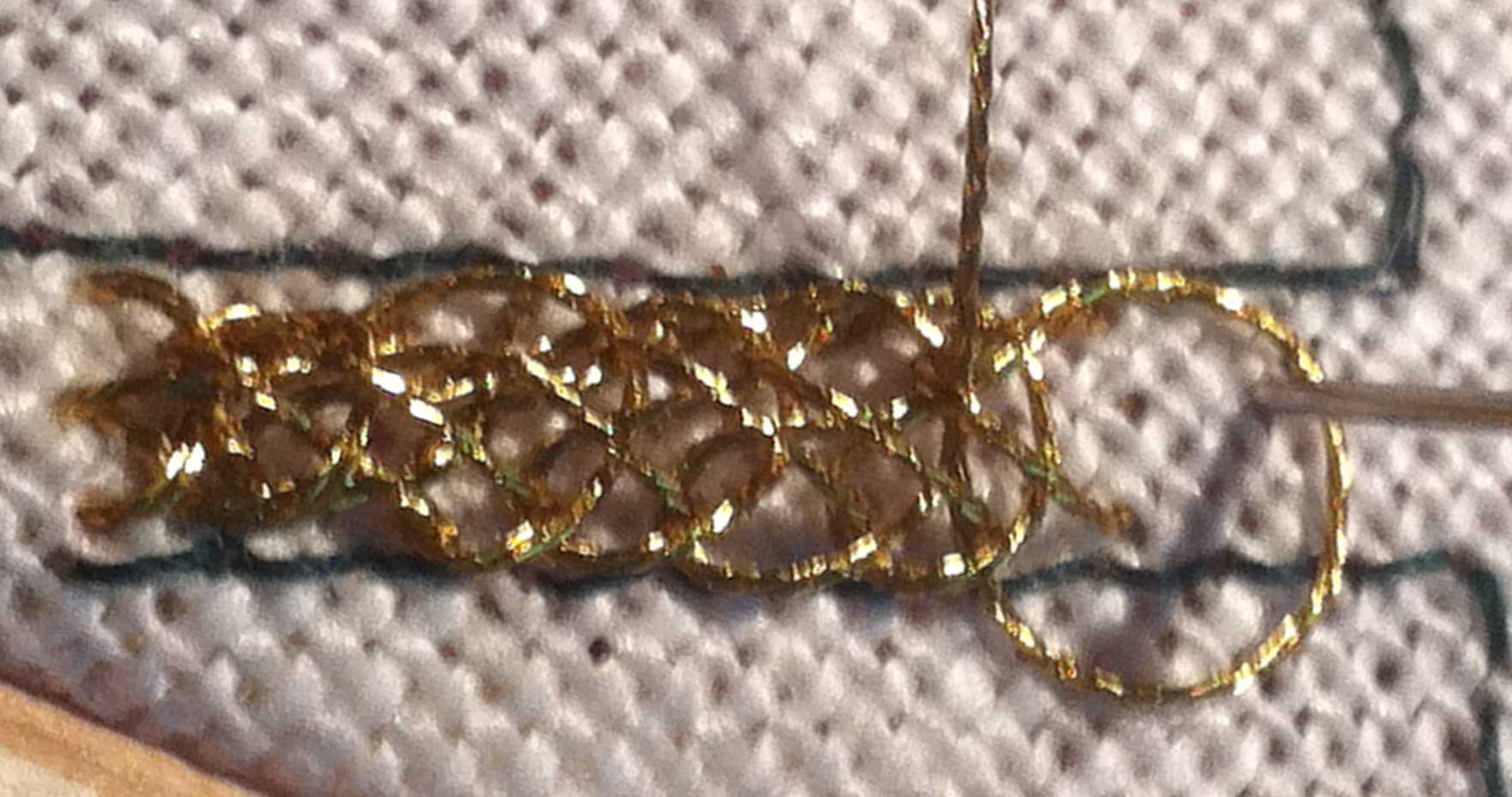
    That’s it’. Now you just repeat steps X-XIII until you’re done! This is how it looks after several stitches:

    A plaited braid!

    Notes:

    • Different threads will produce different results. The thin thread used here gives a looser looking braid — the metallic thread I’m using is pretty stiff. I like this. A thicker or fluffier thread would fill the braid in more (see photo lower on this page). I have ordered more thread and will experiment with different types! A thicker, yet more flexible, metallic thread would be nice!
    • As you go along, you may notice that your most recent stitches don’t look like the older stitches, but don’t worry. They aren’t being pulled in the same manner because you haven’t braided them yet. As you continue stitching, you’ll see that things fall into place.
    • If you don’t want to use a pin (it can be cumbersome — I like to hold it with the thumb and forefinger of my left hand, under my fabric, as I stitch), you could try using your right thumb to hold it in place and to stitch with your left hand. Or reverse the stitches and go in the other direction if you’re right-handed.
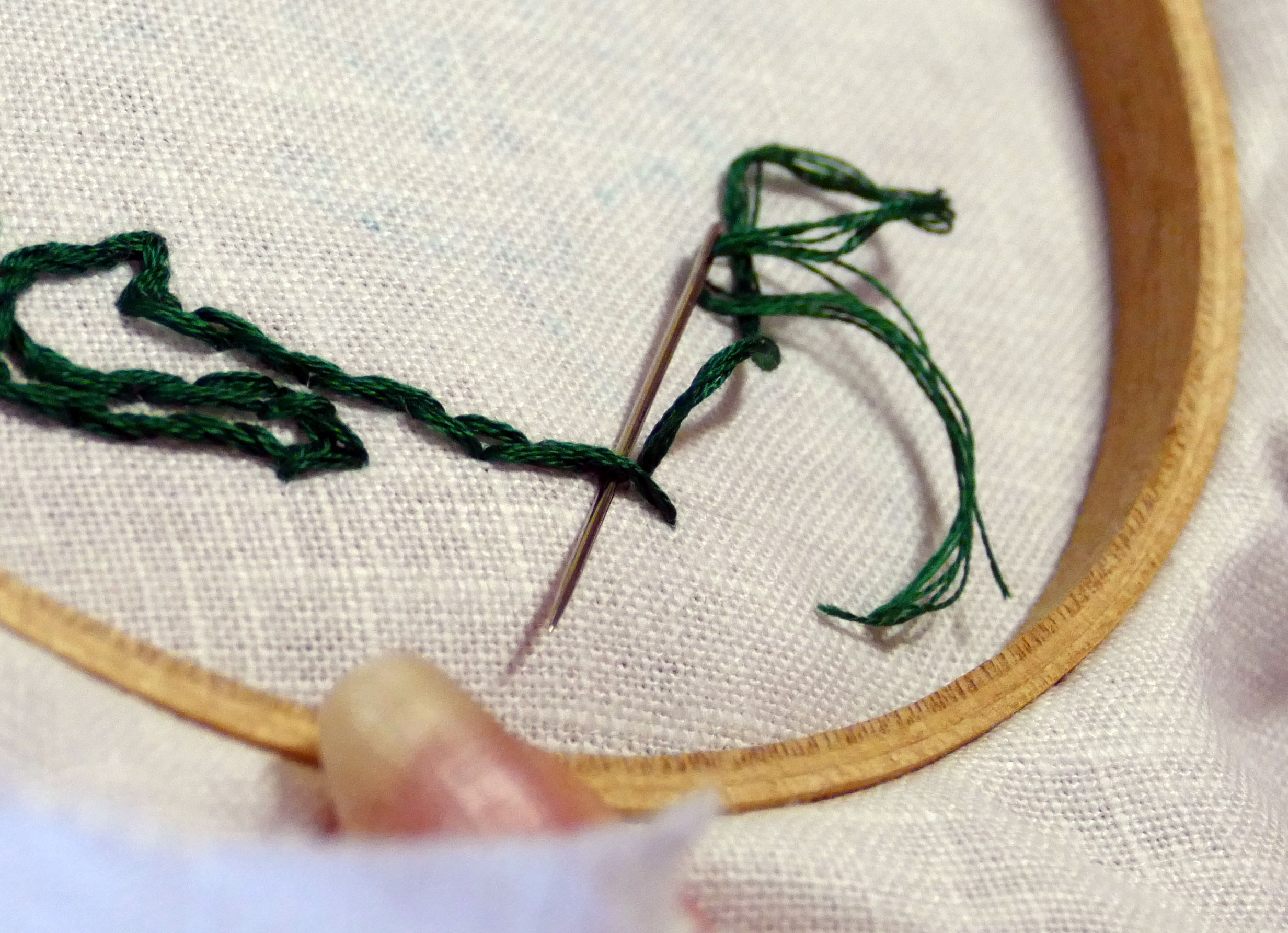
    • If you run out of thread, stop after step X, knot your thread under your fabric, and slide your needle through the stitches in the back, like this:

      Secure your thread underneath

    Here is what the stitch looks like when done in a thicker thread:

    Plaited braid stitch in thick thread

    In the thicker thread, it’s easier to see that the stitch matches the one in this extant coif from the 16th century:

    Coif with Gold Braid Stitching

    And here is some of my plaited braid stitching on my current project:

    Plaited braids on embroidered caul

    Web links I found helpful while learning this stitch:

    I hope this is helpful! Please let me know if you have any questions!

    Blackwork Needle Book: Adapted from a Pattern from Ensamplario Antlantio by Countess Ianthe d’Averoigne

    27 September 2011

    My First Blackwork Embroidery

    Over the last few weeks, I’ve really been enjoying blackwork embroidery. It all started when I attempted to embroider a smock in a 16th century painting, and in researching it, decided that it must be blackwork. (It turns out I was wrong — it’s goldwork.) My first completed project was a little winged heart that I stitched onto the canvas cover of my packbasket. Then I moved on to the blackwork favor for Gregor. Still not satiated, I created a tiny wool-and-linen needlecase. And now I’m working on a full-blown caul with traditional blackwork and Elizabethan plaited braid stitching. I’m just loving this!

    My Little Needle Book

    But today I want to talk about that little needle book I made. I love this thing. It was so simply to make — it took just a few hours — and it sits on my desk everyday, looking all cheerful and cute. All it took was a bit of leftover wool, some counted linen, some suitable thread, and a needle. All of these were just hanging about the studio, which made it very easy to make.

    The design on the front of the needle book is adapted from Ensamplario Atlantio by Countess Ianthe d’Averoigne. Specifically, I was inspired by plate 19 (pattern 114) because, with a little modification, the center design could form four hearts. (Remember, I am using a winged heart for my device.) It was a joy to stitch!

    The book I mention, Ensamplario Atlantio , is actually freely available online as a PDF at the author’s web site, String-Or-Nothing.com. The book is 40 pages long, with 35 plates of designs — over 220 or so individual all-over or filling patterns for double running stitch embroidery. The author is a Mistress of the Laurel for her blackwork embroidery. Her web site is FULL of wonderful ideas, projects, and musings on the subject. She is a real treasure, and I am grateful she’s chosen to share her passion with us through her web site and this book. Now if only I could get my hands on a copy of The New Carolingian Modelbook, but alas it goes for over $100 on the used book market now. I wish she could offer that book as a PDF — I would happily pay $20 or more for it. I wonder if she retained the rights to it, or can get them. Hmm, I should ask her! (Edited: Done!)

    Anyway, I’m now looking for historically accurate patterns to put into the squares I’ve stitched on my caul, such as flowers, animals, or other things embroidered in the 16th century.

    My First SCA A&S Display Experience at Vikings Come Home

    19 September 2011

    I had a great time at Vikings Come Home XX (20) in Traverse City, MI this weekend. For the first time, I brought along a finished project (the blackwork favor I made for Gregor) to include in the A&S display at this event. I had a reasonable idea of what to expect, having read a lot of things online, though firsthand experience is always most helpful.

    I arrived later than nearly everyone (a 4-hour drive on the morning of the event will do that) and was both the last pre-registered person to show up and the last person to set out their project in the A&S display. When I arrived at the display, I discovered that they were having a Jewel Competition for any project that had documentation — the idea is that folks could pick up a jewel from a pile and place them in little cups in front of a project if they liked it. I think this is called a populace bean count vote. I wasn’t aware they were doing this — I was just intending to put my project on display. So after I set up my favor on the table, I did not put out a cup. Besides, nearly all the jewels from the main pile were gone at this point — I saw only a few left to give out. No one was really around at this point, so I left to find my friends from Cynnabar.

    My Blackwork Project at the A&S Display

    When I came back by the A&S display about 30 minutes later, I discovered someone had put out a cup in front of my project and there were now two jewels in it. That made me feel really great! Someone liked my work! I wandered off, but later was nearby again for a demonstration of glass beadmaking (really excellent and fun!) and saw another person taking several photos of my work. Cool! I wish I could have spoken to people to see what they thought, but I’d never approach anyone. I was hoping to have the chance to talk about the project, and discuss the projects of other people, but I just arrived too late. I think at Pennsic you had the opportunity to sit down with your work and talk to folks who came by … I’ll definitely have to do that next year. I love talking to others — I learn so much from them.

    By this point, it was almost time for court, so I came back to the display to collect it. As I approached the building, Lady Helena mentioned that Donnershafen’s Minister of Arts and Sciences, Lady Diamante da Berra, was looking for me. ‘Oops, I must be late picking up my project,’ I thought. But when I got to the display, I found her standing in front of my project, reading my documentation. She said she was really impressed with both my work and my documentation, and asked if she could keep the documentation, or if I could e-mail it to her. I gave it to her, of course. She also said that my project had collected five jewels, and that she wished she had more time to look closer at it. That was very kind of her! She indicated a red ribbon with a bead on it that she’d placed there as a token — how cool was that? That ribbon is going with my other SCA treasures.

    All in all, it was a very positive experience, and I am eager to enter an A&S display again. The only thing I regret is not putting it out earlier, as I don’t think any of my friends of Cynnabar had a chance to see it (they’d visited the display earlier in the day), and I value their feedback highly. I would enjoy the opportunity to talk A&S more! That just means I need to go to more events, now doesn’t it?

    Here is my A&S Documentation as a PDF (or, if you don’t want to view a PDF, look here) — I’d REALLY love any feedback anyone has to give on it, as I want to be sure I am doing it right. Thank you!

    A Favor for My Champion: Blackwork Embroidery of Chivalric Virtues

    16 September 2011

    I have someone who champions my causes, fights for me, supports me completely. He is Gregor. He is my personal champion. So I have made him a token to wear into battle. The token embodies five important chivalric virtues, with related emblems and personal symbolism. Here is a photo of the favor:

    An embroidered blackwork favor for Gregor

    The favor measures about 5″ x 7″, and is designed for Gregor to wear on his belt. I was inspired by historical embroidery. I intend to display it at Vikings Come Home tomorrow as my first A&S project, so I wrote up some documentation to explain it.


    Blackwork Embroidered Favor

    silk and metallic threads on linen

    by Genoveva von Lübeck

    Documentation Summary
    Inspired by the embroidered linens of the 16th century, I created a favor for my fighter to wear to tournaments. The favor employs “blackwork” (Holbein stitch in repeating geometric patterns) with both silk green thread and metallic gold thread, as well as period-appropriate pictographic representations copied directly from 16th c. emblem books, just as embroiderers did at that time. I closely studied high-quality photos of extant embroidery work at the Victoria and Albert Museum and borrowed patterns and techniques used during this time period. All stitches used in this piece (Holbein, backstitch, speckle, chain, and stem) were also used in period embroidery work. The ground material is a 32-thread Belgian linen, which was worked in 1 or 2 thread sections with single strands of silk or metallic thread.

    Why a Favor?
    I wish to encourage my fighter, Gregor Reinhardt von Holstein, in the chivalric values by presenting him with a token. For historical evidence of favors, I offer this passage from The Treasure of the City of Ladies, a book written in 1405 by Christine de Pisan:

    “If this lady sees any gentleman, be he knight or squire, of good courage who has a desire to increase his honor but does not have much money to outfit himself properly, and if she sees that it is worth while to help him, the gentle lady will do so, for she has within her all good impulses for honor and gentility and for always encouraging noble and valiant actions. And thus in various situations that may arise this lady will extend wise and well-considered largesse.”

    Why The Pictograms?
    I was inspired by a 1570 embroidered work I found in the Victoria & Albert Museum (T.219-1953). This piece has a large center illustration of a shepherd, surrounded by unusual emblems and mottoes, worked in the characteristic blackwork of the period. I was curious about the emblems, and quite by chance, discovered that many of the emblems in this piece were clearly copied directly from The Heroicall Devises of M. Claudius Paradin, translated from Latin into English by P.S. William Kearney (London, 1591). The book illustrations of the emblems and the embroidered emblems are nearly exact! A knowledge of emblems and their use in art was part of the intellectual climate of Elizabethan life—the images represented important allegories.
    What Do the Emblems Mean?

    I chose emblems that represented the chivalric values I wish to encourage, as follows:

    Page 311 of Heroicall Devises

    Honor: The emblem of a crown of grass (not a laurel) is from page 312 of The Heroicall Devises. The motto is “Merces sublimis honorum” (the reward of honor is great). The crown was awarded to those that had valiantly subdued their enemies and, while it was only made of grass, flowers and herbs found at the place of battle, it was thought to be the most honorable of all and held in the greatest estimation. This emblem represents honor and encourages my fighter to seek great stature of character by holding to the virtues and duties of a knight (though he is not one), and realizing that though the ideals cannot be reached, the quality of striving towards them ennobles the spirit. View the page of the book at http://emblem.libraries.psu.edu/parad311.htm

    Prowess: The emblem of the sword is from page 218 of The Heroicall Devises. This emblem depicts the hand of Marcus Sergius, who famously fought in Gaul with an artificial iron hand—he is a symbol of prowess and manhood, overcoming personal obstacles to attend to duty. I encourage my fighter to  seek prowess and excellence in all endeavors expected of a knight, martial and otherwise, seeking strength to be used in the service of justice, rather than in personal aggrandizement. View the page of the book at http://www.emblems.arts.gla.ac.uk/french/facsimile.php?id=sm816_p218

    Humility: This emblem carries the motto “sic terras turbine perflat” on page 166 of The Heroicall Devises, which translates to something lile “so he troubles the earth with whirlwinds.” The descriptive text warns that “God our creator doth resist the proud, the high minded, lovers of themselves, and the arrogant, but giveth grace to the humble and the lowly.” This emblem represents humility, inspiring one to refrain from boasting one’s your own accomplishments, and instead tell the deeds of others before one’s own. View the page of the book at http://emblem.libraries.psu.edu/parad166.htm

    Page 32 of Heroicall Devises

    Courage: The emblem of two pillars appears on page 32 of The Heroicall Devises, depicting the Pillars of Hercules which mark the edge of the then known world. According to mythology the pillars bore the warning “Nec plus ultra” (nothing further beyond). These pillars represent the courage to go beyond what is known, choosing a more difficult path. View the page in the book at http://emblem.libraries.psu.edu/parad032.htm

    Loyalty: The central element is a personal image, combining symbolism of my own and my fighter, and thus I will not go into detail about it here. It is still inspired by an illustration from an emblem book, however. The image of the King of Lycia on Pegasus from Les emblemes by Andrea Alciato provided the image for me (view at http://www.emblems.arts.gla.ac.uk/french/emblem.php?id=FALd102). This image represents loyalty, the cornerstone of all virtues. I encourage my fighter to continue to be known for his unwavering commitment to the people and ideals he chooses to live by. There are many places where compromise is expected; loyalty is not amongst them.


    Page 150 of Les Emblemes

    Why Blackwork?

    Blackwork in silk on linen was the most common domestic embroidery technique for clothing and household items throughout the reign of Elizabeth I. Blackwork is a counted-thread embroidery which is usually stitched on even-weave fabric. Traditionally blackwork is stitched in silk thread on white or off-white linen or cotton fabric. Sometimes metallic threads or colored threads are used for accents. In the earliest blackwork, counted stitches are worked to make a geometric or small floral pattern. Historical stitches for blackwork primarily used the Holbein stitch (double running) and the backstitch, as I have done in my work, but also employed other stitches such as stem, chain, ladder, couching, coral, speckling, and others. Evidence of this can be seen in extant embroidery pieces, such as the 1598 sampler by Jane Bostocke in the Victoria and Albert Museum (T.190-1960).

    References

    “The Shepherd’s Buss.” 16th century embroidery by Unknown. Housed in the Victoria and Albert Museum, Textiles and Fashion Collection, British Galleries, room 58c, case 6. Item T.219-1953. View at http://collections.vam.ac.uk/item/O78790/embroidery/

    Sampler. Jane Bostocke in 1598. Housed in the Victoria and Albert Museum, Textiles and Fashion Collection. Item T.219-1953. View at http://collections.vam.ac.uk/item/O46183/sampler/

    The Heroicall Devises of M. Claudius Paradin, Whereunto are added the Lord Gabriel Symeons and others. Claude Paradin. Translated out of our Latin into English by P.S. William Kearney (London, 1591). In the collection of the Penn State University Libraries Rare Books Room. View at http://emblem.libraries.psu.edu/paradtoc.htm

    Les emblemes. Andrea Alciato. 1615 (translated from earlier work). In the collection of the Glagow University Library (SMAdd32). View at http://www.emblems.arts.gla.ac.uk/french/books.php?id=FALd

    Treasure of the City of Ladies. Christine de Pisan. 1405. Translated with an introduction and notes by Sarah Lawson (Penguin classics). Rev. ed.London: Penguin, 2003.

    Blackwork and Goldwork Embroidery

    3 September 2011

    Five days ago I came across a painting of a German woman from the early 16th century. I was instantly drawn to her smock, and I decided I wanted to make it — and likely her gown, or something like it, as well. Here is the painting of Dorothea Meyer by Hans Holbein the Younger:

    Dorothea Meyer (1516) by Hans Holbein

    The smock has hearts and trellises embroidered around the collar, with actual smocking in the very front below that. I think it is just gorgeous!

    So, having some linen and yellow thread handy, I thought I would try my hand at embroidery the design. I looked up embroidery techniques and learned about blackwork and the Holbein stitch, called that because you can see it in so many of his paintings. Then I dove right in and embroidered this:

    Original painting on left, trellis embroidered with the Holbein stitch on the right

    My stitches weren’t terribly even (it’s been like decades since I did any embroidery), but I was still encouraged by how it looked so I kept at it. I discovered that I should probably be counting my stitches based on the threads in the linen itself. So I counted how many threads were in my linen, and came up with 44. Yikes. Most linen that you would embroider on with counted stitches would be in the 22-28 range. I couldn’t see the holes well enough in my linen and I kept losing my place. So I went out and go some 14 thread waste canvas to put over my linen — this would be the size equivalent of a 28 thread linen embroidery as typically you would skip every other thread anyway. Then I tried again and got this:

    Original painting on top; my embroidered heart and trellis pattern on the bottom

    My stitches are much straighter now. And I was happy with this and ready to continue on to embroider the rest. But the next morning I was thinking about it, and how the stitches in my hearts were so obvious in comparison to the hearts in the painting. Then I began to think … what if this was blackwork-style embroidery with the Holbein stitch but rather actual goldwork?! Specifically the type of goldwork that uses small lenths of gold coils that are stitched (couched) onto the fabric. The more I thought about it, the more I realized that must be it. Dorothea was the wife of a bargomaster, a member of the Patriarch, and as such the sumptuary laws of the time would have allowed her to have gold on her clothing. A chat with Mistress Melisant confirmed my suspicions. So I ordered a book on embroidery, Royal School of Needlwork Embroidery Techniques, which has a chapter on goldwork. Once that arrives and I learn more, I will order some gold and couching thread and try again. I want to eventually enter this smock into an A&S competition, so I want to do it right!

    After all this, I found I was still in the mood to embroider something. All my research into blackwork made me curious to try my hand at that. So I got out some green silk thread, some waste canvas, and the canvas cover of my packbasket from Pennsic. I drew a heart onto the canvas and jumped into the project. As I went along, I added some blackwork patterns from the 16th century — a sort of three-dimensional wall along the bottom of the heart (like the embroidery on Mrs. Pemberton’s collar, another 16th c. painting also by Holbein) and a flower motif above. Then I added on wings, basing their design off a 16th century pilgrim badge. The lettering is just block letters, and I don’t think it’s period — but I wanted my name on my basket cover, so there it is. Here is the finished embroidery:

    My First Blackwork Project: A Winged Heart

    By no means perfect, but I really like it! I definitely got better as I went along. Putting beeswax on my thread, which I did about halfway through, made a huge difference in how often my threads got knots. Here is the basket so you can see the size of the heart on it:

    My packbasket with the embroidered canvas cover

    It took me about a day to embroider this. And now I want to do more. I bought some 28 thread count linen at Michaels today, and if I used that I wouldn’t need the waste canvas and I believe I could make straighter lines. Perhaps I could make an embroidered coif!