Elizabethan Double Plaited Braid Stitch: A Step-By-Step Tutorial in Photos

30 September 2011

The Elizabethan Double Plaited Braid Stitch is a very lovely, intricate embroidery stitch that was used on coifs, sweet bags (purses), samplers in the 16th century. The braid stitch was usually done in gilt or silver-gilt thread. Examples can be found in the Victoria & Albert Museum (see examples: coif, sweet bag, sampler).

I tried for several weeks to master this braid stitch. My early attempts were close, but not quite right. Finally, after just keeping after it for a while, watching videos, studying photos of braid stitches, and scouring the web for ideas and tips, I finally figured it out. Here I present my method of working the Elizabethan double plaited braid stitch:


Materials:

  • Fabric (I’m using 32-count evenweave linen)
  • Thread (I’m using DMC Gold Metallic)
  • Blunt end needle (you want a blunt-end needle, NOT a sharp, so that the needle does not catch or pierce other threads — I’m using a tapestry needle)
  • Stick pin

Starting the Stitch – Step by Step:

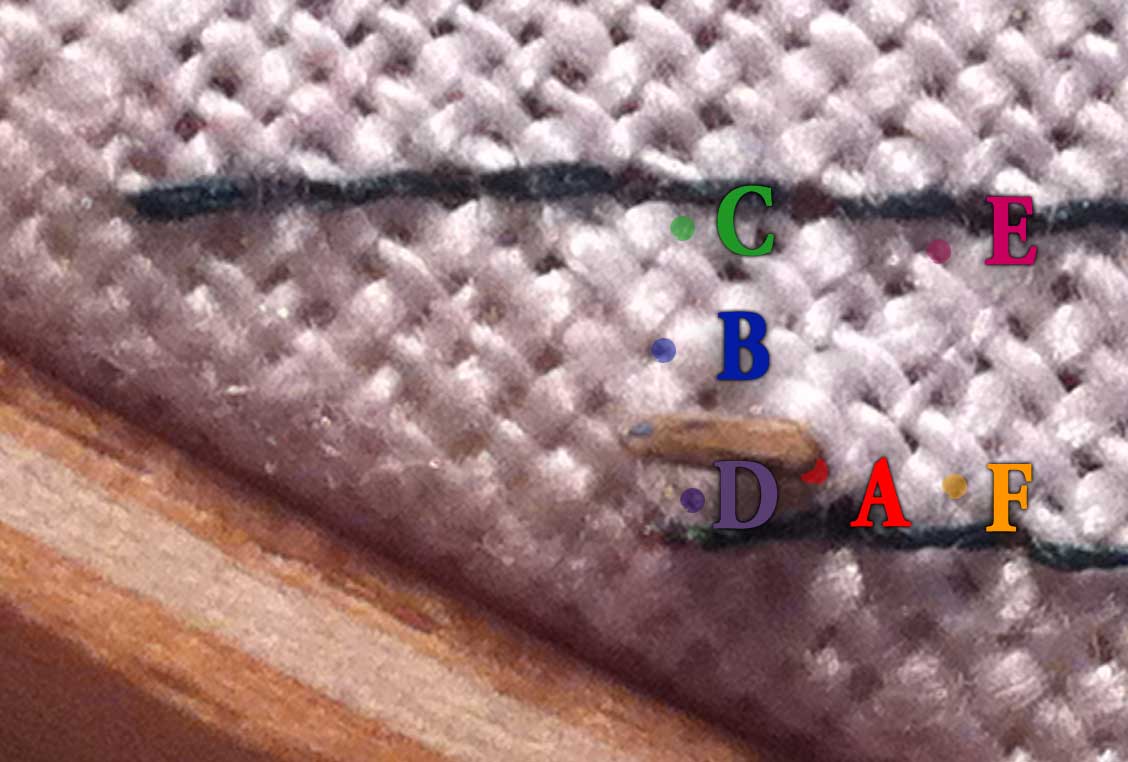
1. First we need to get the stitch started. Thread your needle and mark your fabric with two parallel lines in some fashion, either by stitching it with thread (as I have done with the green in the photo below) or with a water-soluble marking pen. Bring your needle up at point A, as shown below on my fabric (you can click the image to see it larger):


Step 1; Bring Your Needle Up at Point A
If you’re having problems figuring out where each of these points are in your own fabric, here is a simpler chart of points A-F:
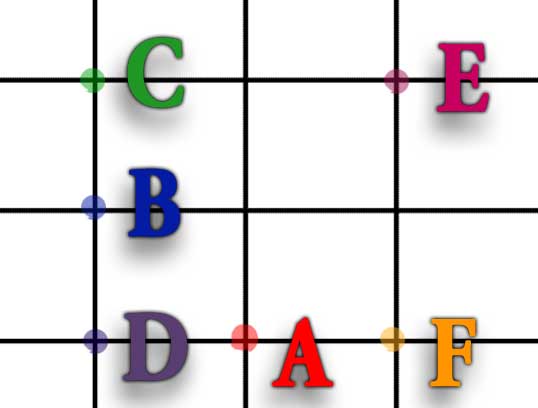
 

Point Chart

Step 2: Go down with your needle at point B, as shown below. Pull taut enough so the thread lies flat. (Sorry for the blurry photo!)
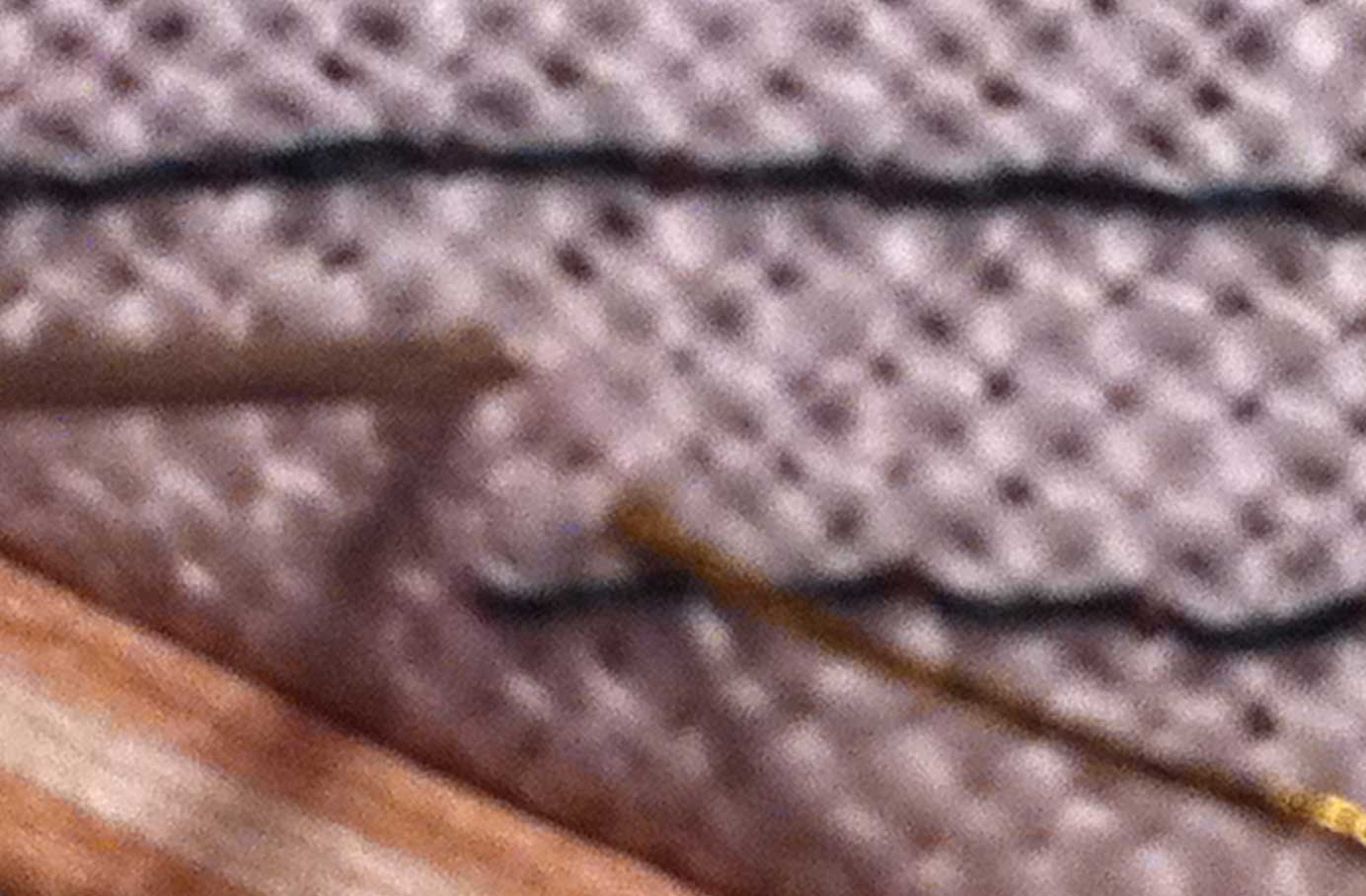
Step 2: Go down at point B.

Step 3: Come up with your needle at point C. Again, pull taut.
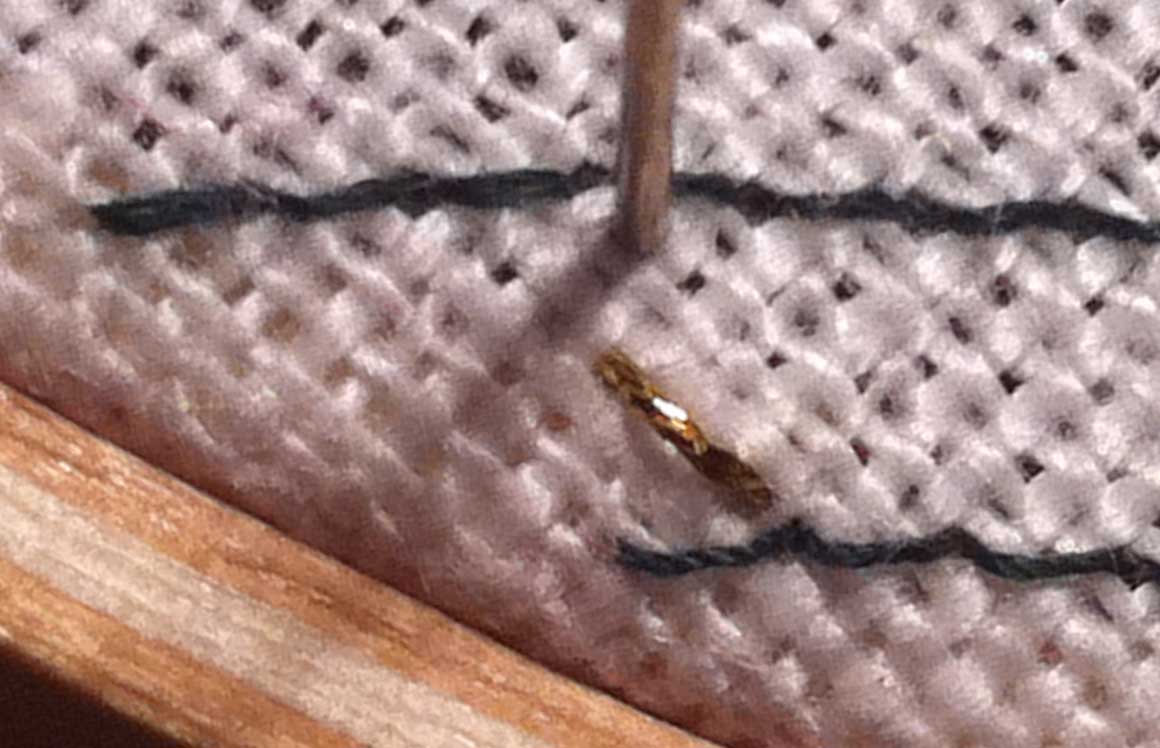
Step 3: Come up at point C.

Step 4: Go down with your needle at point D.
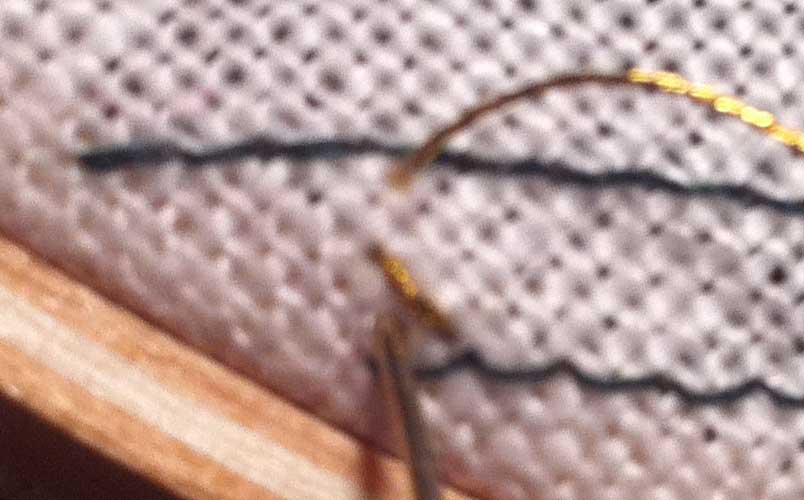
Step 4: Go down at point D.

Step 5: Come up with your needle at point B (yes, you’ve already got thread in this hole, but you need to go back in here), as shown:
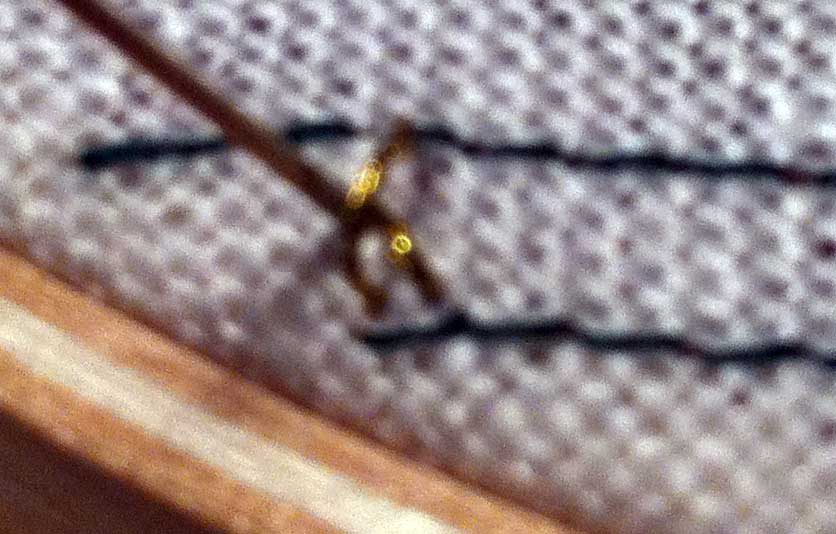
Step 5: Come up at point B.

Step 6: Go down with your needle at point E. Pull taut.
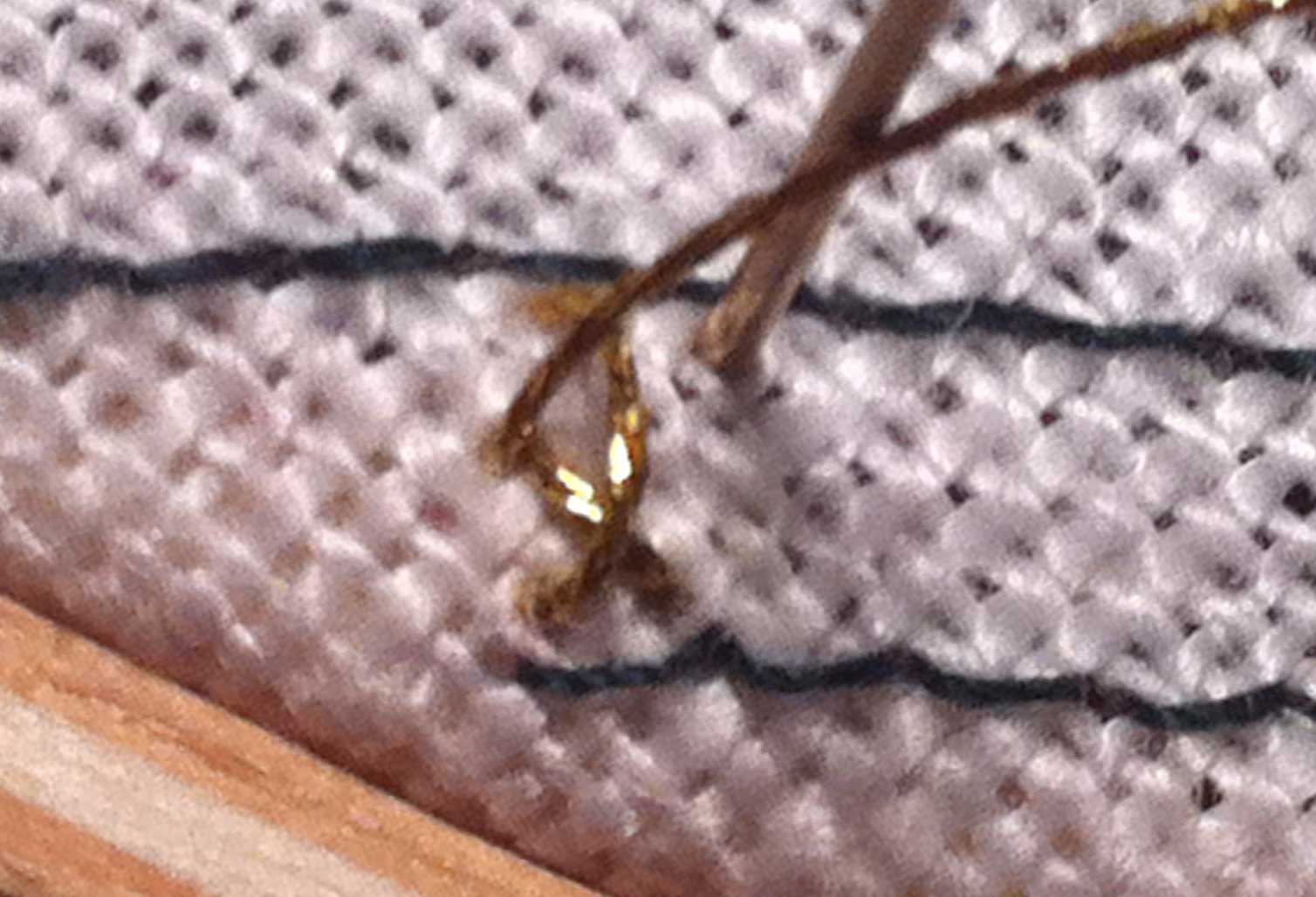
Step 6: Go down at point E.

Step 7: Come up with your needle at point F. Pull taut. All threads should lie flat, though you don’t want anything TOO tight, as that will make it hard to braid and pucker your fabric.
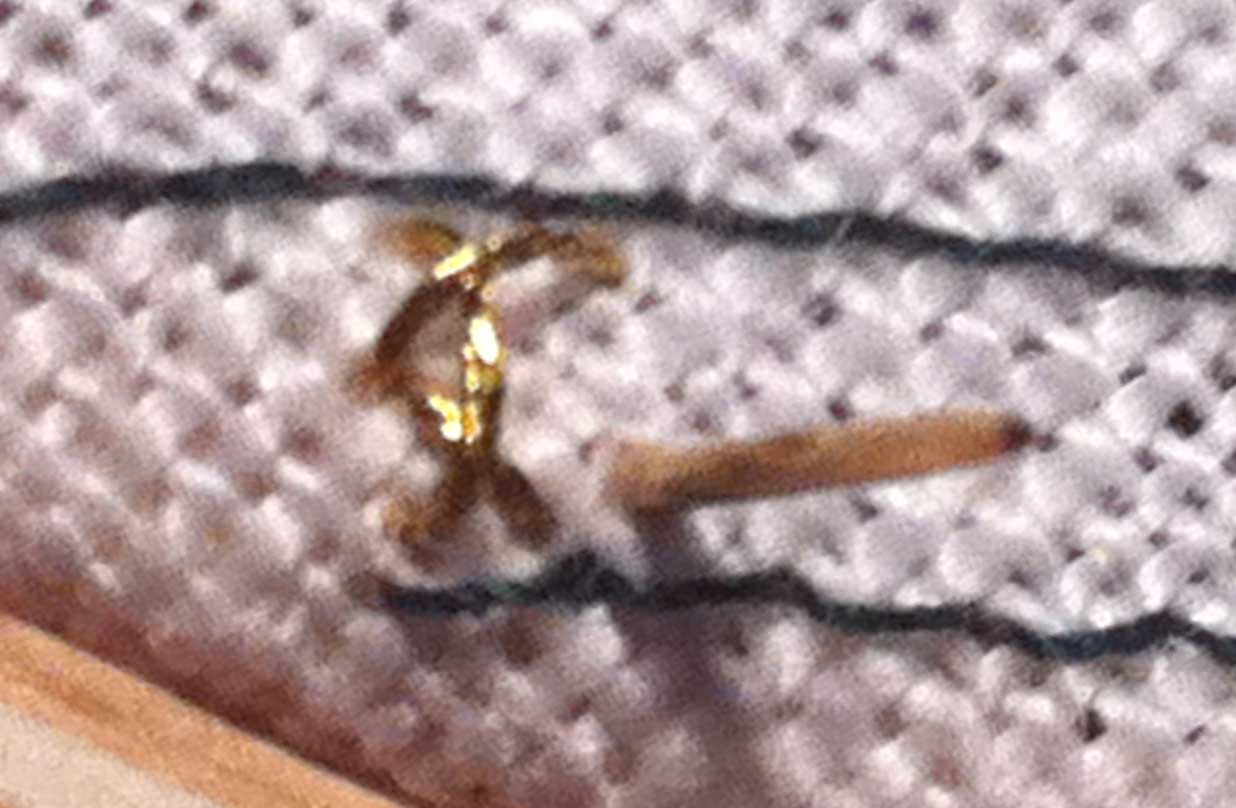
Step 7: Go down at point F.

Step 8. Now, identify the the TWO crossed threads at the top of your stitch shown in this photo:
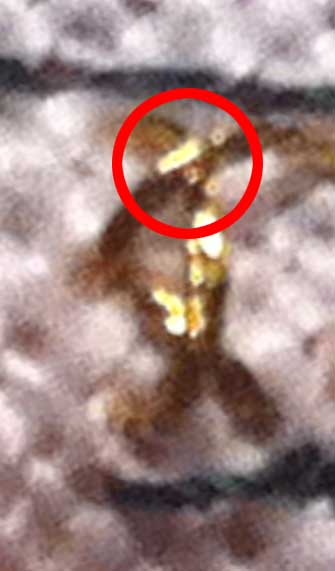
Identify your top cross

Now slide your needle under this cross, going under both threads, from bottom to top as shown below:
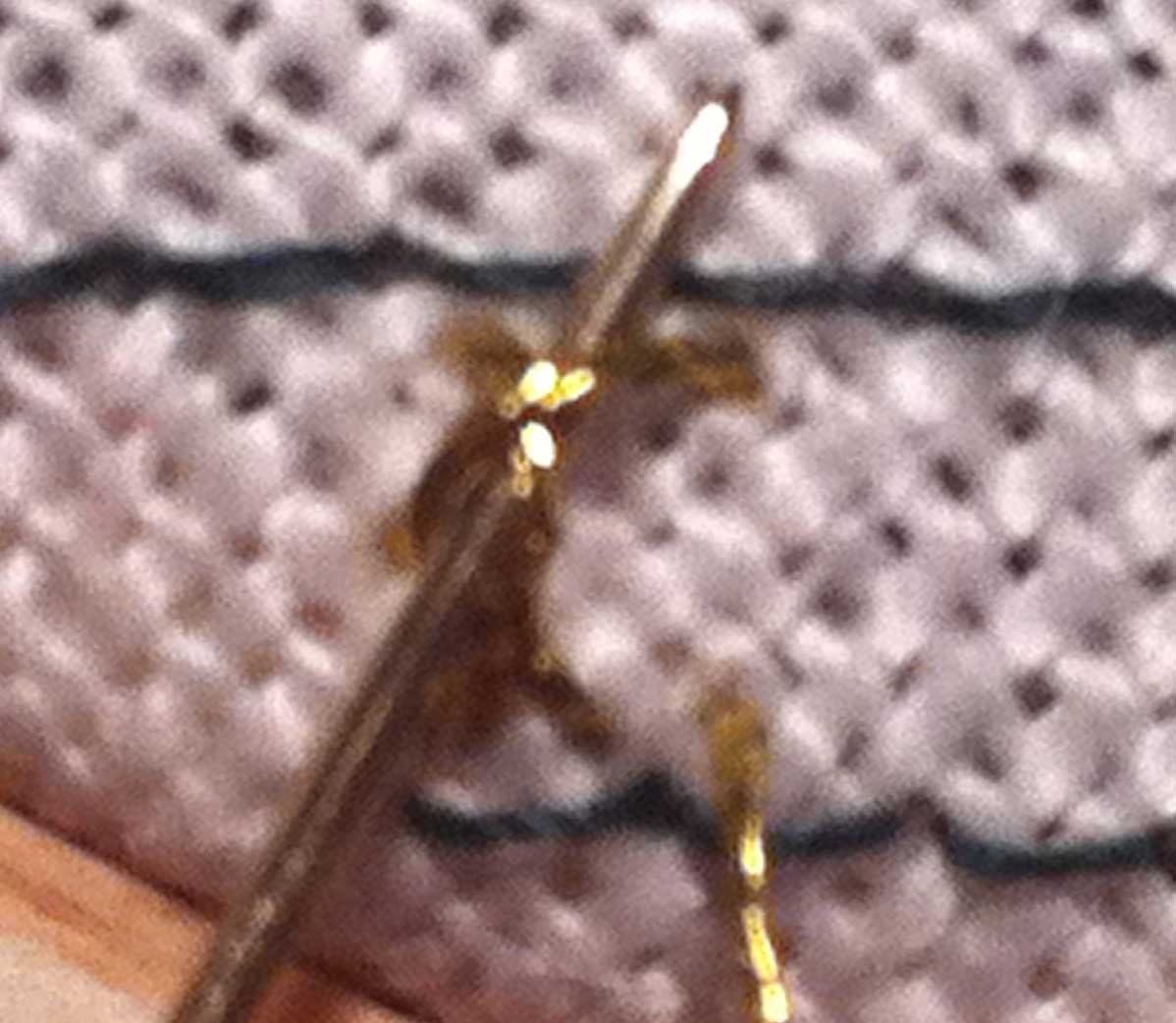
Step 8: Slide your needle under this cross.

Step 9: Next, identify the the THREE crossed threads at the bottom of your stitch shown in the photo below and slide your needle through. The three threads are the very first one you created in steps 1 and 2 above, the one you made in steps 4 and 5, and the one you just made in step 8. It can be tricky to locate these three threads — you may need to move your threads around a bit with your needle. But it’s important to go under all three threads, or your stitch won’t properly braid.
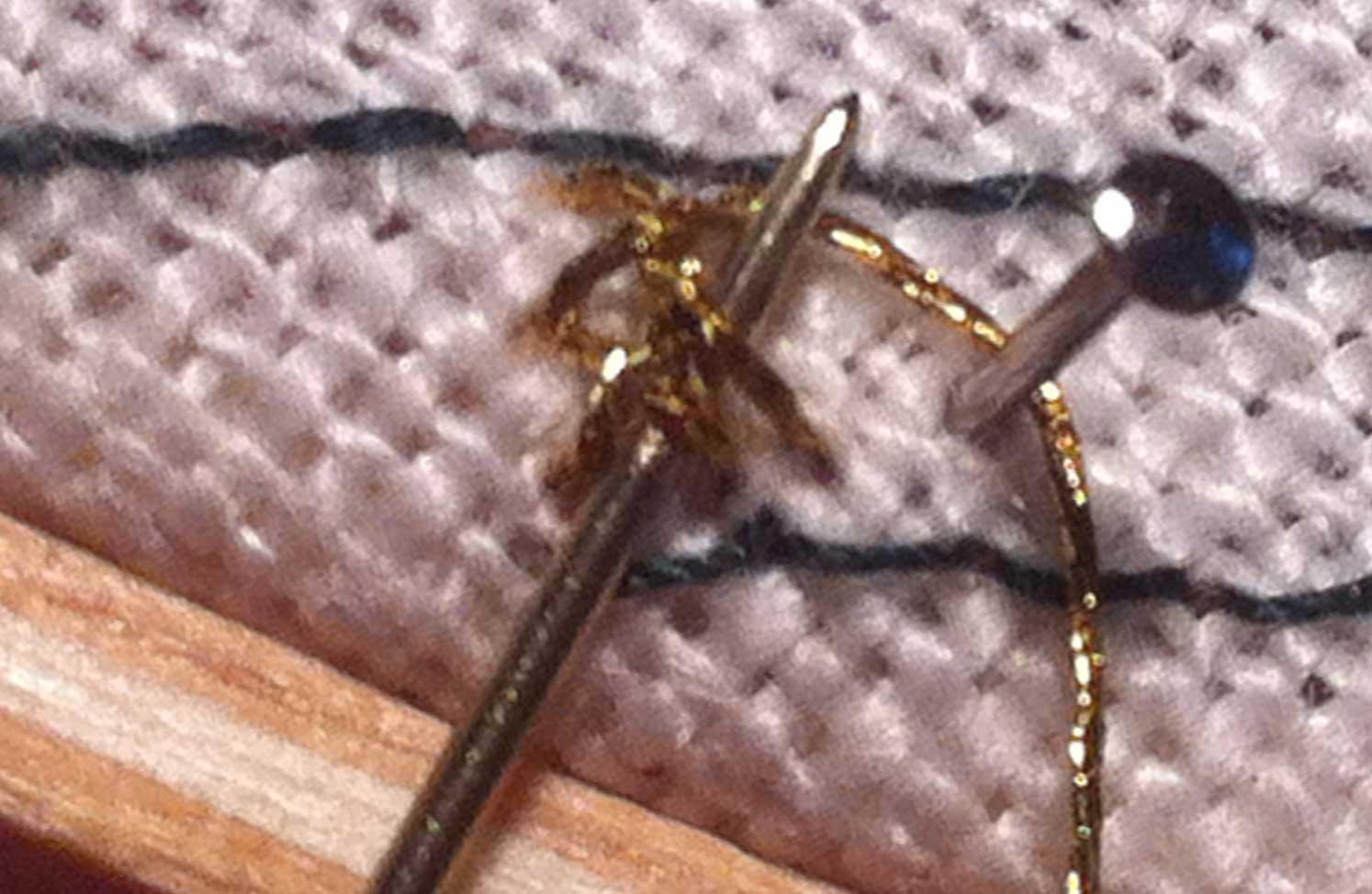
Step 9: Slide under the three threads at the bottom.

Important Tip: See the straight pin sticking out in the above photo? I put that there, just ahead of my stitching, to keep the loop I create in step 9 large enough for future steps. This was the key for making my braid look good. I highly recommend using a pin when you’re getting started.


The Four Main Stitches – Step by Step

At this point, you’ve started your stitch! Now I will explain the four steps you will do immedately fter this point, over and over, to continue stitching your braid. To differentiate from the above steps, I will use roman numerals. Step X: Bring your needle down at the top left. Keep your needle in place if you’re using one. You should pull taut, though not so tight that you strain your loop.
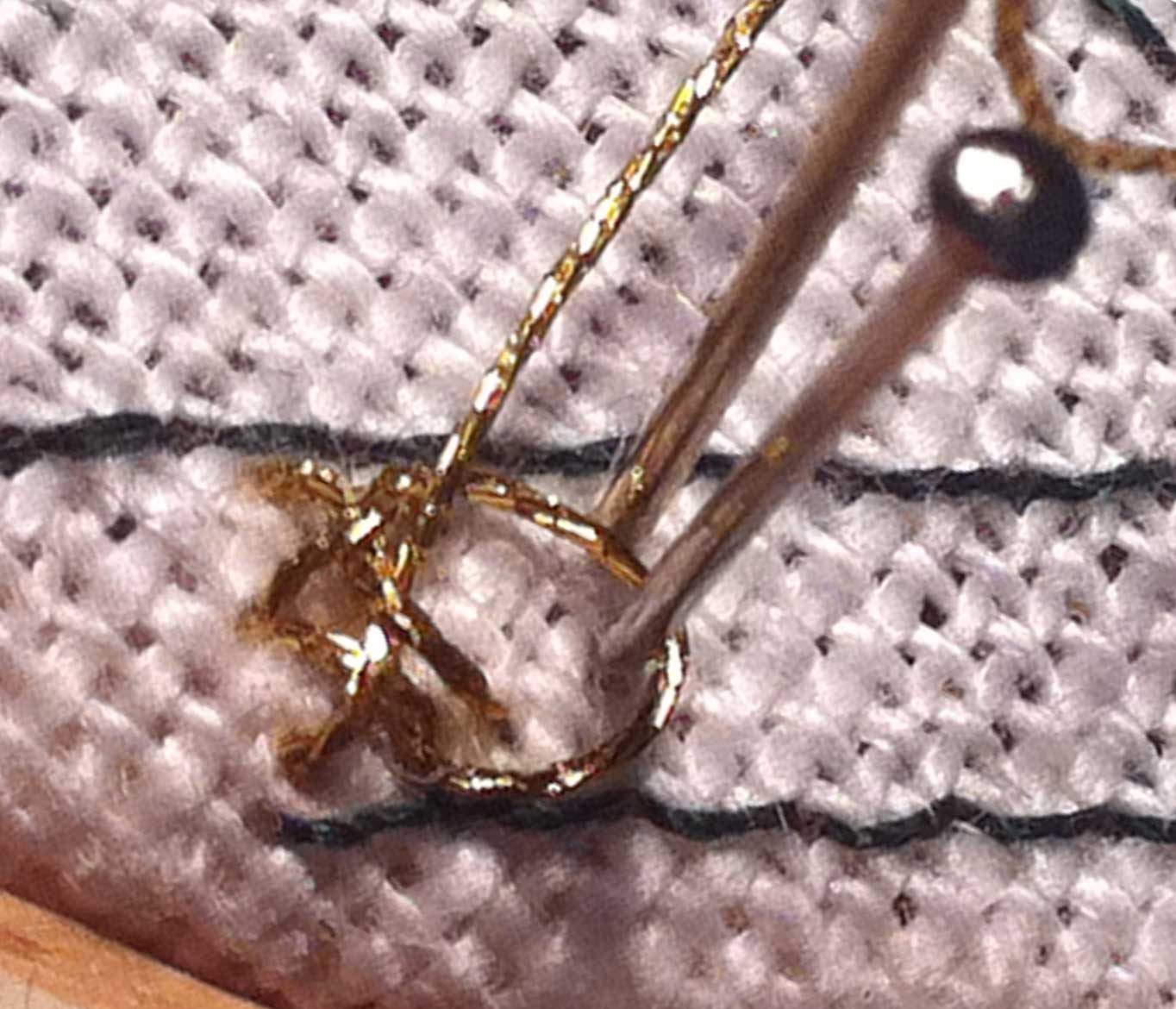
Step X: Go down at the top left.

Step XI: Come up with your needle at the bottom left, as shown below:
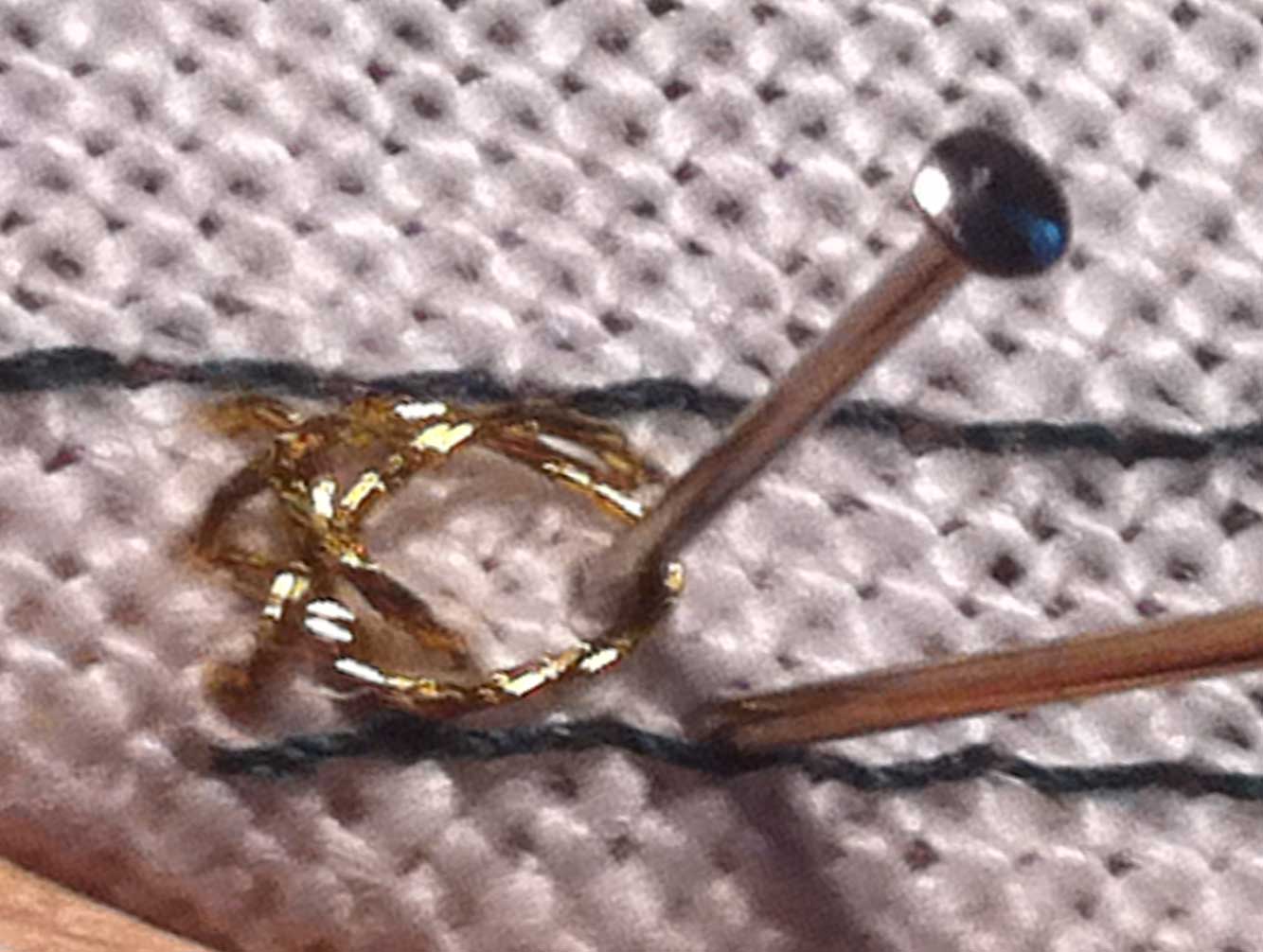
Step XI: Come up at the bottom left.

Step XII: Slide your needle through the THREE crossed threads at the top of your stitch, as shown below. To help you identify these three threads (it can be tricky until you know what to look for), I’ve colored them in the photo below (click to see it larger).
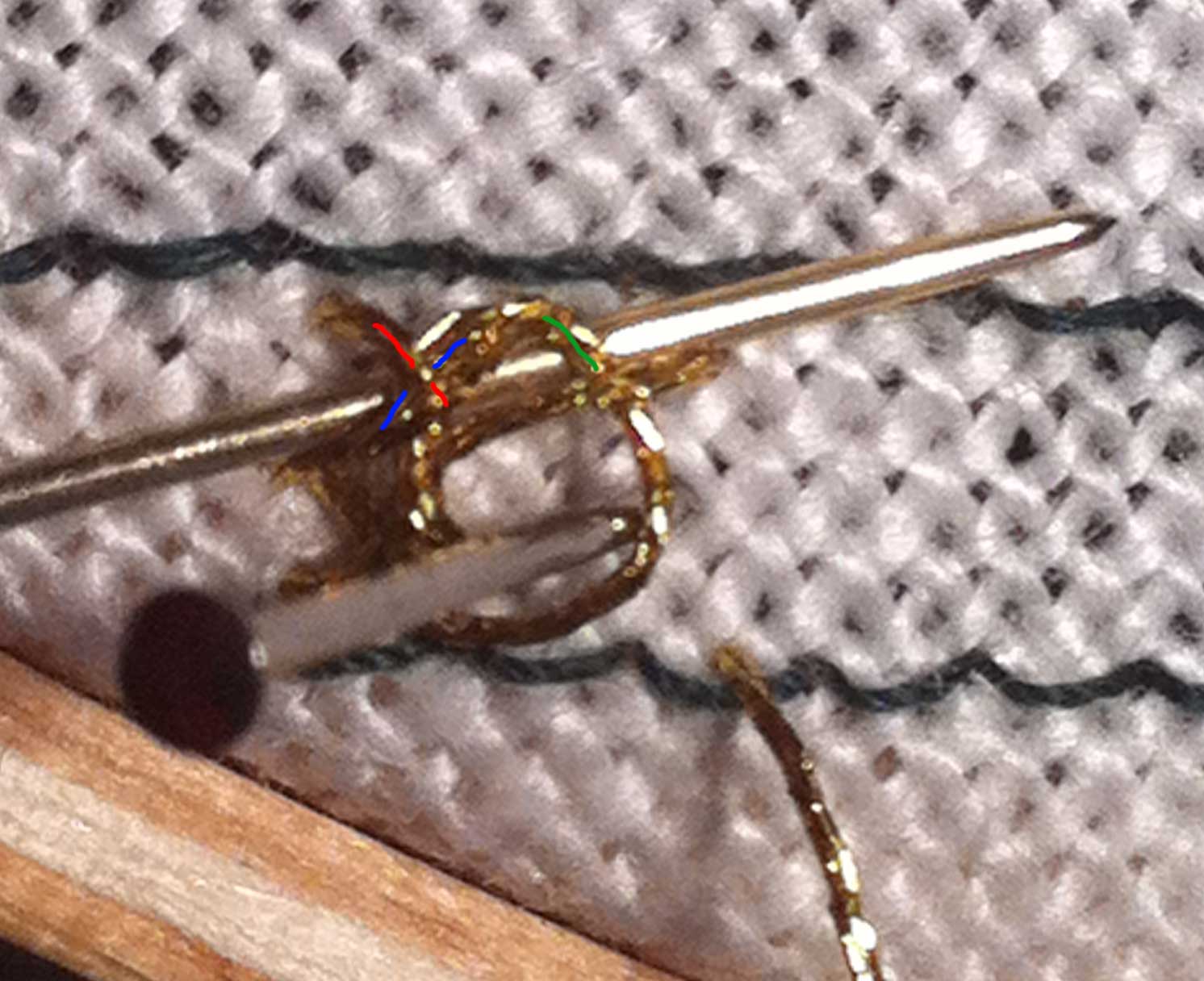
Step XII: Slide your thread under the three top crossed threads

Step XIII: Bring your thread around in a loop to the right and slide your needle up under the THREE cross threads at the bottom. Again, it’s hard to identify before you get practised, and I’ve colored the three threads again. (Note: My photo came out blurry, so I’m showing you two images — one with the threads before the needle goes through, to help you find them, and one with the needle sliding through.) If you’re using a pin to keep your loop in place, you can now move it over to the left in preparation for the new loop you’ll be making in this step.
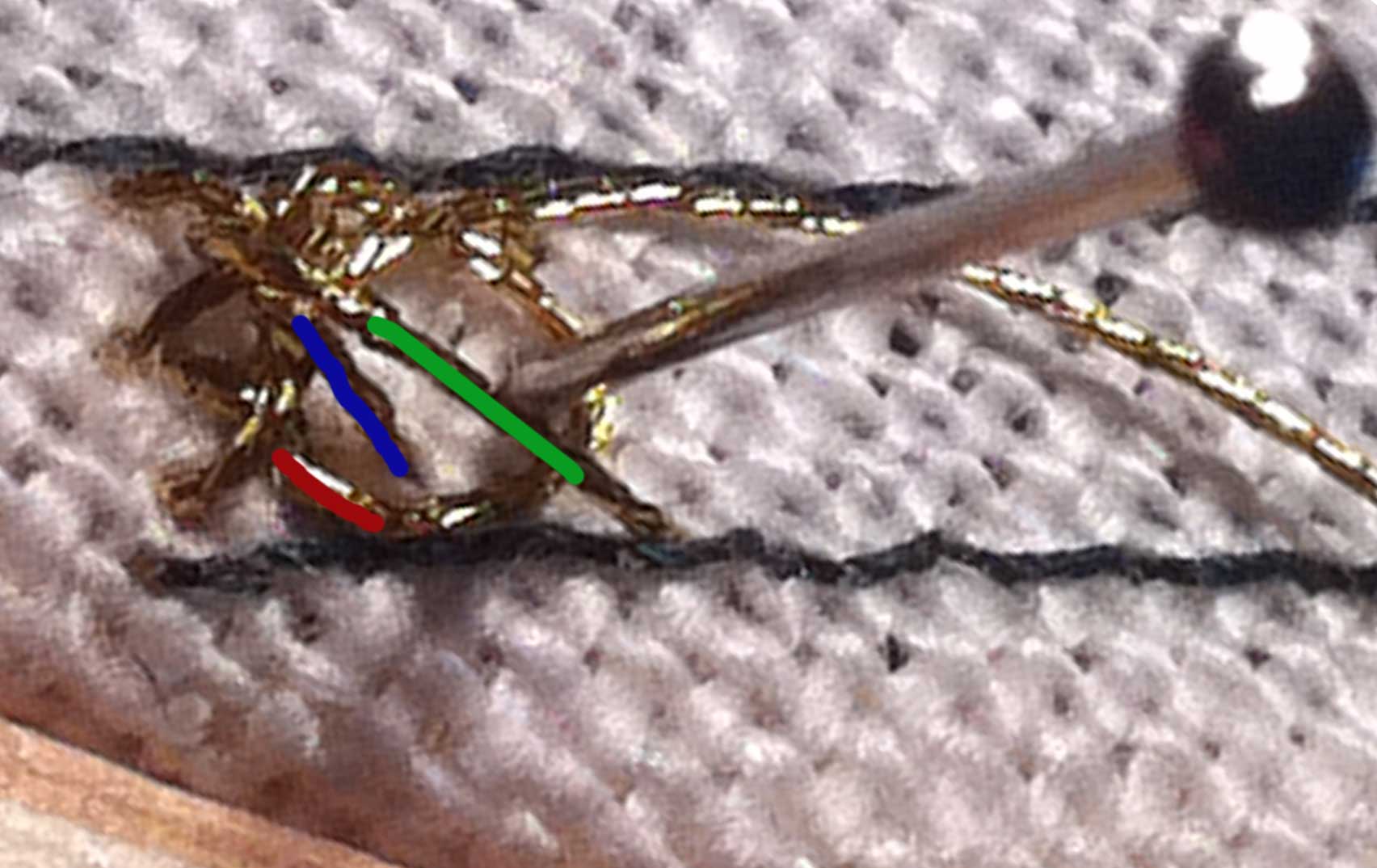
Identify your three bottom crossed threads
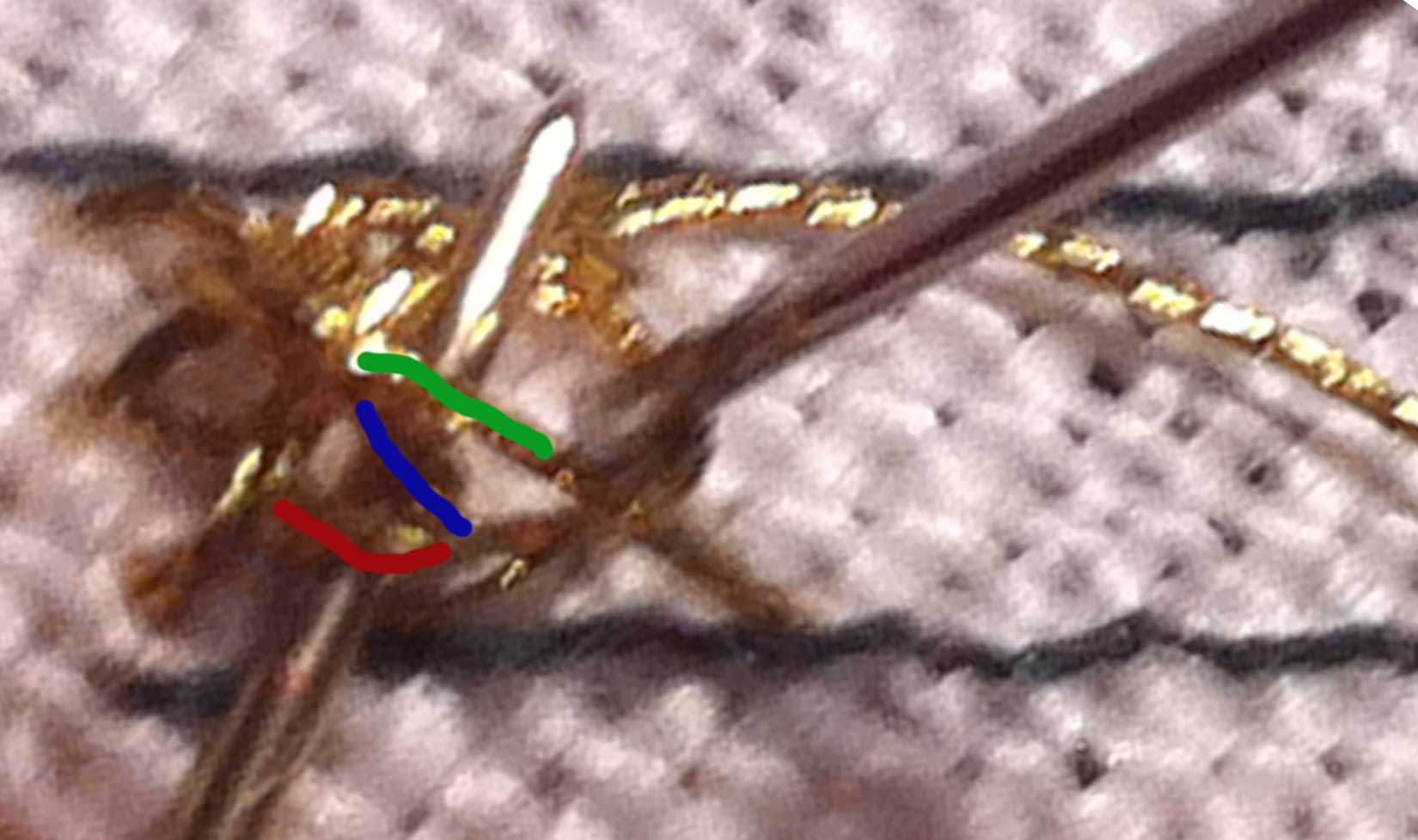
Step XIII: Slide your needle through the bottom three crossed threads

That’s it’. Now you just repeat steps X-XIII until you’re done! This is how it looks after several stitches:
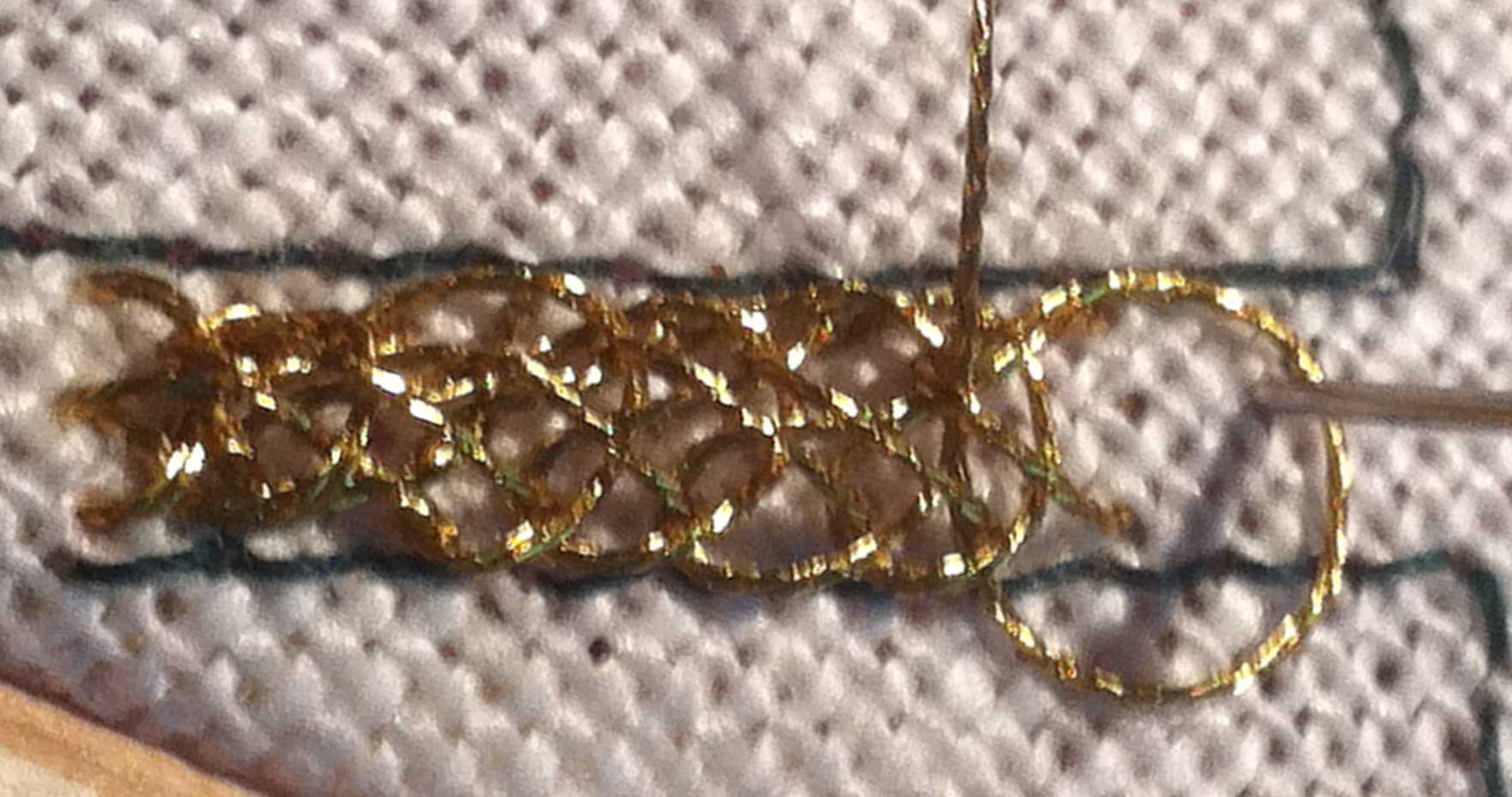
A plaited braid!

Notes:

  • Different threads will produce different results. The thin thread used here gives a looser looking braid — the metallic thread I’m using is pretty stiff. I like this. A thicker or fluffier thread would fill the braid in more (see photo lower on this page). I have ordered more thread and will experiment with different types! A thicker, yet more flexible, metallic thread would be nice!
  • As you go along, you may notice that your most recent stitches don’t look like the older stitches, but don’t worry. They aren’t being pulled in the same manner because you haven’t braided them yet. As you continue stitching, you’ll see that things fall into place.
  • If you don’t want to use a pin (it can be cumbersome — I like to hold it with the thumb and forefinger of my left hand, under my fabric, as I stitch), you could try using your right thumb to hold it in place and to stitch with your left hand. Or reverse the stitches and go in the other direction if you’re right-handed.
  • If you run out of thread, stop after step X, knot your thread under your fabric, and slide your needle through the stitches in the back, like this:

    Secure your thread underneath
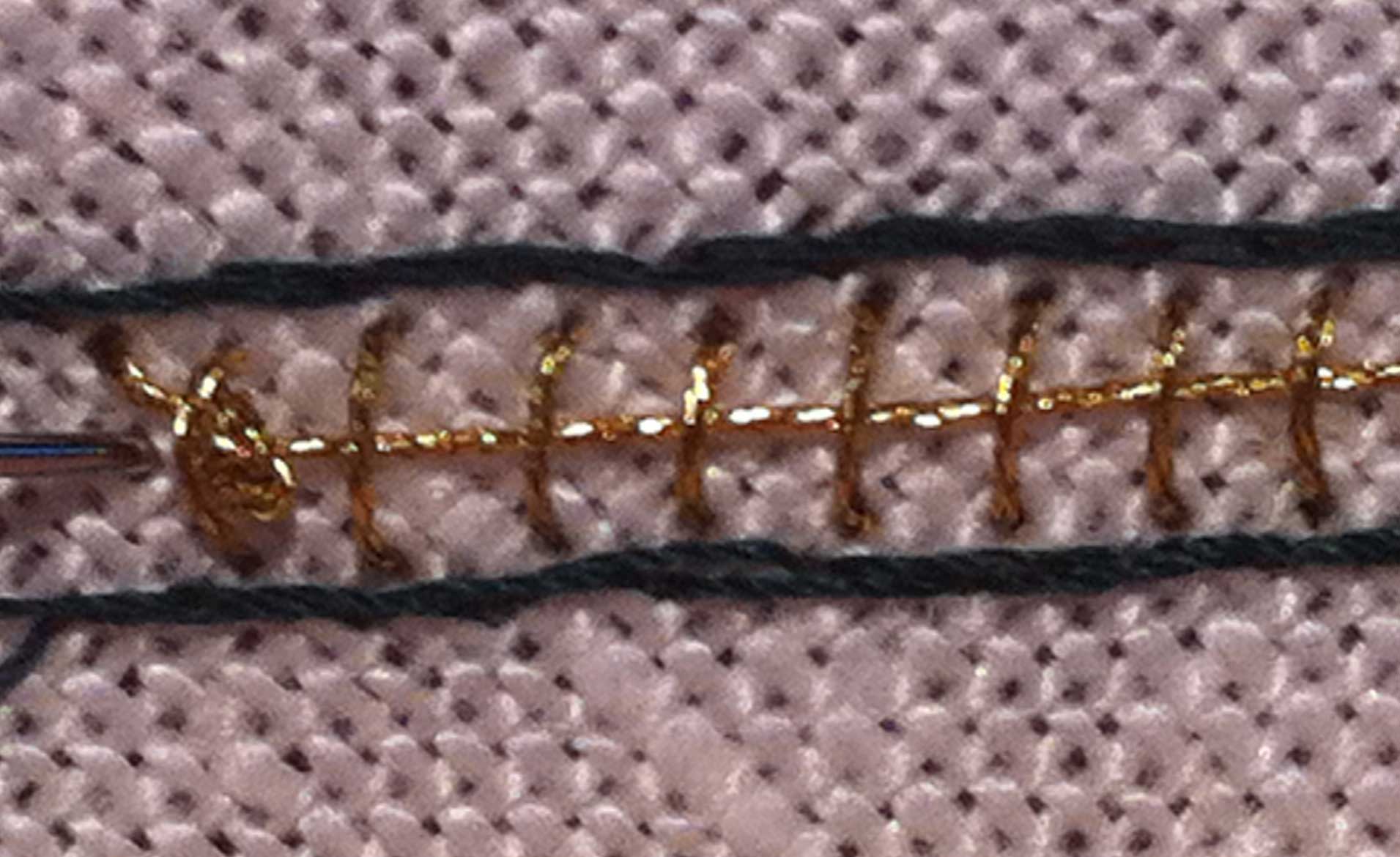
Here is what the stitch looks like when done in a thicker thread:

Plaited braid stitch in thick thread

In the thicker thread, it’s easier to see that the stitch matches the one in this extant coif from the 16th century:
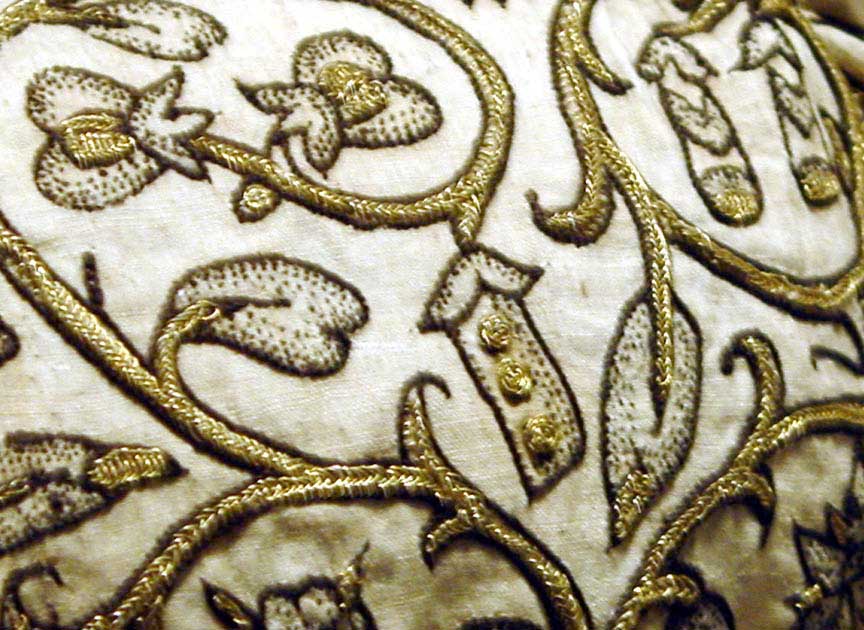
Coif with Gold Braid Stitching

And here is some of my plaited braid stitching on my current project:
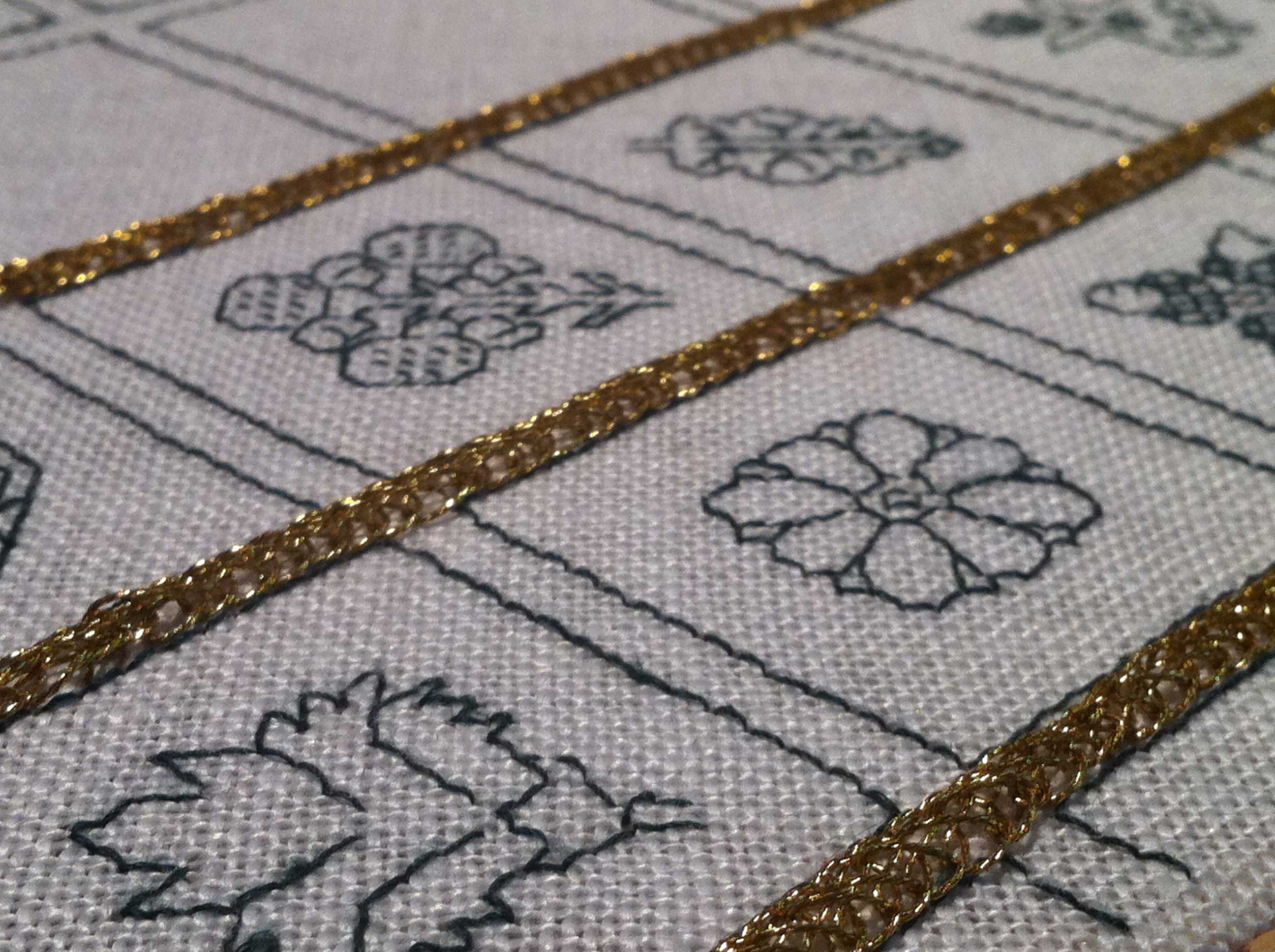
Plaited braids on embroidered caul

Web links I found helpful while learning this stitch:

I hope this is helpful! Please let me know if you have any questions!
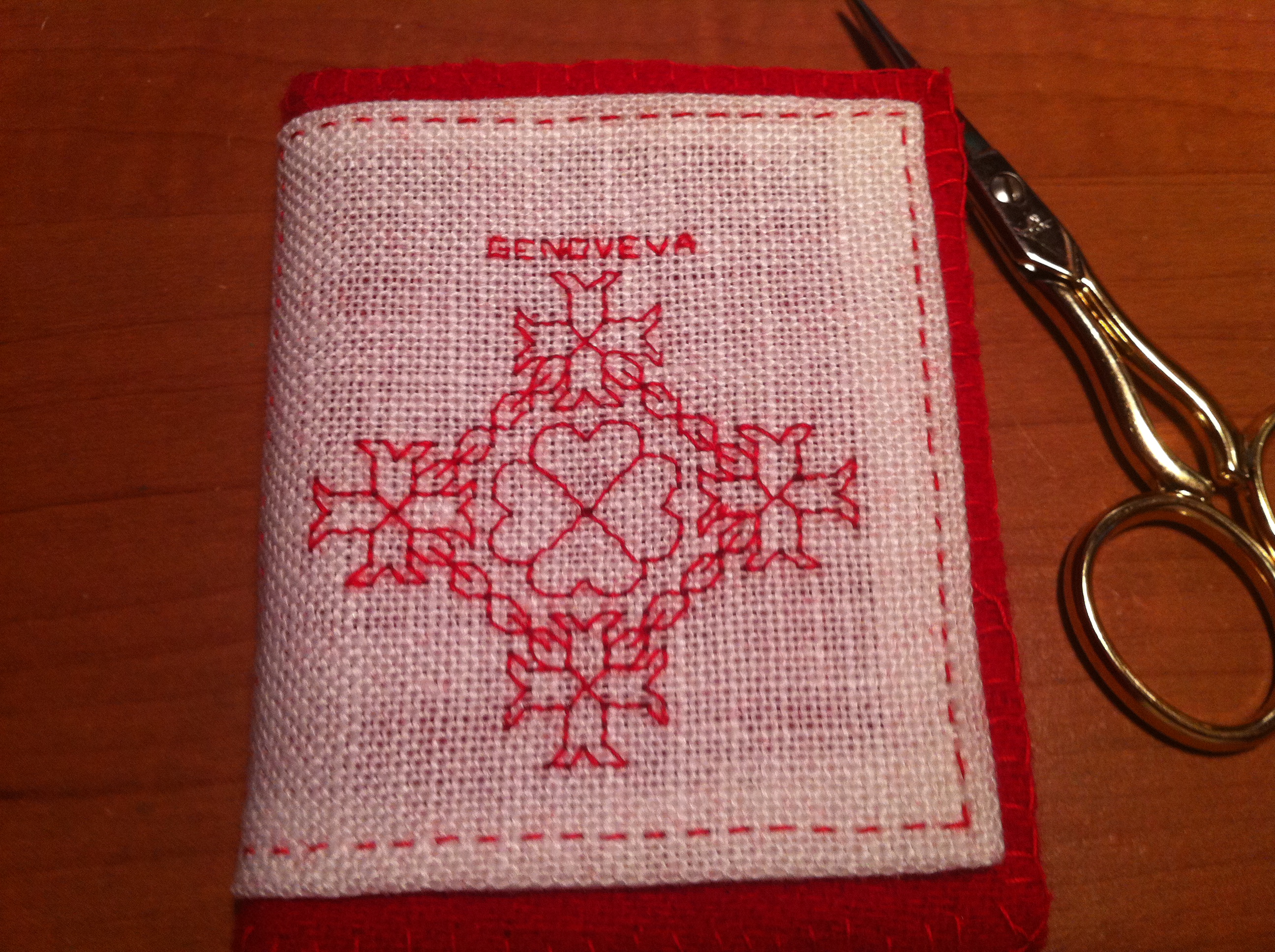
Blackwork Needle Book: Adapted from a Pattern from Ensamplario Antlantio by Countess Ianthe d’Averoigne

27 September 2011

My First Blackwork Embroidery

Over the last few weeks, I’ve really been enjoying blackwork embroidery. It all started when I attempted to embroider a smock in a 16th century painting, and in researching it, decided that it must be blackwork. (It turns out I was wrong — it’s goldwork.) My first completed project was a little winged heart that I stitched onto the canvas cover of my packbasket. Then I moved on to the blackwork favor for Gregor. Still not satiated, I created a tiny wool-and-linen needlecase. And now I’m working on a full-blown caul with traditional blackwork and Elizabethan plaited braid stitching. I’m just loving this!

My Little Needle Book

But today I want to talk about that little needle book I made. I love this thing. It was so simply to make — it took just a few hours — and it sits on my desk everyday, looking all cheerful and cute. All it took was a bit of leftover wool, some counted linen, some suitable thread, and a needle. All of these were just hanging about the studio, which made it very easy to make.

The design on the front of the needle book is adapted from Ensamplario Atlantio by Countess Ianthe d’Averoigne. Specifically, I was inspired by plate 19 (pattern 114) because, with a little modification, the center design could form four hearts. (Remember, I am using a winged heart for my device.) It was a joy to stitch!

The book I mention, Ensamplario Atlantio , is actually freely available online as a PDF at the author’s web site, String-Or-Nothing.com. The book is 40 pages long, with 35 plates of designs — over 220 or so individual all-over or filling patterns for double running stitch embroidery. The author is a Mistress of the Laurel for her blackwork embroidery. Her web site is FULL of wonderful ideas, projects, and musings on the subject. She is a real treasure, and I am grateful she’s chosen to share her passion with us through her web site and this book. Now if only I could get my hands on a copy of The New Carolingian Modelbook, but alas it goes for over $100 on the used book market now. I wish she could offer that book as a PDF — I would happily pay $20 or more for it. I wonder if she retained the rights to it, or can get them. Hmm, I should ask her! (Edited: Done!)

Anyway, I’m now looking for historically accurate patterns to put into the squares I’ve stitched on my caul, such as flowers, animals, or other things embroidered in the 16th century.

My First SCA A&S Display Experience at Vikings Come Home

19 September 2011

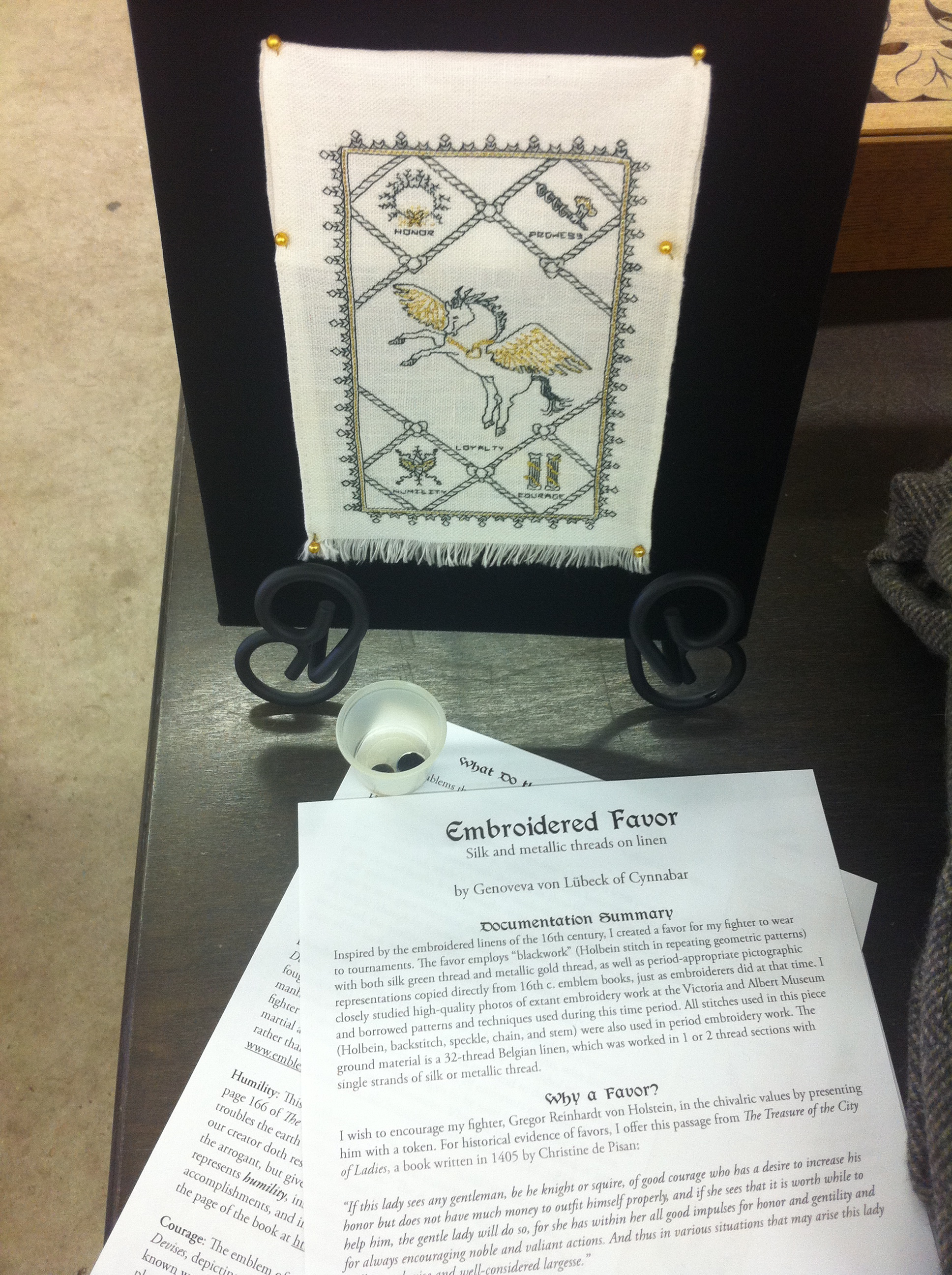
I had a great time at Vikings Come Home XX (20) in Traverse City, MI this weekend. For the first time, I brought along a finished project (the blackwork favor I made for Gregor) to include in the A&S display at this event. I had a reasonable idea of what to expect, having read a lot of things online, though firsthand experience is always most helpful.

I arrived later than nearly everyone (a 4-hour drive on the morning of the event will do that) and was both the last pre-registered person to show up and the last person to set out their project in the A&S display. When I arrived at the display, I discovered that they were having a Jewel Competition for any project that had documentation — the idea is that folks could pick up a jewel from a pile and place them in little cups in front of a project if they liked it. I think this is called a populace bean count vote. I wasn’t aware they were doing this — I was just intending to put my project on display. So after I set up my favor on the table, I did not put out a cup. Besides, nearly all the jewels from the main pile were gone at this point — I saw only a few left to give out. No one was really around at this point, so I left to find my friends from Cynnabar.

My Blackwork Project at the A&S Display

When I came back by the A&S display about 30 minutes later, I discovered someone had put out a cup in front of my project and there were now two jewels in it. That made me feel really great! Someone liked my work! I wandered off, but later was nearby again for a demonstration of glass beadmaking (really excellent and fun!) and saw another person taking several photos of my work. Cool! I wish I could have spoken to people to see what they thought, but I’d never approach anyone. I was hoping to have the chance to talk about the project, and discuss the projects of other people, but I just arrived too late. I think at Pennsic you had the opportunity to sit down with your work and talk to folks who came by … I’ll definitely have to do that next year. I love talking to others — I learn so much from them.

By this point, it was almost time for court, so I came back to the display to collect it. As I approached the building, Lady Helena mentioned that Donnershafen’s Minister of Arts and Sciences, Lady Diamante da Berra, was looking for me. ‘Oops, I must be late picking up my project,’ I thought. But when I got to the display, I found her standing in front of my project, reading my documentation. She said she was really impressed with both my work and my documentation, and asked if she could keep the documentation, or if I could e-mail it to her. I gave it to her, of course. She also said that my project had collected five jewels, and that she wished she had more time to look closer at it. That was very kind of her! She indicated a red ribbon with a bead on it that she’d placed there as a token — how cool was that? That ribbon is going with my other SCA treasures.

All in all, it was a very positive experience, and I am eager to enter an A&S display again. The only thing I regret is not putting it out earlier, as I don’t think any of my friends of Cynnabar had a chance to see it (they’d visited the display earlier in the day), and I value their feedback highly. I would enjoy the opportunity to talk A&S more! That just means I need to go to more events, now doesn’t it?

Here is my A&S Documentation as a PDF (or, if you don’t want to view a PDF, look here) — I’d REALLY love any feedback anyone has to give on it, as I want to be sure I am doing it right. Thank you!

A Favor for My Champion: Blackwork Embroidery of Chivalric Virtues

16 September 2011

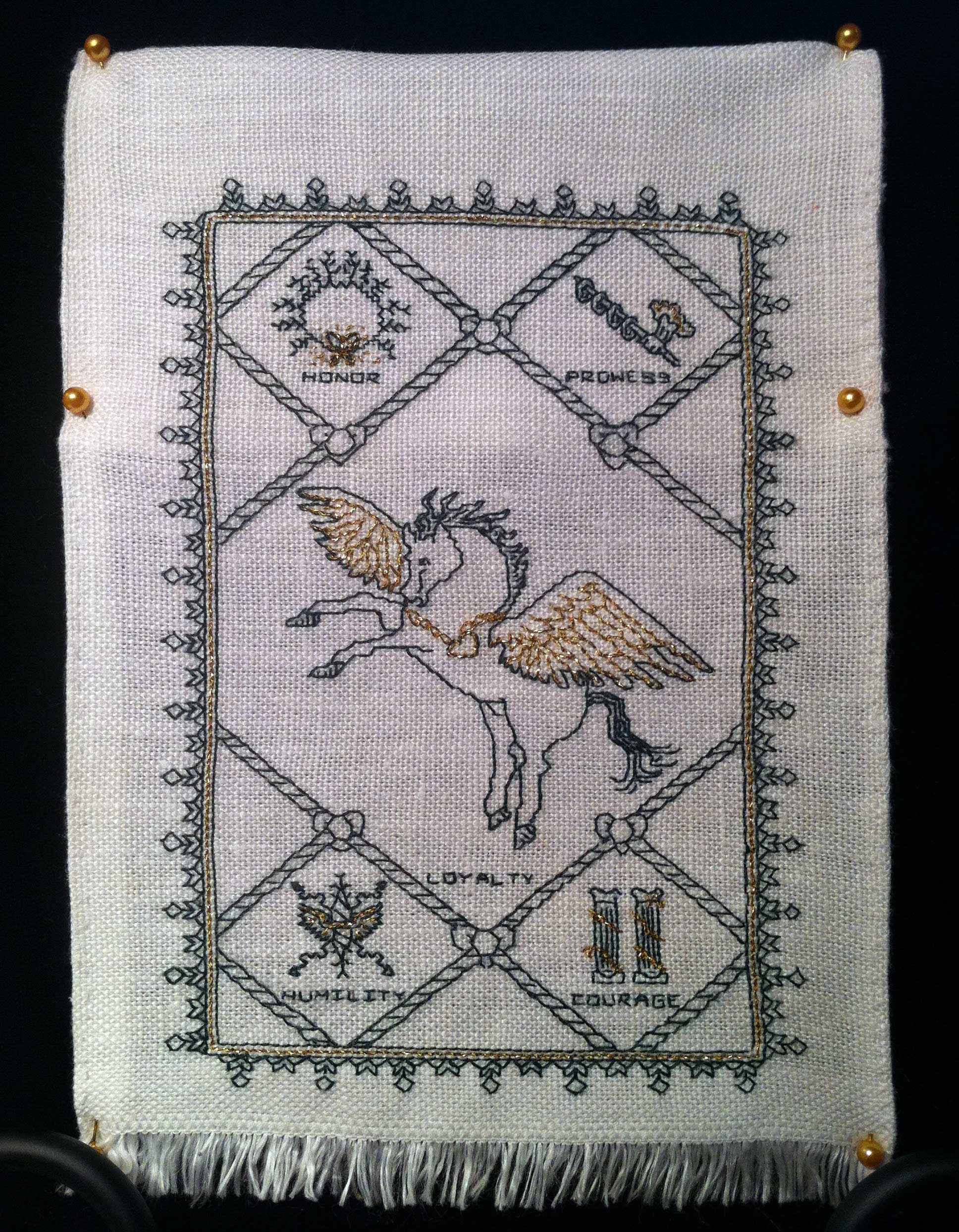
I have someone who champions my causes, fights for me, supports me completely. He is Gregor. He is my personal champion. So I have made him a token to wear into battle. The token embodies five important chivalric virtues, with related emblems and personal symbolism. Here is a photo of the favor:

An embroidered blackwork favor for Gregor

The favor measures about 5″ x 7″, and is designed for Gregor to wear on his belt. I was inspired by historical embroidery. I intend to display it at Vikings Come Home tomorrow as my first A&S project, so I wrote up some documentation to explain it.


Blackwork Embroidered Favor

silk and metallic threads on linen

by Genoveva von Lübeck

Documentation Summary
Inspired by the embroidered linens of the 16th century, I created a favor for my fighter to wear to tournaments. The favor employs “blackwork” (Holbein stitch in repeating geometric patterns) with both silk green thread and metallic gold thread, as well as period-appropriate pictographic representations copied directly from 16th c. emblem books, just as embroiderers did at that time. I closely studied high-quality photos of extant embroidery work at the Victoria and Albert Museum and borrowed patterns and techniques used during this time period. All stitches used in this piece (Holbein, backstitch, speckle, chain, and stem) were also used in period embroidery work. The ground material is a 32-thread Belgian linen, which was worked in 1 or 2 thread sections with single strands of silk or metallic thread.

Why a Favor?
I wish to encourage my fighter, Gregor Reinhardt von Holstein, in the chivalric values by presenting him with a token. For historical evidence of favors, I offer this passage from The Treasure of the City of Ladies, a book written in 1405 by Christine de Pisan:

“If this lady sees any gentleman, be he knight or squire, of good courage who has a desire to increase his honor but does not have much money to outfit himself properly, and if she sees that it is worth while to help him, the gentle lady will do so, for she has within her all good impulses for honor and gentility and for always encouraging noble and valiant actions. And thus in various situations that may arise this lady will extend wise and well-considered largesse.”

Why The Pictograms?
I was inspired by a 1570 embroidered work I found in the Victoria & Albert Museum (T.219-1953). This piece has a large center illustration of a shepherd, surrounded by unusual emblems and mottoes, worked in the characteristic blackwork of the period. I was curious about the emblems, and quite by chance, discovered that many of the emblems in this piece were clearly copied directly from The Heroicall Devises of M. Claudius Paradin, translated from Latin into English by P.S. William Kearney (London, 1591). The book illustrations of the emblems and the embroidered emblems are nearly exact! A knowledge of emblems and their use in art was part of the intellectual climate of Elizabethan life—the images represented important allegories.
What Do the Emblems Mean?

I chose emblems that represented the chivalric values I wish to encourage, as follows:

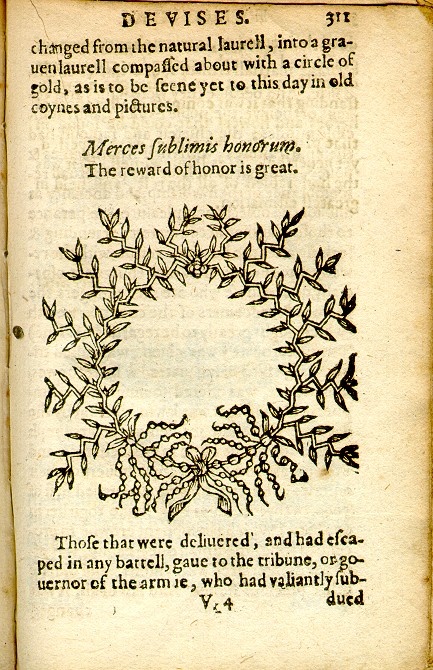
Page 311 of Heroicall Devises

Honor: The emblem of a crown of grass (not a laurel) is from page 312 of The Heroicall Devises. The motto is “Merces sublimis honorum” (the reward of honor is great). The crown was awarded to those that had valiantly subdued their enemies and, while it was only made of grass, flowers and herbs found at the place of battle, it was thought to be the most honorable of all and held in the greatest estimation. This emblem represents honor and encourages my fighter to seek great stature of character by holding to the virtues and duties of a knight (though he is not one), and realizing that though the ideals cannot be reached, the quality of striving towards them ennobles the spirit. View the page of the book at http://emblem.libraries.psu.edu/parad311.htm

Prowess: The emblem of the sword is from page 218 of The Heroicall Devises. This emblem depicts the hand of Marcus Sergius, who famously fought in Gaul with an artificial iron hand—he is a symbol of prowess and manhood, overcoming personal obstacles to attend to duty. I encourage my fighter to  seek prowess and excellence in all endeavors expected of a knight, martial and otherwise, seeking strength to be used in the service of justice, rather than in personal aggrandizement. View the page of the book at http://www.emblems.arts.gla.ac.uk/french/facsimile.php?id=sm816_p218

Humility: This emblem carries the motto “sic terras turbine perflat” on page 166 of The Heroicall Devises, which translates to something lile “so he troubles the earth with whirlwinds.” The descriptive text warns that “God our creator doth resist the proud, the high minded, lovers of themselves, and the arrogant, but giveth grace to the humble and the lowly.” This emblem represents humility, inspiring one to refrain from boasting one’s your own accomplishments, and instead tell the deeds of others before one’s own. View the page of the book at http://emblem.libraries.psu.edu/parad166.htm

Page 32 of Heroicall Devises

Courage: The emblem of two pillars appears on page 32 of The Heroicall Devises, depicting the Pillars of Hercules which mark the edge of the then known world. According to mythology the pillars bore the warning “Nec plus ultra” (nothing further beyond). These pillars represent the courage to go beyond what is known, choosing a more difficult path. View the page in the book at http://emblem.libraries.psu.edu/parad032.htm

Loyalty: The central element is a personal image, combining symbolism of my own and my fighter, and thus I will not go into detail about it here. It is still inspired by an illustration from an emblem book, however. The image of the King of Lycia on Pegasus from Les emblemes by Andrea Alciato provided the image for me (view at http://www.emblems.arts.gla.ac.uk/french/emblem.php?id=FALd102). This image represents loyalty, the cornerstone of all virtues. I encourage my fighter to continue to be known for his unwavering commitment to the people and ideals he chooses to live by. There are many places where compromise is expected; loyalty is not amongst them.


Page 150 of Les Emblemes

Why Blackwork?

Blackwork in silk on linen was the most common domestic embroidery technique for clothing and household items throughout the reign of Elizabeth I. Blackwork is a counted-thread embroidery which is usually stitched on even-weave fabric. Traditionally blackwork is stitched in silk thread on white or off-white linen or cotton fabric. Sometimes metallic threads or colored threads are used for accents. In the earliest blackwork, counted stitches are worked to make a geometric or small floral pattern. Historical stitches for blackwork primarily used the Holbein stitch (double running) and the backstitch, as I have done in my work, but also employed other stitches such as stem, chain, ladder, couching, coral, speckling, and others. Evidence of this can be seen in extant embroidery pieces, such as the 1598 sampler by Jane Bostocke in the Victoria and Albert Museum (T.190-1960).

References

“The Shepherd’s Buss.” 16th century embroidery by Unknown. Housed in the Victoria and Albert Museum, Textiles and Fashion Collection, British Galleries, room 58c, case 6. Item T.219-1953. View at http://collections.vam.ac.uk/item/O78790/embroidery/

Sampler. Jane Bostocke in 1598. Housed in the Victoria and Albert Museum, Textiles and Fashion Collection. Item T.219-1953. View at http://collections.vam.ac.uk/item/O46183/sampler/

The Heroicall Devises of M. Claudius Paradin, Whereunto are added the Lord Gabriel Symeons and others. Claude Paradin. Translated out of our Latin into English by P.S. William Kearney (London, 1591). In the collection of the Penn State University Libraries Rare Books Room. View at http://emblem.libraries.psu.edu/paradtoc.htm

Les emblemes. Andrea Alciato. 1615 (translated from earlier work). In the collection of the Glagow University Library (SMAdd32). View at http://www.emblems.arts.gla.ac.uk/french/books.php?id=FALd

Treasure of the City of Ladies. Christine de Pisan. 1405. Translated with an introduction and notes by Sarah Lawson (Penguin classics). Rev. ed.London: Penguin, 2003.

Blackwork and Goldwork Embroidery

3 September 2011

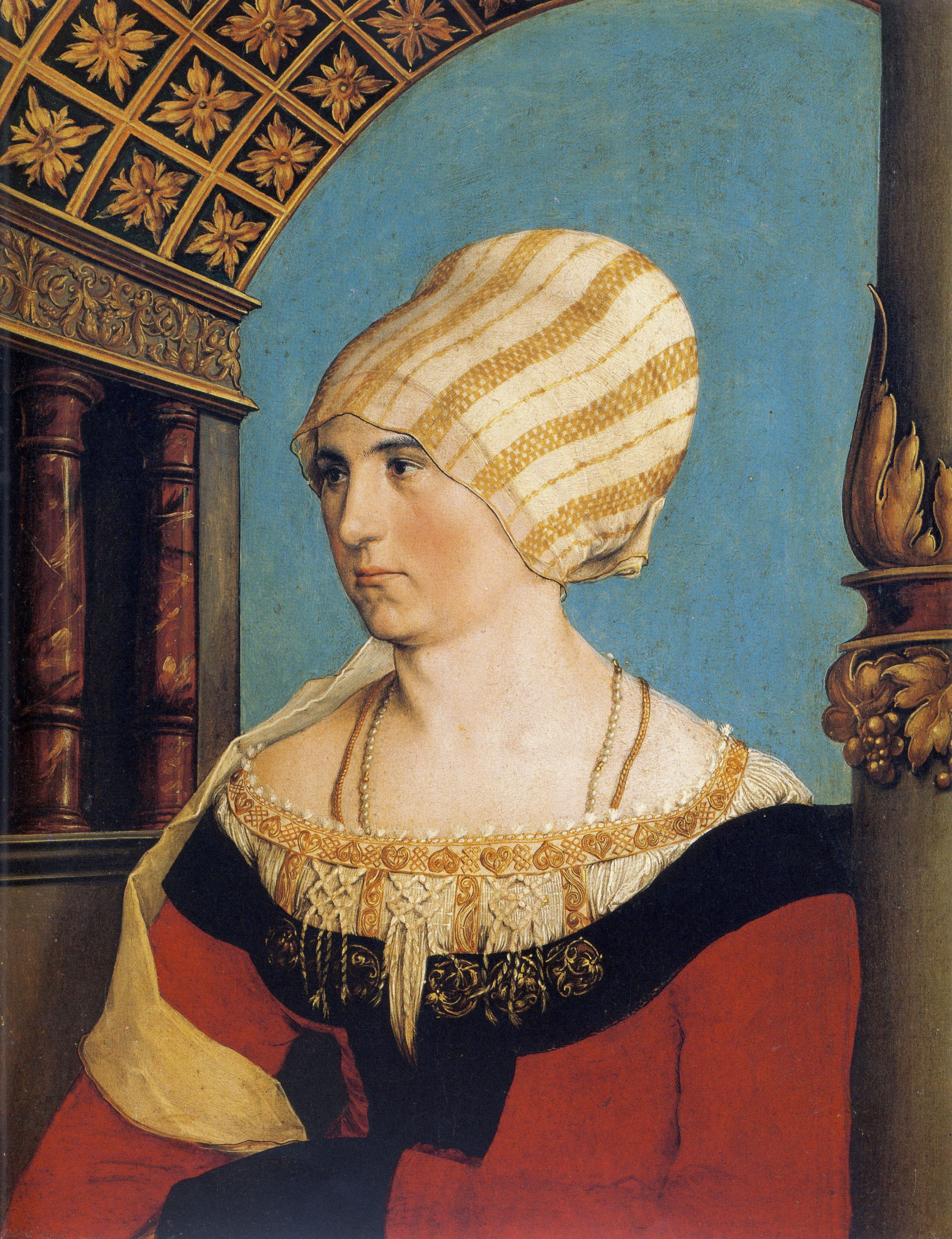
Five days ago I came across a painting of a German woman from the early 16th century. I was instantly drawn to her smock, and I decided I wanted to make it — and likely her gown, or something like it, as well. Here is the painting of Dorothea Meyer by Hans Holbein the Younger:

Dorothea Meyer (1516) by Hans Holbein

The smock has hearts and trellises embroidered around the collar, with actual smocking in the very front below that. I think it is just gorgeous!

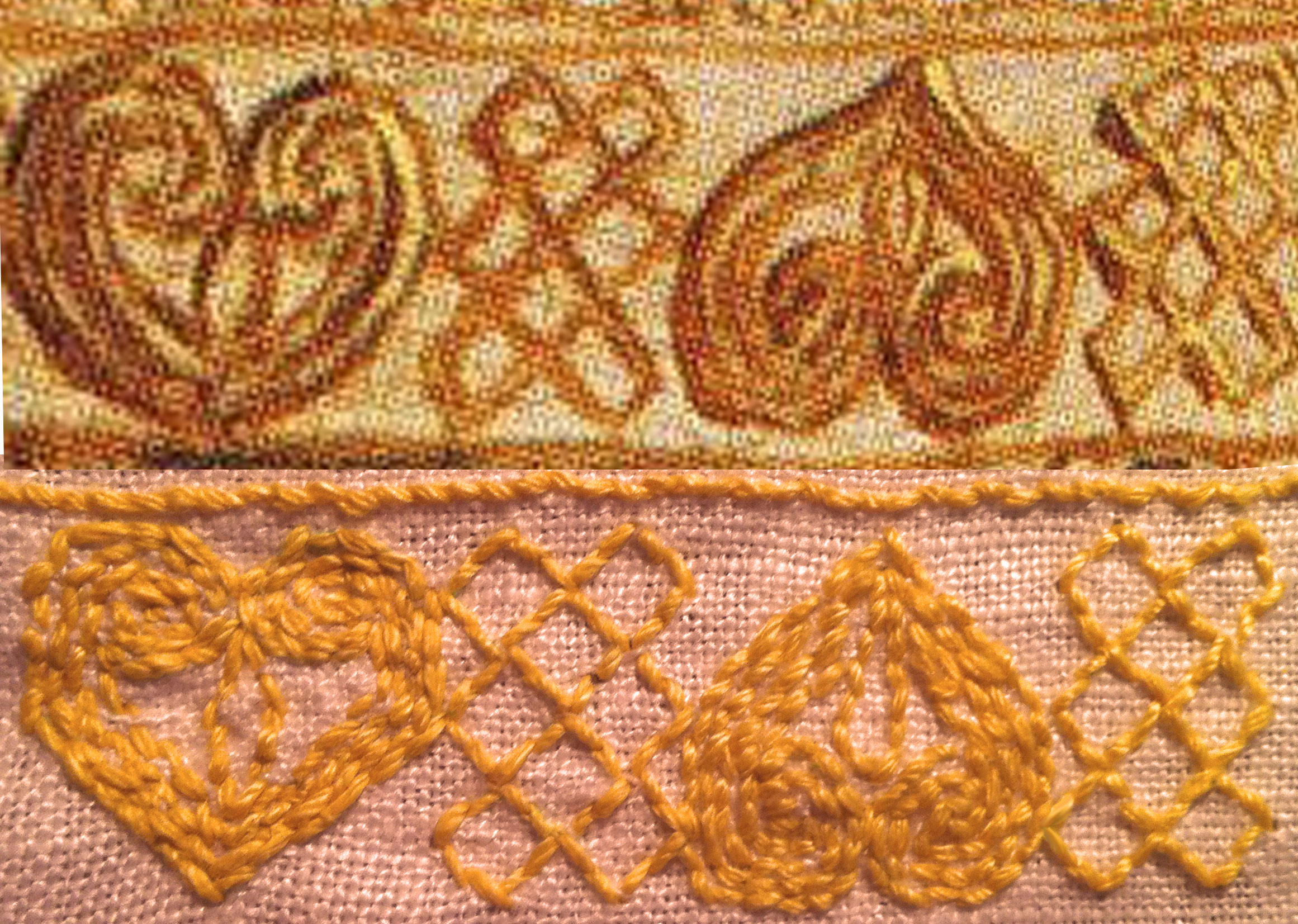
So, having some linen and yellow thread handy, I thought I would try my hand at embroidery the design. I looked up embroidery techniques and learned about blackwork and the Holbein stitch, called that because you can see it in so many of his paintings. Then I dove right in and embroidered this:

Original painting on left, trellis embroidered with the Holbein stitch on the right

My stitches weren’t terribly even (it’s been like decades since I did any embroidery), but I was still encouraged by how it looked so I kept at it. I discovered that I should probably be counting my stitches based on the threads in the linen itself. So I counted how many threads were in my linen, and came up with 44. Yikes. Most linen that you would embroider on with counted stitches would be in the 22-28 range. I couldn’t see the holes well enough in my linen and I kept losing my place. So I went out and go some 14 thread waste canvas to put over my linen — this would be the size equivalent of a 28 thread linen embroidery as typically you would skip every other thread anyway. Then I tried again and got this:

Original painting on top; my embroidered heart and trellis pattern on the bottom

My stitches are much straighter now. And I was happy with this and ready to continue on to embroider the rest. But the next morning I was thinking about it, and how the stitches in my hearts were so obvious in comparison to the hearts in the painting. Then I began to think … what if this was blackwork-style embroidery with the Holbein stitch but rather actual goldwork?! Specifically the type of goldwork that uses small lenths of gold coils that are stitched (couched) onto the fabric. The more I thought about it, the more I realized that must be it. Dorothea was the wife of a bargomaster, a member of the Patriarch, and as such the sumptuary laws of the time would have allowed her to have gold on her clothing. A chat with Mistress Melisant confirmed my suspicions. So I ordered a book on embroidery, Royal School of Needlwork Embroidery Techniques, which has a chapter on goldwork. Once that arrives and I learn more, I will order some gold and couching thread and try again. I want to eventually enter this smock into an A&S competition, so I want to do it right!

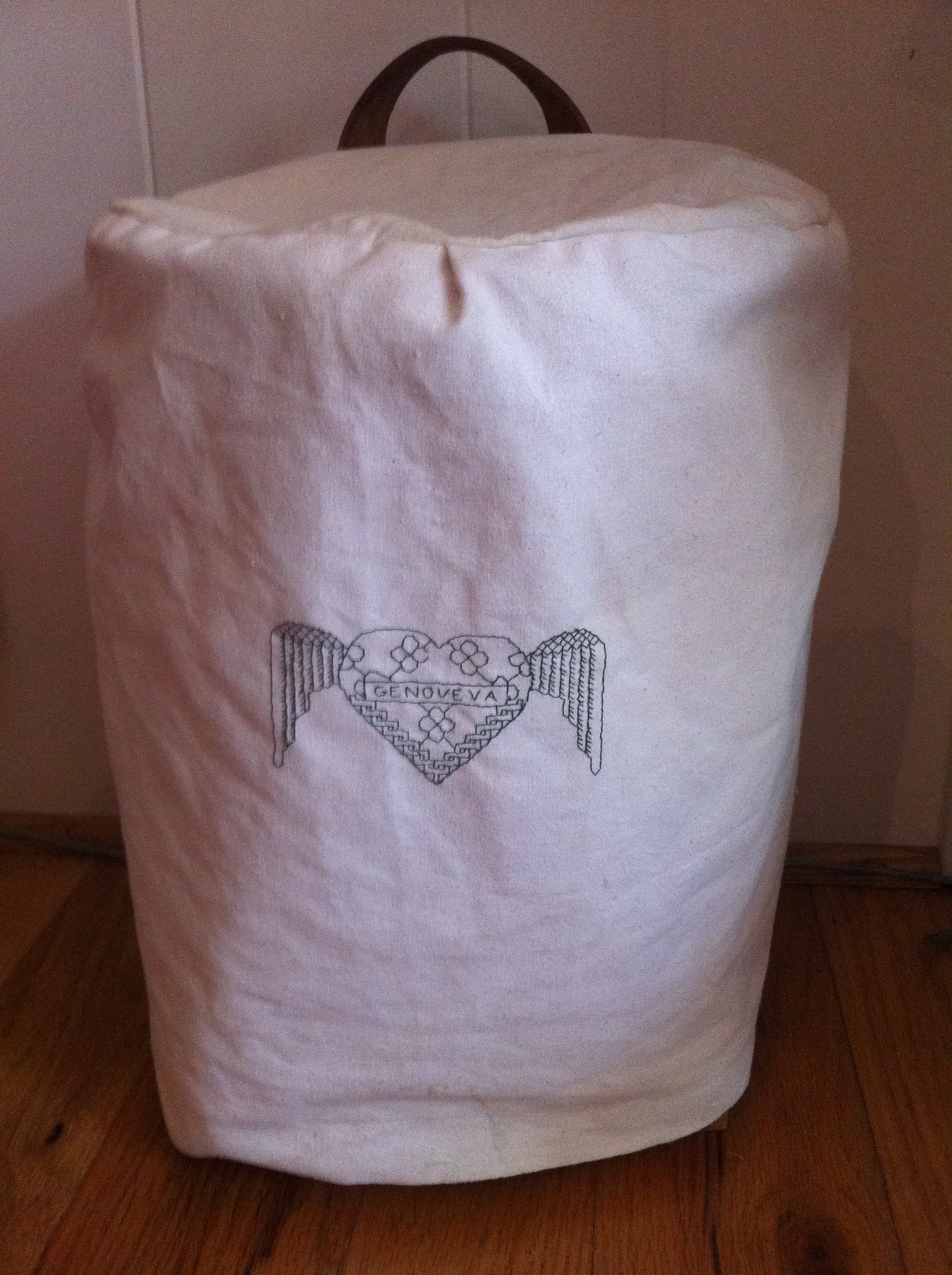
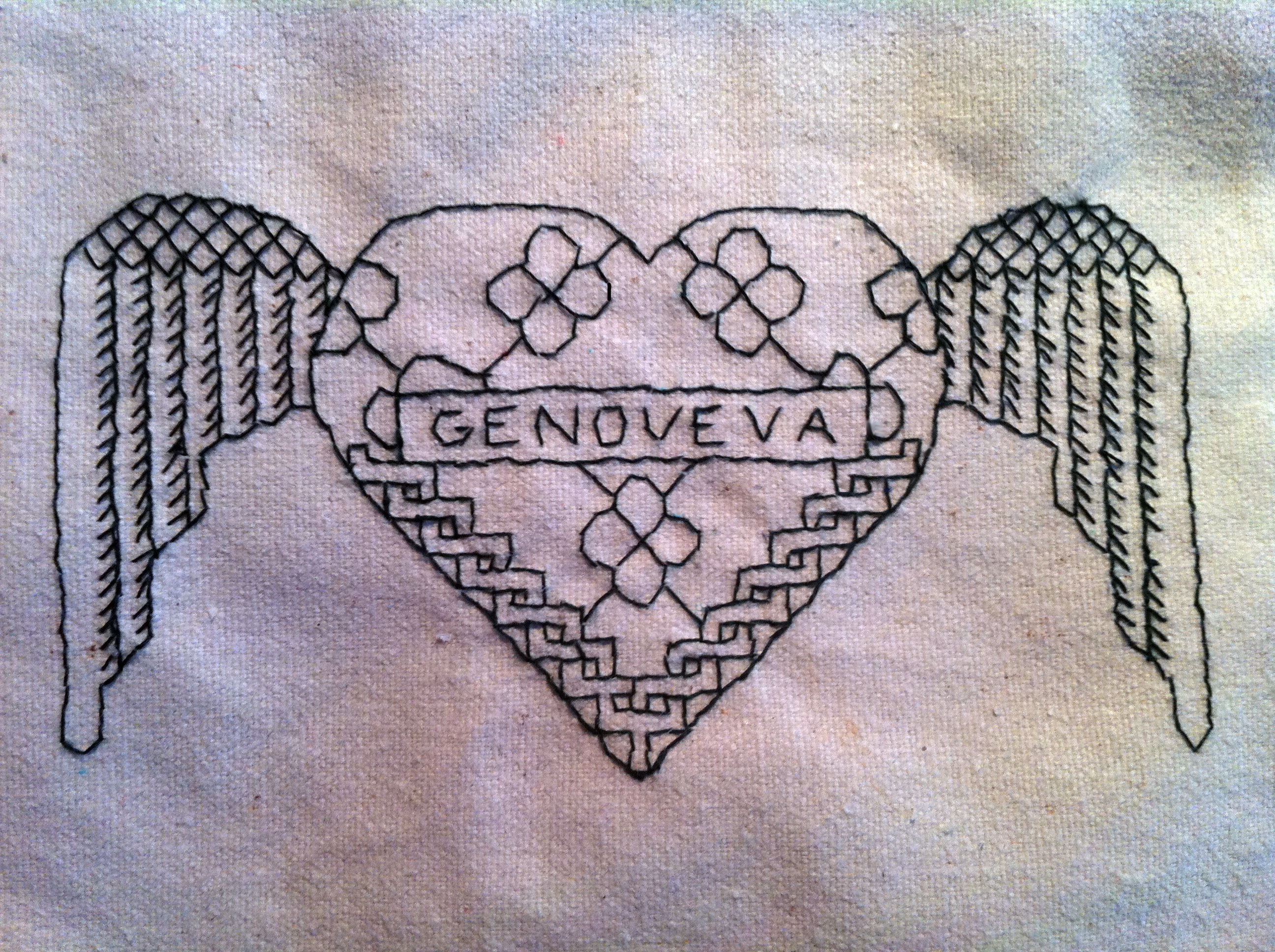
After all this, I found I was still in the mood to embroider something. All my research into blackwork made me curious to try my hand at that. So I got out some green silk thread, some waste canvas, and the canvas cover of my packbasket from Pennsic. I drew a heart onto the canvas and jumped into the project. As I went along, I added some blackwork patterns from the 16th century — a sort of three-dimensional wall along the bottom of the heart (like the embroidery on Mrs. Pemberton’s collar, another 16th c. painting also by Holbein) and a flower motif above. Then I added on wings, basing their design off a 16th century pilgrim badge. The lettering is just block letters, and I don’t think it’s period — but I wanted my name on my basket cover, so there it is. Here is the finished embroidery:

My First Blackwork Project: A Winged Heart

By no means perfect, but I really like it! I definitely got better as I went along. Putting beeswax on my thread, which I did about halfway through, made a huge difference in how often my threads got knots. Here is the basket so you can see the size of the heart on it:

My packbasket with the embroidered canvas cover

It took me about a day to embroider this. And now I want to do more. I bought some 28 thread count linen at Michaels today, and if I used that I wouldn’t need the waste canvas and I believe I could make straighter lines. Perhaps I could make an embroidered coif!

Heraldry: First Draft of a Device for Genoveva

20 August 2011

I chose my SCA name in May — Gregor followed with his in June. And we just submitted both names for registration with the SCA while we were at Pennsic.

But I’ve been giving myself plenty of time to choose my device, because I want to be sure I like it and will feel good about using it for a long time. So after much thought and research, and ruminating about it at Pennsic where I could see lots of other devices, here’s my first draft:


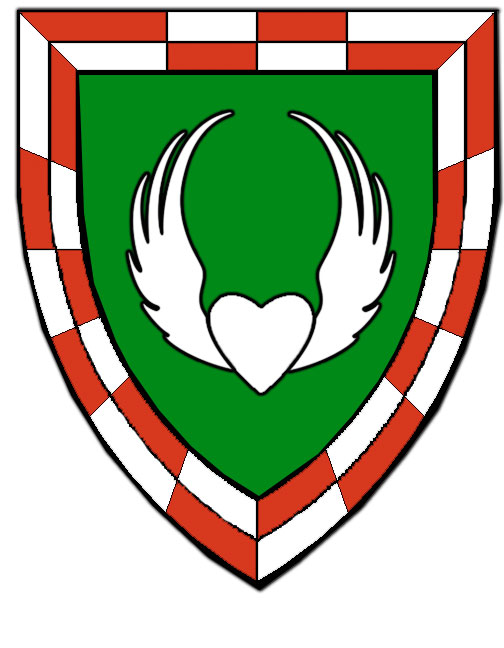
Genoveva's Device: First Draft

Tinctures: The colors I’ve selected are easy to explain. Green is my absolute favorite color, followed closely by red. And I prefer silver (white) to gold. The fact that these happen to be the same as the Midrealm’s colors are just icing on the cake for me.

Charge: I’ve tentatively chosen the winged heart for several reasons:

  1. Symbolism. In heraldic terms, the heart can mean charity, kindness, and sincerity. wings may mean swiftness and protection. These are all important ideals I strive for in my life.
  2. Personal Meaning. Wings have long held importance for me, “angel” being an old nickname of mine. The heart symbol has a special significance between my son and I, as well. These two symbols together just “feel right” to me. It has many meanings to me, which I don’t need to go into here.

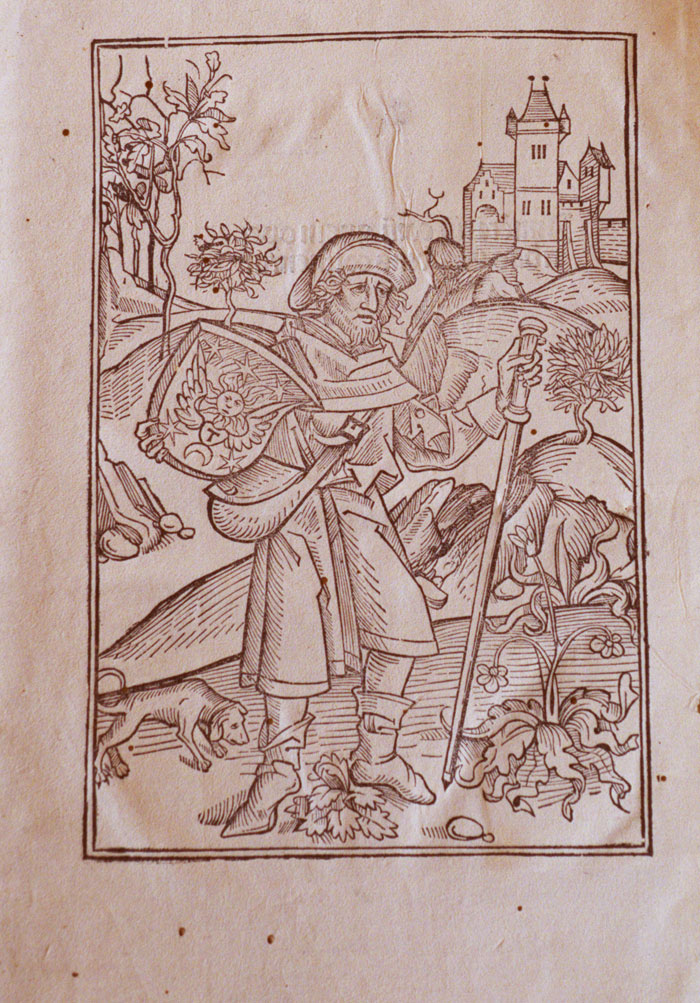
    Winged Heart on a Woodcut

  3. Historical Significance. The winged heart has been used throughout history. The one example I find most relevant is on a woodcut of a pilgrim attributed to Albrecht Dürer, a German artist of the 15th century (my time period/place of interest). The woodcut shows a pilgrim passing a castle, holding a coat-of-arms showing a winged heart, sun, stars, and moon.
  4. Uncommon. While used on SCA devices and badges, it is not common. I find just seven matches in OANDA. There are, of course, many matches for hearts in general. But not the winged heart. I want a charge that identifies me when people see it, and that’s more likely to happen if I’m one of the few with it.
  5. Simplicity. It’s a heart with wings and a border. Easy to draw. Easy to identify.

Bordure: I chose the bordure (border) because it feels “German” to me.

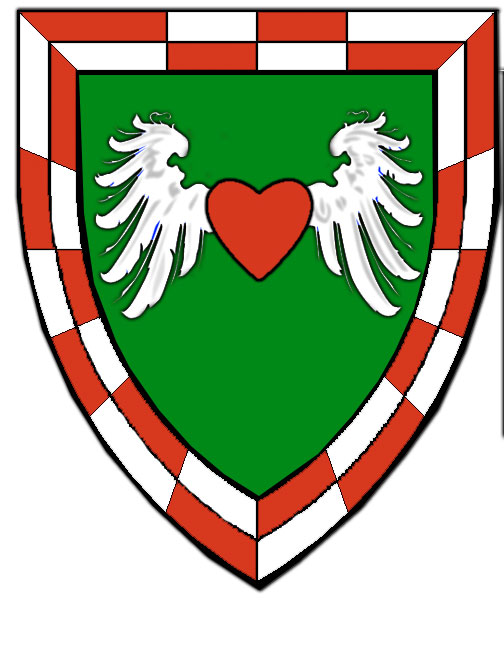
I believe the description would be: “Vert, a heart gules between wings argent within a bordure counter-compony gules and argent”

I have two concerns with this device:

  • I don’t want it to appear “cute” just because I’ve chosen a heart. I think there’s a range of ways I could depict the charge, from cute to more serious, and I can just lean toward more serious.
  • I’m not sure if I can have the heart red and the wings white, nor if the red heart on the green field violates the rule of tincture. If either is the case, I could change the heart to white, like this:

    Device with white heart

Here is an alternate drawing of the wings which look less like a crescent. These wings are styled after those which appear on the coat of arms of Germany during the Middle Ages.

As I understand it, though, I can draw the heart and wings as I like — I just need to get it passed in an acceptable form first.

Our Epic Pennsic: Videos, Photos, and Memories!

20 August 2011

We’re home from our first Pennsic War! The Midrealm didn’t win, but we certainly feel like victors! We successfully prepared, survived, and enjoyed a 10-day long SCA event/camping trip filled with both amazing and challenging events. If you want just the highlights, check out this short video I made of our “Epic Pennsic” — it even has a soundtrack and some battle footage.

As is to be expected, our Pennsic was not perfect. But I believe strongly that mistakes can be the best path to success (if you learn from them!) so it’s all okay. Here are the bumps in the road we encountered:

  • Strapping stuff to our car rack was NOT easy! We’d chosen to put our futon up there and it kept flapping up when we got up to highway speeds. We had to stop three times to re-strap it, and that put us behind schedule. Solution for next Pennsic: Buy or rent a small trailer so we don’t have to put stuff on the roof!
  • Arriving too late in the day to set up camp before dark! This was related to the point above, as stopped to re-strap really slowed us down. Solution for next Pennsic: Plan to leave by at least 9:00 am.
  • Putting the tarp under the canvas pavilion as if it was a modern nylon tent with a floor resulted in a moat around the inside perimeter of our tent after a rainfall on the first night. It was sprinkling and getting dark fast when we arrived, and we didn’t understand that the tarp had to go OVER the edges of the pavilion so that the rain would run off the canvas into the ground, not into the tarp. Had we not been pressed for time when setting up, we could have probably figured that out. This is one of those cascading issues. But we learned fast! Solution for next Pennsic: Set the tarp up the right way to start with, and think carefully about where water will go when it lands on the canvas.
  • Not enough garb! Gregor laughed when I told him I thought we needed at least one outfit for each day. He changed his tune once we got to Pennsic. We need more! Doing laundry was too time-consuming. Solution for next Pennsic: Try to have at least one outfit for each day PLUS a few extra for clothing changes due to heat, humidity, or rain.

That list isn’t so bad, really! Much worse things could have happened, such as my painter’s canvas shade fly collapsing due to all the rain. But, amazingly, it stayed up for the entire time and provided MUCH needed shade. I am glad I took a chance on that, but next year we’ll have a proper shade fly that keeps out water, too.

Some of my personal highlights of Pennsic XL are:

  • Retaining for the king, His Majesty King Arch, immediately after Opening Ceremonies. I’d never retained before, so I totally winged it … and it worked out fine. I got to see the Heroic Belted Champions Battle and Belted Champions Battle up close. I got to see the broken arrow that starts the war! I got to see Her Majesty Queen Runa give out awards (tokens?) to the Belted Champions on the field. It was a terrifying but thrilling experience for me! Definitely pushed me out of my comfort zone, and that’s a good thing.
  • Camping with Cynnabar. Everyone was kind and welcoming, and helped us feel like part of the group. The showers were awesome, as were evenings around the fire. And my son even had another 7-year-old to play with, which I wasn’t expecting. Cynnabar was also VERY convenient to shopping, food, and the battles — a really prime spot. We are very fortunate!
  • Going to a vigil for a knight-to-be with Their Excellencies, Cynnabar’s Baron and Baroness. They invited us along one evening, which we really appreciated. So not only did we get a chance to speak with them for an extended period, during which they patiently and candidly answered our questions about the SCA, but we also were able to witness a vigil. Very cool!
  • Seeing all my camp furniture in action. Everything worked and stood up to the rain, wind, dew, and heavy use we gave it. That made me feel great!
  • Volunteering for guard duty at the Midrealm Royal Encampment. We did it twice, and it helped us newbies feel like we were involved and useful. I highly recommend this for other newcomers.
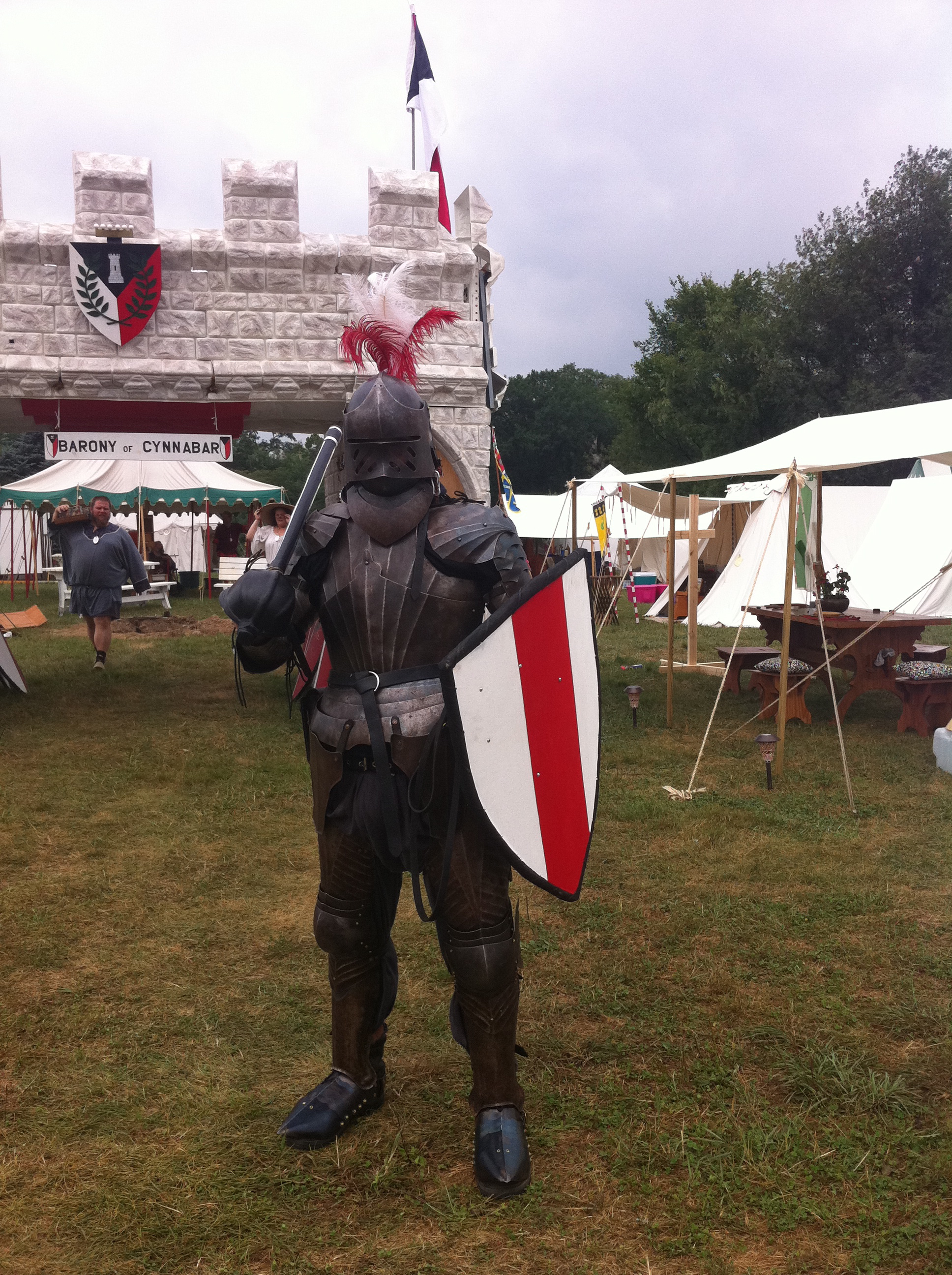
  • Walking with Gregor when he was in his full plate armor. This was an unexpected experience. I mean, yeah, I thought he looked cool, but I didn’t realize how unusual his armor was until people stopped and stared, took pictures, and gave him kudos. It was a little like walking with a celebrity. He did look really good!
  • Talking a stroll at twilight around Pennsic. Gregor and I went exploring one evening and walked down around the lake. There was a mist everywhere and it was pure magic. At one point when we’d paused to stare across the lake at the encampments, a woman stopped to tell us how she and her husband stopped every year on that exact spot to take it in, and how she and her husband had met at Pennsic 20 years ago.
  • The Cynnabar’s Got Talent show. Lots of fun, but let’s just say that Ermenrich is lucky Gregor didn’t challenge him in defense of my honor. Ha ha. ‘Nuff said. 🙂
  • Getting my first SCA award — the Award of Elephant’s Heart! This was totally unexpected and it made me really happy!

I could go on and on, but then I’ll never get any new blog posts up. So I’ll just end it here with some of my favorite photos. And this …. I can’t wait for next Pennsic!

Gregor ready for inspection before war

The OTHER Cynnabar Shield Wall

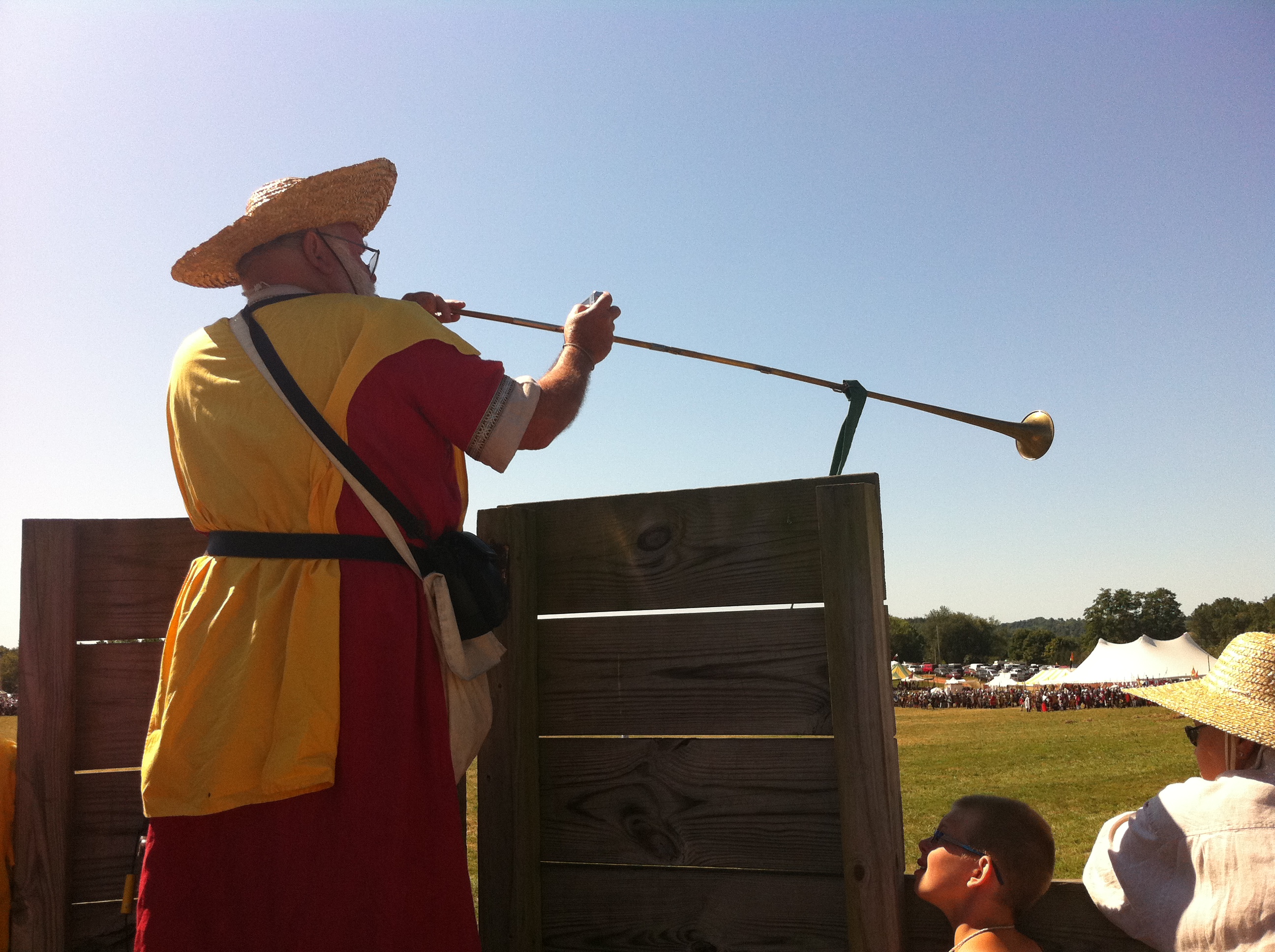
The Pennsic Battle Horn blowing at the start of the field battle

Gregor on Midrealm Royal Encampment guard duty

Encamped at Pennsic: Rainy Days, Shopping Sprees, and Quiet Nights

5 August 2011

We did it — we made it to Pennsic, got everything setup, and have begun to enjoy all our hard work in preparing for this event. I am currently back at home, as I am returning my son back home for his birthday party tomorrow. I’ll return sans kid tomorrow or Sunday for war week at Pennsic. Gregor is still at Pennsic, holding down the pavilion! At least I think he is — without his cell phone, we can’t keep in touch. I look forward to returning to him as soon as I can.

Setting up our encampment wasn’t really fun, to be honest. We arrived at 5:30 pm and it got dark pretty fast. Especially when we learned we had to move our pavilion after we had it set up already (there needed to be a walkway beside our tent but we hadn’t been told until after the pavilion went up). Then it began to sprinkle. So once the pavilion was set up, we moved on to putting the bed together … only to discover the bed had been packaged without its hardware. Ugh. We dragged everything in from the rain and slept on our futon and air mattress. It rained hard during the night. When we woke, we discovered water all around the inside edges of the pavilion. The carpet was wet, the futon was wet, almost everything was either damp or wet. We hadn’t realized we had to put the tent OVER the mud flaps. It seems so obvious now, but we were very tired when we arrived, and it was dark and wet!

The next day (Thursday) we went to get food at the Wal-Mart then drove to IKEA in Pittsburgh to get the hardware for the bed. Turns out they didn’t have all the hardware, so we just bought a new $50 bed. But … it was worth it. I should be able to return the bad bed later after Pennsic. For now we do have a bed and it’s very nice not to sleep on the ground!

We also set up our homemade shade fly on Thursday — it’s just two canvas dropcloths sewn together, grommetted, and held up on poles with ropes. It’s working, and keeping the sun off us. And it was a little windy yesterday and survived. But I am worry what will happen if it rains. A proper shade fly is on the list of things we need for next time!

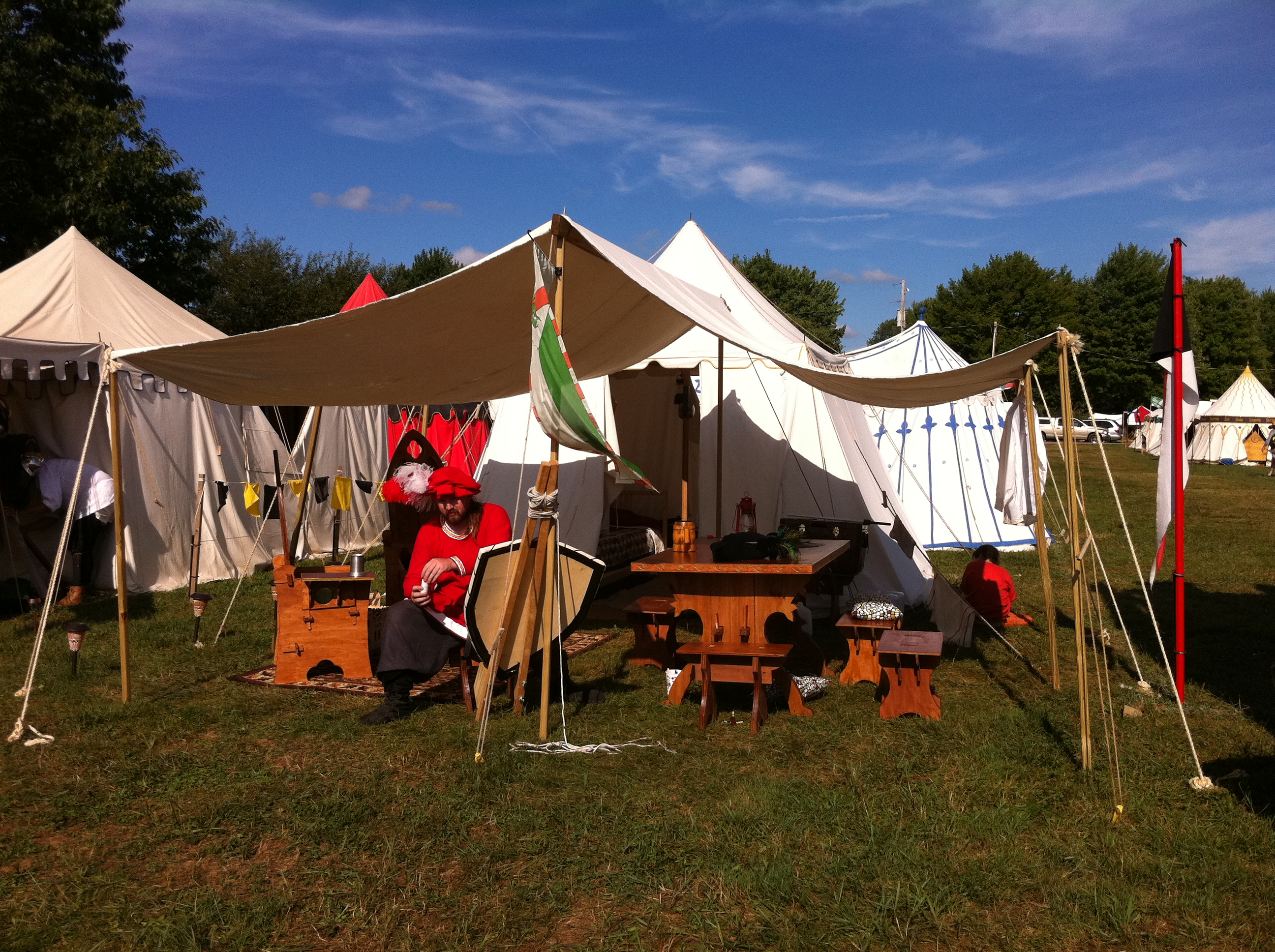
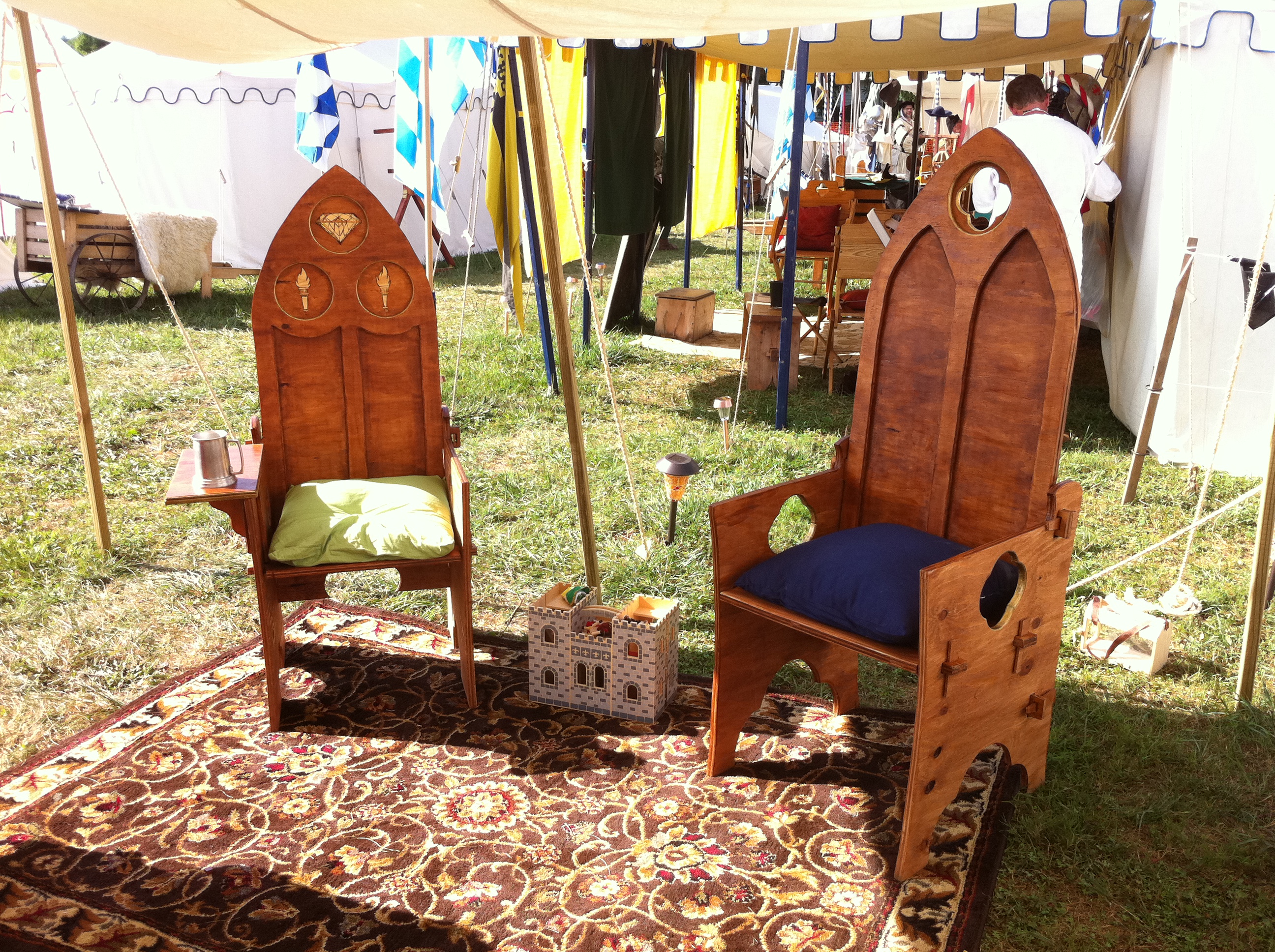
The camp chairs, table, and benches I made are all working great. I’m very pleased I took the time to make them! They aren’t amazing works of art, but they are sturdy and functional, and that makes me a happy camper.

It seems like it took us the better part of two days to setup, but really it was probably more like a day and a half. Let’s hope we do better next time! Everyone was tired and grumpy by the end of it. But … it was worth it. The encampment is now setup and looks great. I look forward to returning to it!

There’s so much more to write, but I need to do laundry and see if I can’t sew a few things before I return tomorrow. So watch for more of our report on Pennsic when we return! In the meantime, here are some of the photos I’ve taken so far…

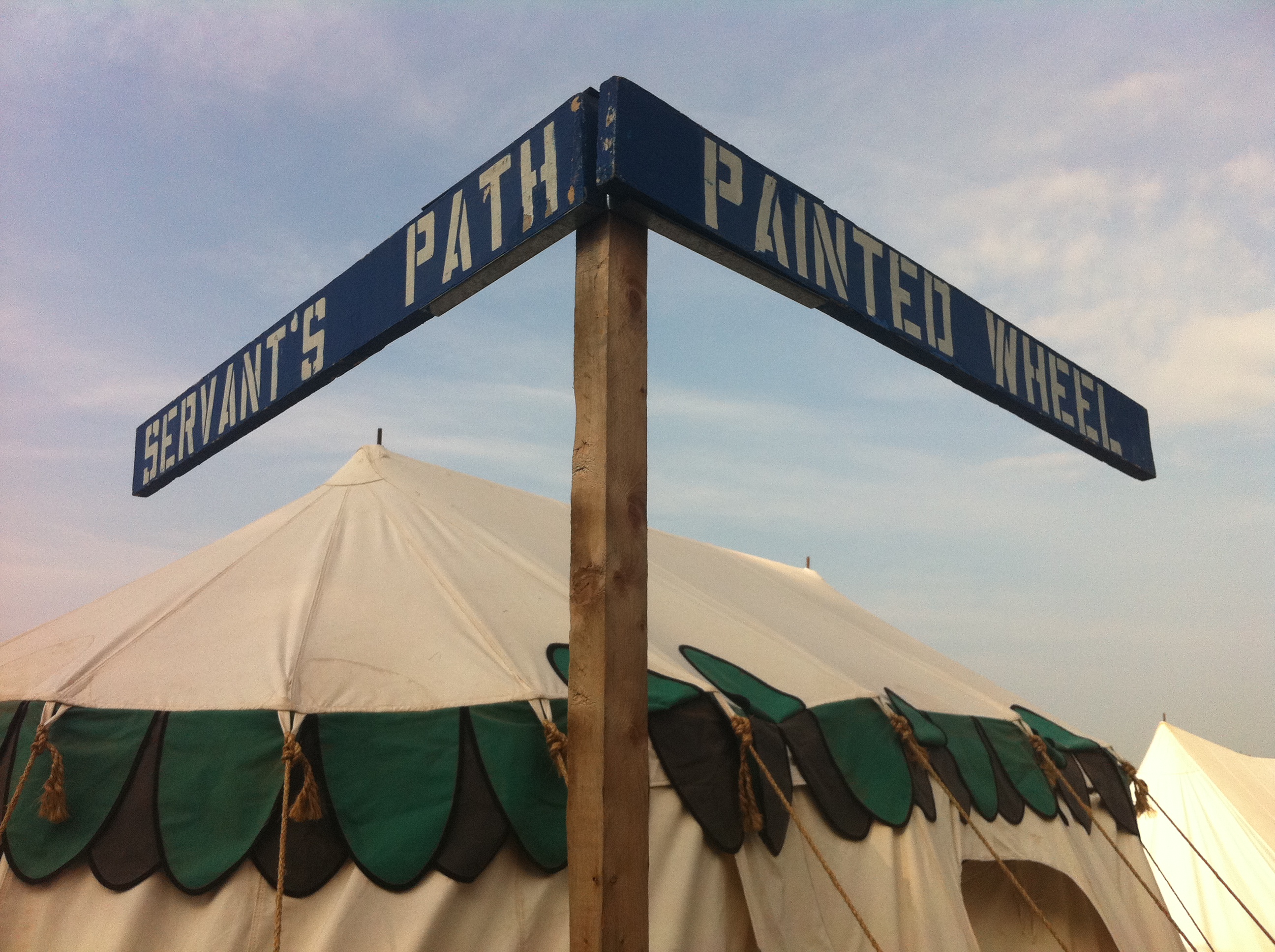
Finding Camp Cynnabar at Pennsic ... this is the signpost at the end of our road.

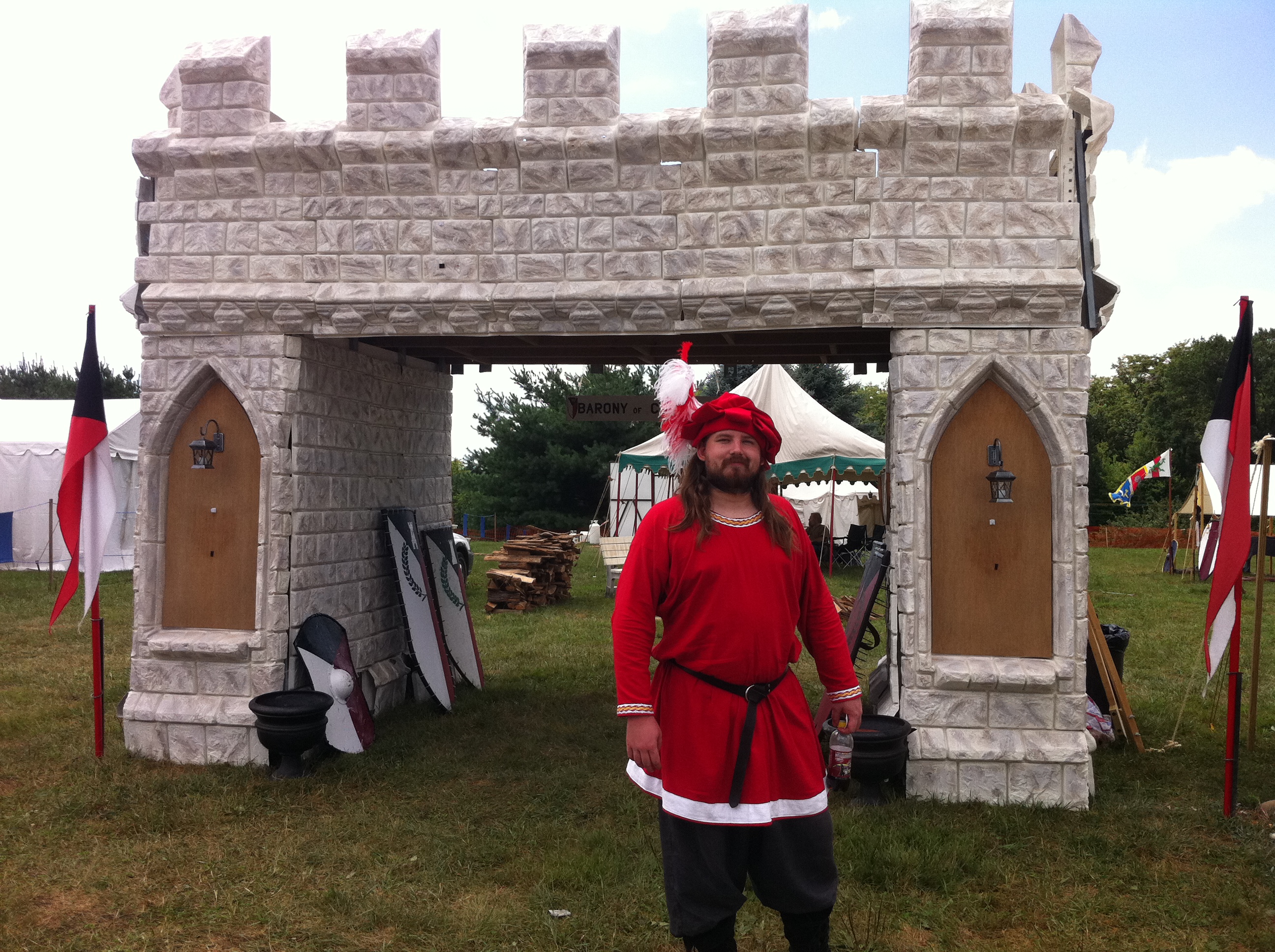
My son Alexander walks (runs?) toward the Gates of Camp Cynnabar at Pennsic!

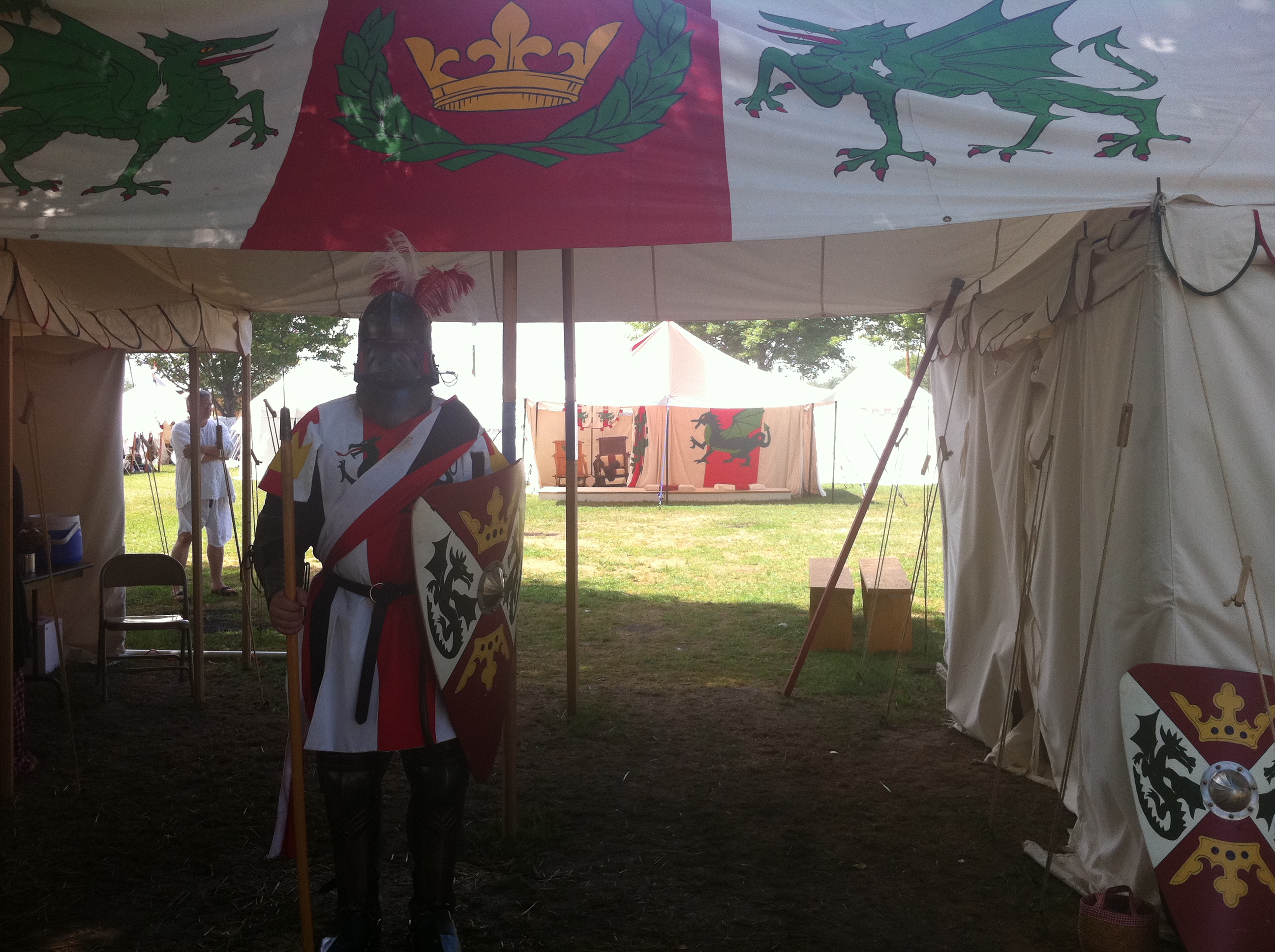
Gregor stands in front of Camp Cynnabar's gates at Pennsic.

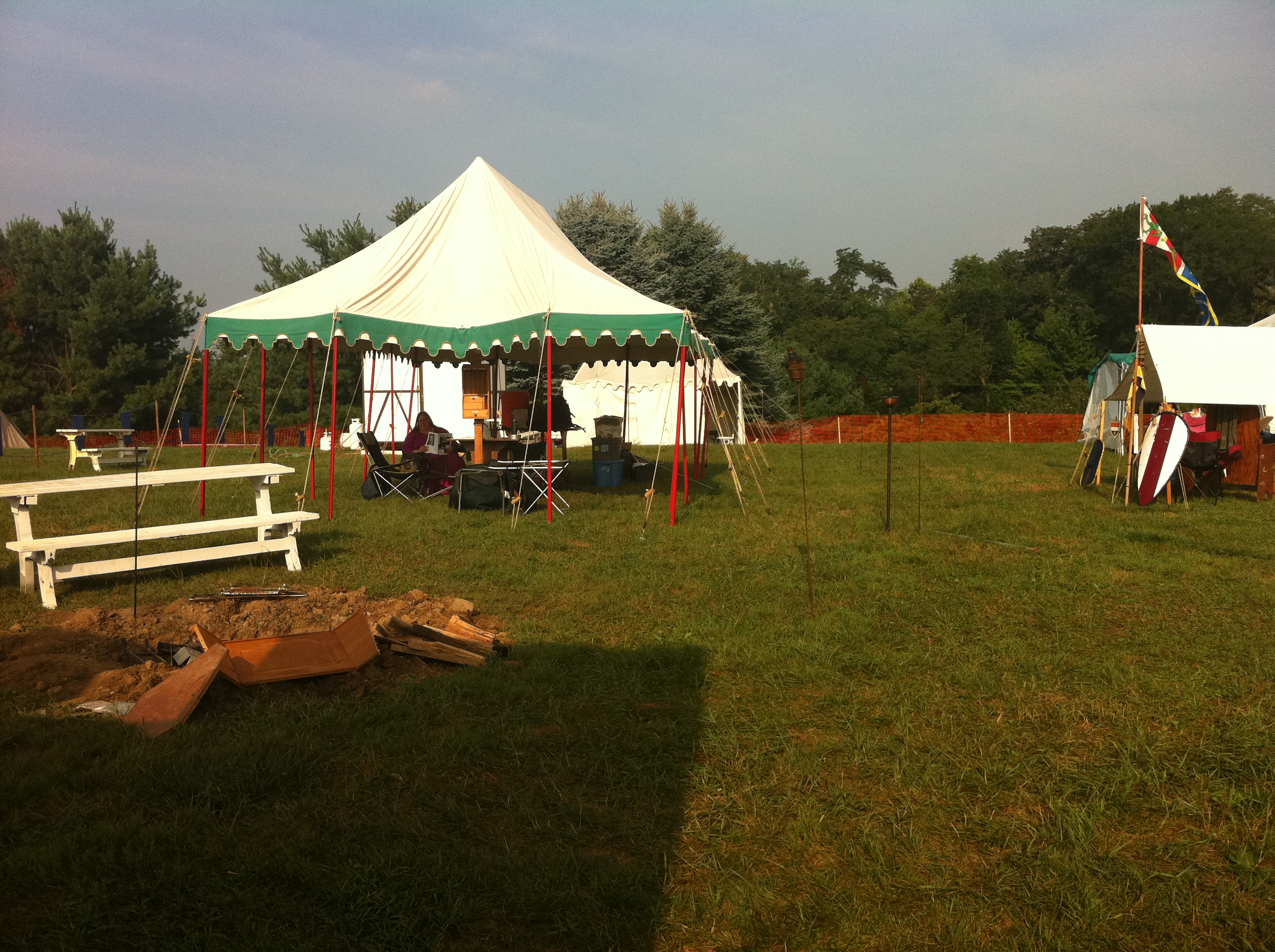
Our encampment within Camp Cynnabar at Pennsic. Gregor is painting his shield here.

The silk standard Gregor painted (dyed?) for me at our encampment. You can see the Cynnabar gates behind it!

Our camp chairs at Pennsic ... so happy I made these! It's great to have a nice place to sit.

Our trestle table and benches at Pennsic. Also very handy!

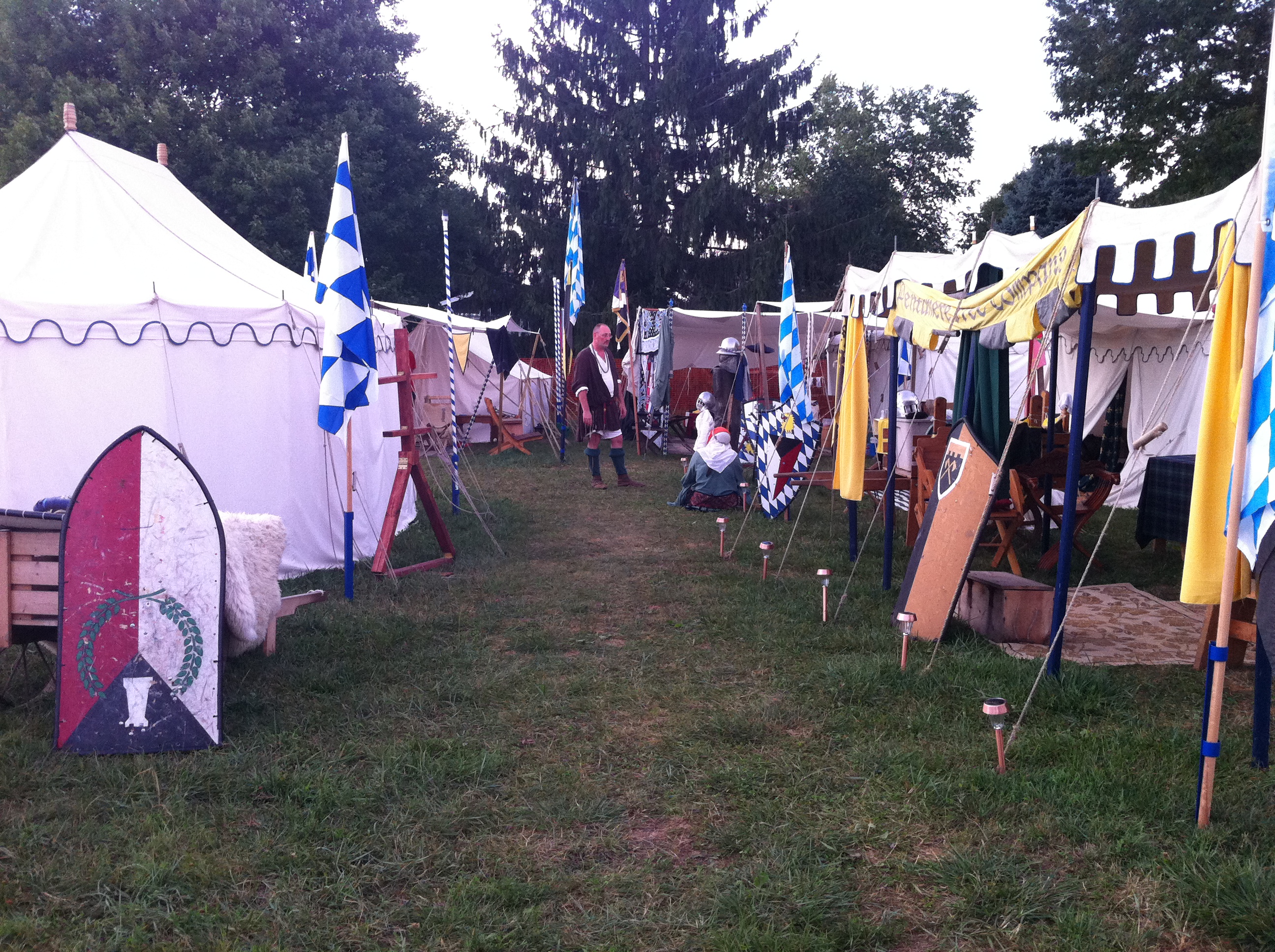
A look down one of the rows to tents at Camp Cynnabar!

Camp Cynnabar's common tent and firepit. You can see the kitchen tent behind them.

My little pirate at Pennsic!

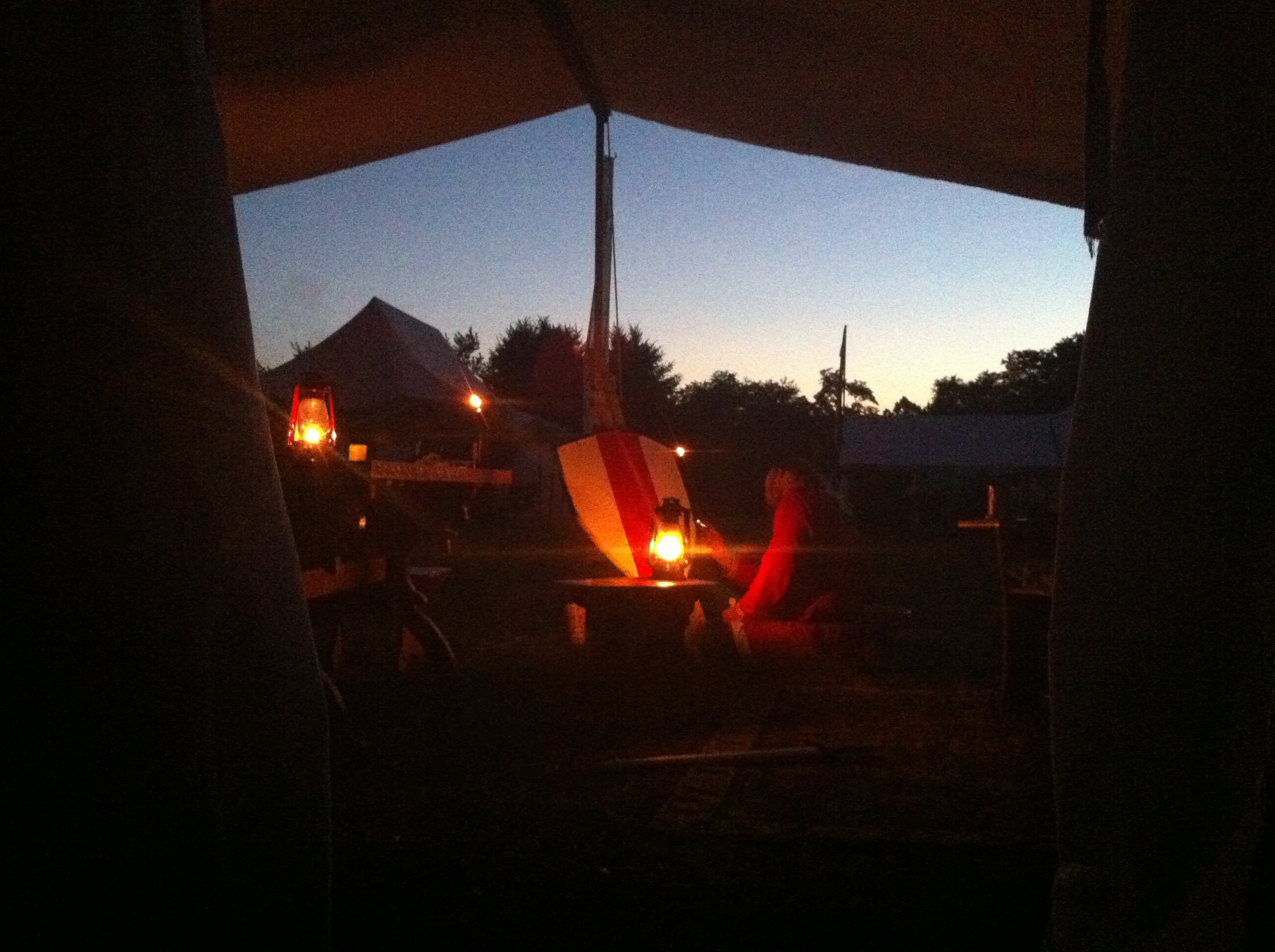
Our encampment at twilight, taken from inside our pavilion looking out. I was putting Alexander to sleep when I snapped this shot. I love this photo!

Shopping at Pennsic

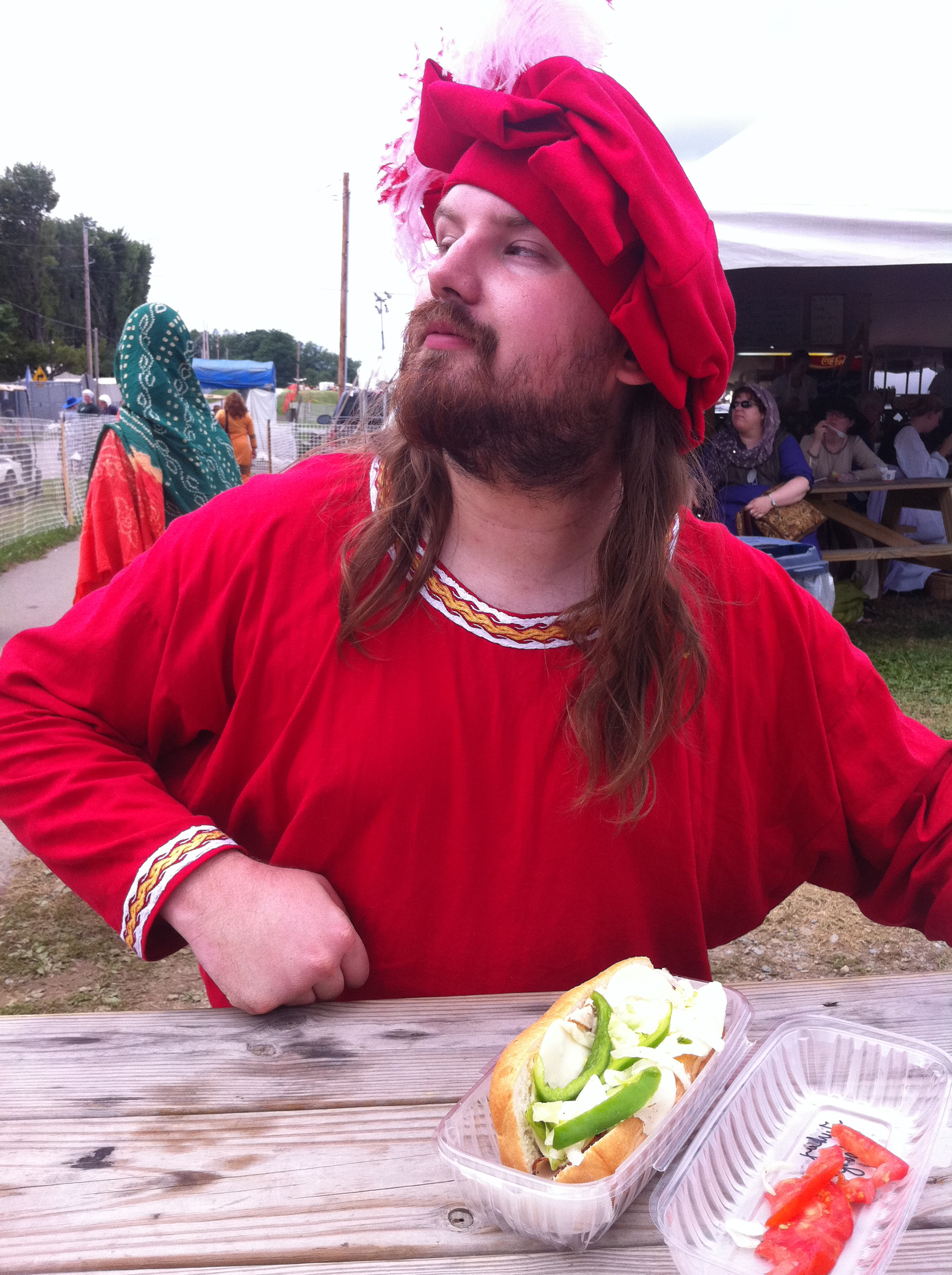
About to eat an epic sandwich in the food court at Pennsic

Look Out, Pennsic — Here We Come!

2 August 2011

We spent most of the evening packing the van (wow, did we fit a lot of stuff in there). Now all that remains is to take showers, pack up the last few items, and get in the car. Oh, wait, I forgot … we need to call AAA because we wore down the battery last night leaving all the doors open. Heh. Smooth, I know. So after the jump, THEN we’ll be on our way! Don’t expect a lot of updates while we’re at Pennsic — I don’t expect to have a lot of time for blogging. I will do what I can, though!

Look out Pennsic -- here we come!

Pennsic or Bust: Status of Projects and Packing

1 August 2011

The last few days have been CRAZY. Very busy and exhausting. Here’s a quick recap:

1. Shield — It worked! We strapped three layers of hardwood plywood around the tree in the front yard. We left it strapped on the tree for over two days. Took it down and Gregor shaped and sanded it, put an old garden hose around the edge, and canvas over and around the shield, securing it with parachute cord. It looks good. He just needs to attach the basket and strap. He’ll paint it at Pennsic.

2. Stick — Gregor has a new weapon cut from the rattan stave I got a while back. It’s just missing its thrusting tip — maybe he can pick one up at Pennsic.

3. Shade Fly — It’s kind of working. We put it up, and it stayed and looked good. But then we tried to test it out with a little rain (water from the sprinkler) and the canvas leaked badly (of course). So we got some waterproofing spray and we’re also shortening the legs a bit to make a steeper slope on the roof. Also, the grommets in the canvas are already ripping after just being up for 12 hours, so those need to be reinforced. I’m not sure how well this is going to work — if it rains or the wind is bad, it may have to be taken down. I don’t actually want the shade fly to be water proof — I just don’t want it to fall down because it is collecting water! 🙁

4. Sewing — Gregor’s Elizabethan shirt is mostly done and my dresses are done. The only things left to do are eyelets — lots of eyelets (doublet, shirt, two dresses, and two sets of sleeves). But I can do those at Pennsic, right? -crazy laugh-

5. Camp Furniture — Got the $50 wood bed from IKEA. Love the small packaging. The chairs, benches, and tables are ready to go.

So at this point, what’s left is packing. We’re going to work on it this evening, and finish up whatever is necessary in the morning.

Oh, one other little tidbit — Gregor’s cell phone “shuffled off this mortal coil.” Yeah, it died. (Charles, if you’re reading this, please post a reply to this post with your phone number so Gregor can call you — your post won’t be made public.)

« Previous PageNext Page »